






































Why Slate Switched to an LFP Battery for Its Affordable Electric Truck
Slate replaced its original battery plan with LFP technology to lower costs, improve durability, and keep its affordable EV truck competitively priced for U.S. buyers.
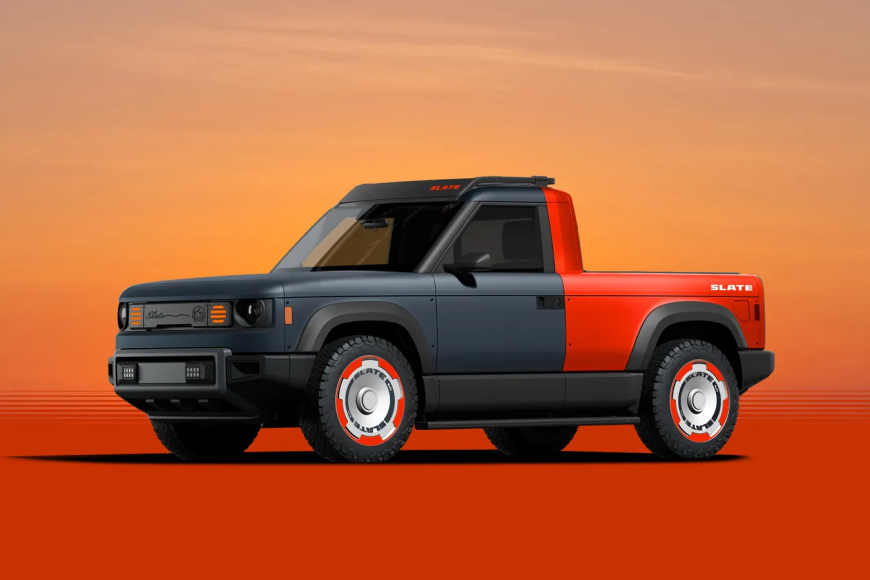
Slate, the startup behind the minimalist electric pickup truck, has found another way to simplify its vehicle—and this time, the focus is on the battery.
When the company revealed on Wednesday that its pickup would start at $24,950 before destination charges, taxes, and other fees, it also announced a significant change to its battery lineup. Slate has dropped its planned optional 240-mile battery pack while increasing the driving range of the standard battery from 150 miles to an estimated 205 miles.
The decision highlights how dramatically the battery market in the United States has evolved over the past four years.
Originally, Slate intended to build its trucks using nickel-manganese-cobalt (NMC) battery cells. NMC chemistry has long been the preferred choice in much of the automotive industry because of its high energy density, which allows vehicles to travel longer distances on a single charge. However, the technology also comes with a higher price tag, largely because nickel and cobalt remain expensive raw materials.
In recent years, many automakers have increasingly turned to lithium-iron-phosphate (LFP) batteries instead. Although LFP cells provide lower energy density than NMC, they are significantly cheaper—roughly 40% less expensive—thanks to the use of more affordable materials such as iron, which replaces both nickel and cobalt in the battery’s cathode.
There were practical reasons why Slate and many other vehicle manufacturers initially favoured NMC batteries. One of the biggest challenges has been the supply chain for LFP technology, which is now heavily concentrated in China. That was not always the case. Early American battery company A123 Systems was established to commercialise LFP technology, but after encountering financial difficulties, it filed for bankruptcy and was acquired in 2013 by a Chinese automotive parts manufacturer. Since then, Chinese battery companies have become the dominant producers of LFP cells worldwide.
For several years, this created another complication for automakers selling electric vehicles in the United States. Under the Inflation Reduction Act, EVs using Chinese-sourced LFP batteries generally did not qualify for the federal $7,500 tax credit because eligible batteries were required to use materials sourced domestically or from countries with which the U.S. has free trade agreements. However, after the One Big Beautiful Bill Act eliminated those EV tax incentives, that concern largely disappeared, making Chinese-produced LFP cells a more practical option once again.
Slate said it is sourcing battery cells from Hefei-based battery manufacturer Gotion, with production taking place at the company’s Illinois manufacturing facility, according to a report from InsideEVs.
Limited driving range was another reason many automakers previously overlooked LFP technology. Manufacturers competing in the U.S. market have traditionally prioritised vehicles capable of travelling well over 300 miles on a single charge. However, those models typically carry much higher price tags—the exact opposite of Slate’s strategy for producing one of the country’s most affordable electric vehicles.
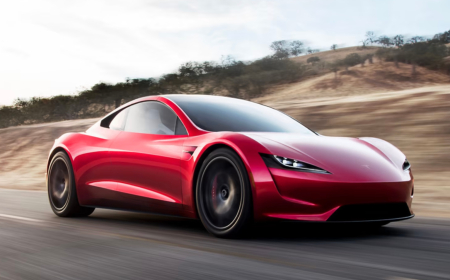
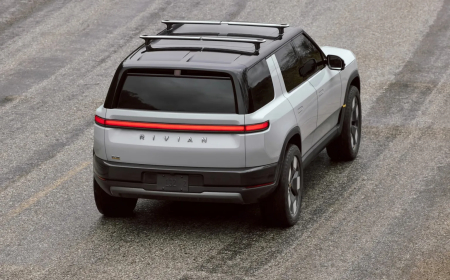
In reality, however, most drivers rarely require that level of range. As charging infrastructure continues to expand and charging speeds improve, concerns about range anxiety have gradually eased. While LFP batteries still cannot match the energy density of NMC chemistry, improvements in modern LFP cell design have narrowed the performance gap considerably. Today, manufacturers including Ford, General Motors, Rivian, and Tesla all offer electric vehicles powered by LFP battery packs.
The growing adoption of LFP batteries has also coincided with another important manufacturing shift: the move toward cell-to-pack battery construction, which Slate is using for its trucks.
Traditionally, automakers assembled battery packs by first grouping individual cells into modules, then installing those modules into the finished battery pack. That design worked particularly well with pouch cells, which were lighter and less expensive. Over time, however, manufacturers realised that the additional modules largely offset those advantages in both cost and weight.
As a result, much of the industry has shifted toward cell-to-pack construction, where rigid prismatic or cylindrical battery cells are installed directly into the battery pack without intermediate modules. While some electric vehicles still rely on modular designs, the newer approach reduces manufacturing complexity while improving volumetric energy density—an important benefit for compact vehicles such as Slate’s pickup.
LFP chemistry offers another practical advantage. Unlike NMC batteries, LFP packs can typically be charged to 100% more frequently without the same level of concern about long-term battery degradation. That allows owners to make full use of the available driving range daily.
Although Slate’s management undoubtedly had to approve the transition from NMC to LFP batteries formally, the factors driving that decision had been building across the industry for years. LFP technology is unlikely to dominate every segment of the electric vehicle market—some manufacturers, including General Motors, continue investing in entirely different battery chemistries—but its combination of lower costs and practical driving range makes it an especially logical choice for what Slate hopes will become the most affordable electric vehicle available in the United States.
What's Your Reaction?
 Like
0
Like
0
 Dislike
0
Dislike
0
 Love
0
Love
0
 Funny
0
Funny
0
 Angry
0
Angry
0
 Sad
0
Sad
0
 Wow
0
Wow
0