






















Tesla Responds After Deadly Texas Crash Sparks Autopilot Debate
Tesla challenges claims that Autopilot caused the fatal Texas crash, saying the driver manually overrode the system. Read the latest updates, investigation details, and lawsuit developments.
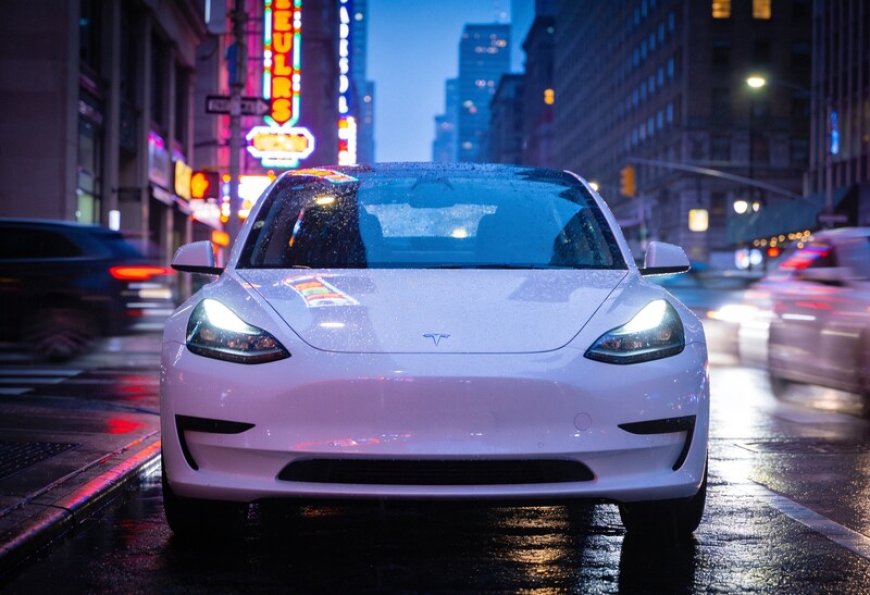
A fatal crash involving a Tesla Model 3 that struck a brick home in Katy, Texas, killing a 76-year-old woman, has renewed scrutiny over the company’s driver-assistance technology. By Monday afternoon, however, Tesla had publicly challenged how the incident was being portrayed.
The crash occurred on Friday night when a Tesla Model 3 driven by Michael Butler left the roadway and crashed into the home of Martha Avila. Avila was airlifted to a hospital, where she later died from her injuries. Butler reportedly told deputies from the Harris County Sheriff’s Office that the vehicle was operating on Autopilot at the time of the collision. That claim quickly spread over the weekend, reigniting debate surrounding Tesla’s Autopilot and Full Self-Driving (Supervised) driver-assistance systems.
Tesla, which eliminated its public relations department several years ago and rarely comments on such incidents, broke from its usual approach on Monday to dispute that narrative.
Ashok Elluswamy, Tesla’s Vice President of AI Software and the company’s first Autopilot engineer, posted on X that the vehicle’s internal data presented a different picture. According to Elluswamy, the driver manually overrode the self-driving system by pressing the accelerator pedal to 100% while travelling through a residential neighbourhood. He added that the vehicle was travelling at approximately 73 mph at the time of the crash and that the accelerator remained fully depressed even after the collision.
His statement suggested that regardless of whether a driver-assistance system had been engaged beforehand, the driver’s full-throttle acceleration—not the vehicle’s software—was responsible for the events leading to the crash.
Tesla CEO Elon Musk later echoed Elluswamy’s comments on X, writing that the allegation “makes no sense” because Full Self-Driving typically travels slowly on residential streets, whereas this incident involved a high-speed impact.
Tesla officially discontinued its basic Autopilot branding in January following a California ruling that determined the name could mislead consumers. The company’s current Full Self-Driving (Supervised) system, available through a $99 monthly subscription, can handle steering, navigation, lane changes, parking, and other driving functions. However, Tesla continues to require drivers to supervise the system actively at all times.
Federal regulators are expected to conduct their own review of the incident. On Monday, the National Highway Traffic Safety Administration confirmed it had opened a special investigation into the fatal crash. The inquiry reportedly becomes the latest among more than 40 investigations the agency has launched in recent years involving Tesla vehicles equipped with advanced driver-assistance technologies.
Meanwhile, the Harris County Sheriff’s Office said its findings will be submitted to the local district attorney, who will determine whether any criminal charges should be filed.
Whether Autopilot or Full Self-Driving was active, manually overridden, or otherwise contributed to the collision is unlikely to be determined until investigators complete a detailed analysis of the vehicle’s onboard data and system logs.
What's Your Reaction?
 Like
0
Like
0
 Dislike
0
Dislike
0
 Love
0
Love
0
 Funny
0
Funny
0
 Angry
0
Angry
0
 Sad
0
Sad
0
 Wow
0
Wow
0