




























Tesla Robotaxi Miles Fall 36% Despite Expansion to More Cities
Tesla’s Robotaxi service logged fewer paid miles in the second quarter despite expanding into more cities, raising new questions about the pace of its autonomous vehicle rollout.
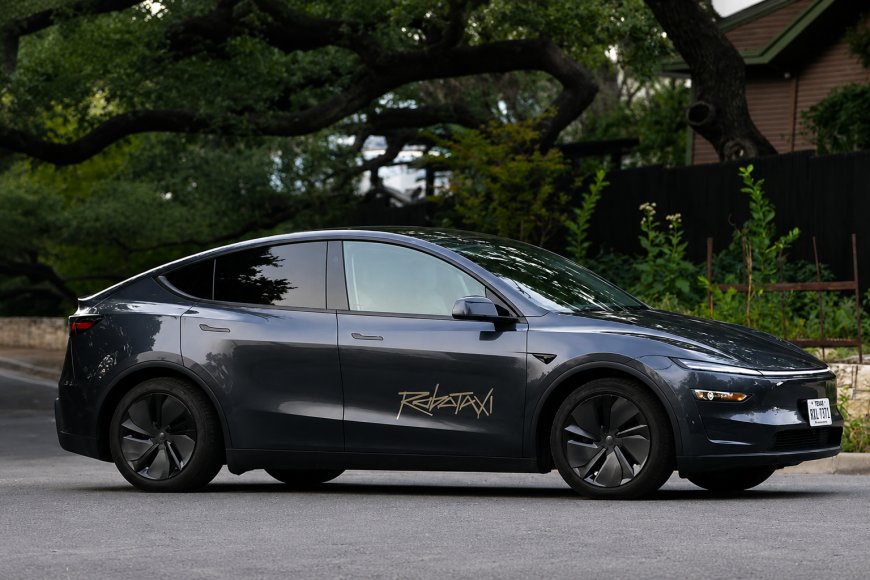
Tesla's Robotaxi network logged fewer paid miles during the second quarter than it did in the first, despite expanding its autonomous ride-hailing service to additional cities, according to company figures released alongside its latest quarterly earnings.
The decline comes at a critical time for Tesla, which has increasingly positioned autonomous driving and its Robotaxi business as central to its long-term growth strategy while its core electric vehicle business faces slowing sales and weaker-than-expected financial results. Following the earnings release, Tesla shares fell more than 13% in early Thursday trading.
Although Tesla's chart of cumulative Robotaxi miles appears to show consistent growth between August 2025 and June 2026, a quarter-by-quarter breakdown tells a different story. The company's fleet of Model Y Robotaxis carrying paying passengers drove approximately 1.1 million miles during the first quarter before dropping to about 700,000 miles in the second quarter, a decline of roughly 36%.
The decrease occurred even as Tesla expanded Robotaxi operations to six cities across Texas and Florida, deploying a mix of supervised and unsupervised autonomous vehicles. The company also appears to include paid rides in the San Francisco Bay Area as part of its Robotaxi coverage, even though those vehicles still require safety drivers because they do not have the permits needed to operate autonomously in California.
Tesla says Cybercab data is now the priority
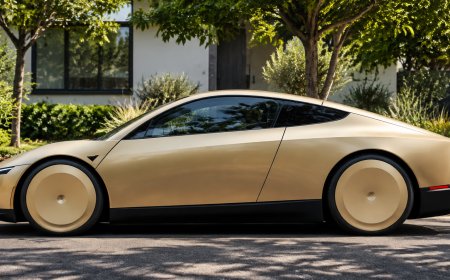
During Tesla's earnings conference call, CEO Elon Musk acknowledged that scaling the Robotaxi service will depend on gathering driving data specifically for the upcoming Cybercab, the company's purpose-built two-seat autonomous vehicle expected to become the backbone of its future ride-hailing fleet.
Musk explained that Tesla has millions of miles of driving data from customer-owned Model 3 and Model Y vehicles, but not for the Cybercab platform. To address that gap, the company is using Cybercab prototypes fitted with steering wheels and pedals to collect data and calibrate the system before deploying larger numbers of the vehicles.
The comments mark a shift from Tesla's long-standing argument that its fleet of nearly 10 million customer vehicles was already collecting the driving data needed to train future Robotaxis through its Full Self-Driving software.
Safety takes center stage
Tesla executives said the cautious rollout reflects the company's focus on safety rather than rapid expansion. Musk said Tesla wants to avoid accidents that could trigger negative publicity and increased regulatory scrutiny, arguing that even a single injury involving a Robotaxi would receive worldwide attention despite the far higher number of traffic fatalities that occur each year.
Ashok Elluswamy, Tesla's vice president of AI, said the company's unsupervised Robotaxis have driven more than 380,000 miles without a safety operator and have experienced "zero notable incidents." He did not define what qualifies as a notable incident but said reported events largely involved other road users striking stationary Tesla vehicles.
Federal filings show Tesla has reported 22 Robotaxi-related crashes to the National Highway Traffic Safety Administration over the past year. Most involved other vehicles colliding with Tesla Robotaxis, though the reports also include crashes linked to remote teleoperators and low-speed collisions with objects such as curbs, utility poles and a tow truck bed.
Debate over Tesla's autonomous strategy
Tesla has also shifted its messaging around the biggest obstacle to deploying Robotaxis at scale. While the company previously suggested regulation was the primary barrier, executives now say demonstrating the technology's safety is the main challenge.
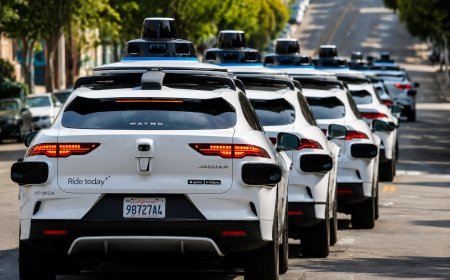
Elluswamy also defended Tesla's camera-only autonomous driving approach, arguing that safe and affordable self-driving technology can be achieved without radar, lidar or high-definition maps. The strategy differs from competitors such as Waymo, which rely on a broader suite of sensors.
Despite the slower quarterly performance, Tesla executives remain confident that growth will accelerate. Musk and Elluswamy said the number of unsupervised Robotaxi miles has been increasing by roughly 10% each week since the service began operating without safety drivers late last year, and Musk predicted the network would continue to expand rapidly as more Cybercabs enter service.
What's Your Reaction?
 Like
0
Like
0
 Dislike
0
Dislike
0
 Love
0
Love
0
 Funny
0
Funny
0
 Angry
0
Angry
0
 Sad
0
Sad
0
 Wow
0
Wow
0