
















Tesla shifts focus as Model S and Model X near the end of their lifecycle, Cybercab takes centre stage
Tesla’s Model S and Model X may be nearing their final phase as the company shifts focus toward its upcoming Cybercab and autonomous mobility strategy.
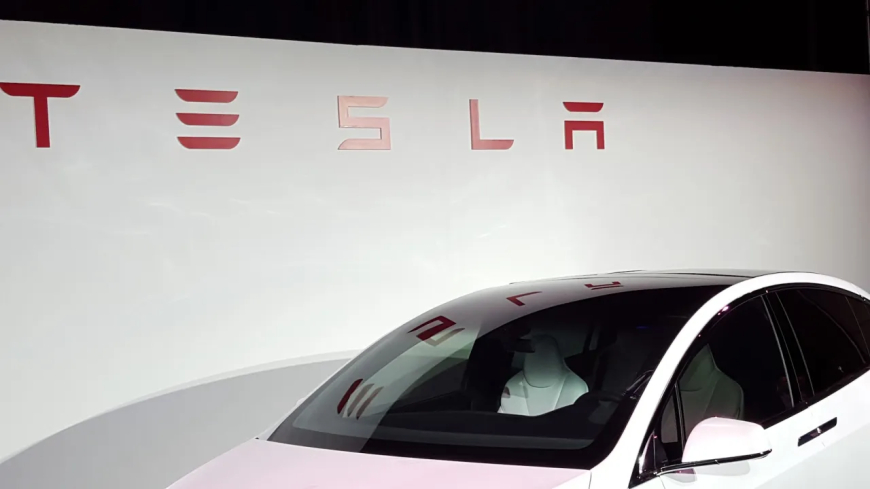
The transition has been anticipated for weeks, and now it is nearly complete: only a few hundred units of the Tesla Model S and Tesla Model X remain unsold. Elon Musk confirmed in a recent post on X that custom orders for both vehicles have officially ended, noting that only existing inventory is still available.
Plans to discontinue production of these models were first revealed earlier this year, and recent sales data clarifies the reasoning behind the decision.
Over time, demand for the Model S and Model X has steadily declined as Tesla’s more affordable, high-volume offerings — the Model 3 and Model Y — have taken centre stage. Rather than reporting separate figures, Tesla groups these vehicles into a broader “other models” category, which now also includes the Cybertruck. Combined sales for this segment peaked in 2017 at over 100,000 units but dropped to just above 50,000 in 2025, representing only a small portion of the 1.63 million vehicles Tesla delivered globally last year.
In simple terms, the phase-out of these flagship models was only a matter of time. What lies ahead, however, reflects a more complex shift in strategy.
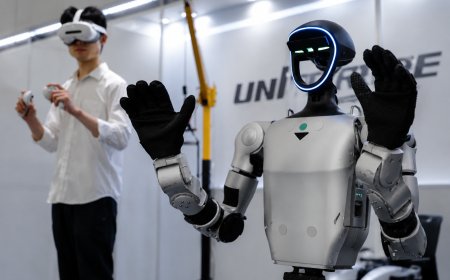
Instead of replacing the Model S and Model X with another conventional electric vehicle, Musk has moved away from plans for a lower-cost EV — once expected to be priced around $25,000 — and is focusing on new directions. These include the Optimus robot, which is still in development, and the Cybercab, a fully electric, two-seat autonomous vehicle first introduced as a concept in 2024.
Tesla intends to begin producing Optimus robots at its Fremont, California, facility once production of the Model S and Model X concludes, which could happen imminently. At the same time, Musk has indicated that Cybercab production may start at the company’s Austin, Texas factory within the month, although Tesla’s timelines have historically been subject to delays.
Looking back at Tesla’s legacy models
Although the Model S and Model X have recently taken a backseat to more affordable vehicles, their introduction marked defining moments in Tesla’s journey.
The Model S debuted in 2012 as Tesla’s first large-scale electric vehicle, reshaping public perception of EVs and pushing traditional automakers to reconsider their stance on electric mobility. The Model X followed in 2015 and quickly became known for its ambitious design, which Musk once compared to a “Fabergé egg.”
At the time, Musk even acknowledged that the company may have pushed the limits too far with the Model X, reflecting on its complexity during its launch period. Despite early delays and criticism, the Model X ultimately expanded Tesla’s customer base and contributed to the company’s growing visibility. These models laid the foundation for Tesla’s next phase: mass-market vehicles.
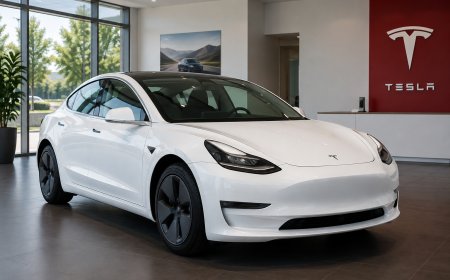
The Model 3 experienced a challenging rollout but eventually became a breakthrough success, while the Model Y further strengthened Tesla’s global position. Together, they helped Tesla dominate the EV market until BYD overtook it in 202,5 with 2.26 million vehicle deliveries.
Even today, Tesla continues to sell large volumes of the Model 3 and Model Y. However, the company’s overall growth has slowed. In 2025, Tesla reported 1.69 million vehicles sold — marking its second consecutive year of declining annual sales.
Efforts to revive growth through more affordable, stripped-down versions of the Model 3 and Model Y have shown limited impact. In the first quarter of 2026, Tesla delivered 358,023 vehicles worldwide, a modest 6% increase over the same period the previous year, but still below analyst expectations of roughly 368,000 units.
Despite these figures, Musk’s broader vision for Tesla is shifting away from traditional automotive identity. Rather than positioning Tesla strictly as a car manufacturer or even an energy company, Musk increasingly frames it as an artificial intelligence company. This perspective underpins the company’s current strategic direction.
Cybercab and the risks ahead
While Optimus represents one aspect of Tesla’s AI ambitions, the Cybercab highlights both the potential and the challenges of this shift.
The Cybercab is designed as a fully autonomous vehicle without standard controls such as a steering wheel or pedals. This means it is intended to operate entirely without a human driver, eliminating the need for a safety operator at launch.
The first unit was reportedly produced earlier this year, and Tesla aims to scale production soon, although timelines may change.
Unlike earlier Tesla vehicles, the main challenges here are not related to manufacturing but to regulation and real-world deployment. Current federal safety standards require vehicles to include basic controls like steering wheels and pedals. There is no public indication that Tesla has secured exemptions from these requirements through agencies such as the National Highway Traffic Safety Administration.
Additionally, the Cybercab depends on Tesla’s Full Self-Driving software to operate safely in real-world conditions. While the system has improved and undergone limited testing, it has not yet demonstrated consistent performance at scale.
Beyond technical hurdles, operating a robotaxi service involves complex regulatory approvals, particularly in states like California, where companies must obtain permits before deploying and charging for driverless rides.
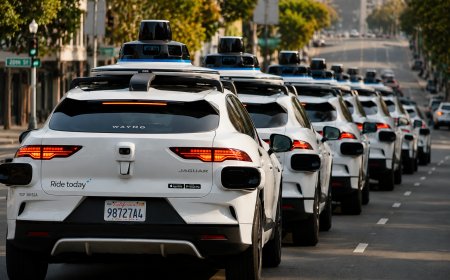
Competitors are already advancing in this space. For instance, Zoox, owned by Amazon, has received approval to test purpose-built robotaxis without traditional controls on public roads and is moving toward commercial deployment.
Musk, however, remains confident in the long-term vision. During a recent earnings call, he emphasised that autonomous driving will dominate the future of transportation, suggesting that only a small percentage of miles travelled will involve human drivers.
As Tesla phases out its long-standing flagship models and doubles down on AI-driven technologies, the company is entering a new chapter — one defined less by cars alone and more by automation, robotics, and intelligent systems.
What's Your Reaction?
 Like
0
Like
0
 Dislike
0
Dislike
0
 Love
0
Love
0
 Funny
0
Funny
0
 Angry
0
Angry
0
 Sad
0
Sad
0
 Wow
0
Wow
0