






























Ultrahuman expands US strategy with Ring Pro amid Oura’s growing dominance
Ultrahuman accelerates its US expansion with the Ring Pro, aiming to compete with Oura as the smart ring market heats up in the health-tracking space.
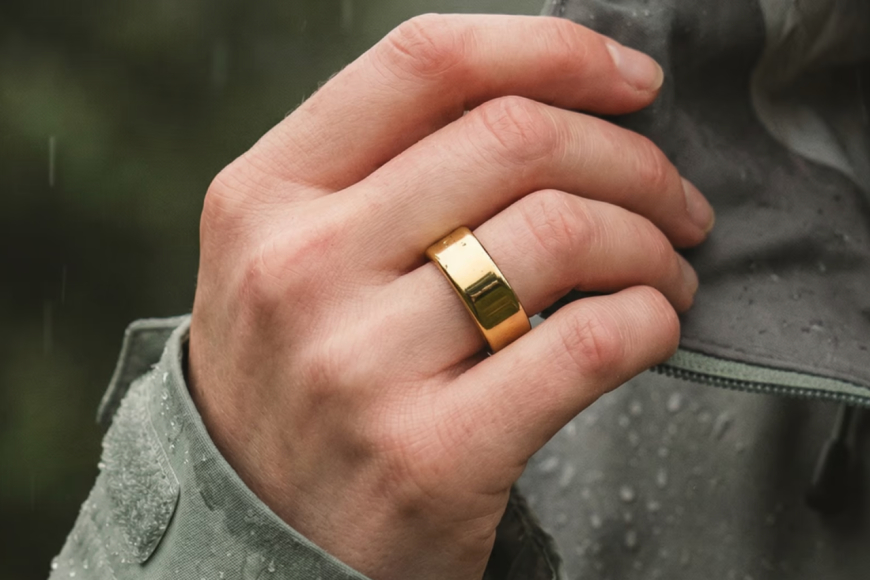
Ultrahuman, a Bengaluru-based health technology company recognised for its smart ring products, is moving to rebuild its presence in the United States after obtaining approval for its Ring Pro, setting the stage for renewed competition with Oura, which has strengthened its market position in the meantime.
The latest clearance, issued by U.S. Customs and Border Protection, arrives less than a month after the Ring Pro’s global debut in late February. It also follows an earlier decision by the U.S. International Trade Commission in October that ruled in favour of Oura, effectively limiting Ultrahuman’s ability to import its smart rings into the U.S. market. According to CEO Mohit Kumar, the restrictions resulted in up to $50 million in lost sales because the company was temporarily unable to bring its Ring Air model into the country.
The United States continues to be the most significant market for smart rings, representing approximately 2.6 million units sold in 2025 — about 60% of global shipments, which totalled 4.4 million units — and growing at 59% year over year, according to IDC data. During this period, the market has consolidated rapidly, with Oura expanding its lead as Ultrahuman’s share declined amid import limitations.
Ultrahuman’s share in the U.S. rose from 11.5% in 2024 to 24.6% by the second quarter of 2025, but dropped to low single digits by the end of the year once restrictions took effect, according to IDC research manager Jitesh Ubrani. Meanwhile, Oura’s share increased from 63.3% to 85%, capturing much of the space vacated by Ultrahuman.
At its peak, the U.S. contributed up to 50% of Ultrahuman’s revenue. That figure has since declined as the company expanded into Europe and Asia during the period when imports into the U.S. were constrained. Kumar minimised the long-term impact, describing the gap left by its absence as a “three-month advantage” for competitors and expressing confidence that the company can quickly regain its position.
Ultrahuman is preparing to accelerate its return to the U.S. market, with Kumar noting that it may take five to six months to reach full operational scale as supply chains and distribution channels are rebuilt.
The Ring Pro, featuring a redesigned unibody metal structure, played a key role in securing regulatory clearance. The device also includes enhancements such as extended battery life and improved on-device processing capabilities, which the company believes will support its renewed push in the market.
Preorders for the Ring Pro are already open in the U.S., with shipments scheduled to begin on May 15. The device starts at $399, with an introductory offer of $349 for the first 1,000 customers.
Kumar explained that the Ring Pro was already under development as part of a broader product evolution and also addressed the ongoing patent dispute. “We believe the Ring Air is a non-infringing model, and we are fighting that in federal court in the U.S.,” he said, adding that the updated design aims to resolve the issue more clearly.
India becomes a key battleground.
While Ultrahuman is regaining momentum in the United States, Oura has entered India—Ultrahuman’s home market—with the launch of its Ring 4, signalling increased competition across multiple regions.
Kumar welcomed the increased competition, emphasising that Ultrahuman remains committed to long-term growth in India. He noted that the presence of additional players could help raise awareness in what is still an emerging category within the country.
Smart ring shipments in India declined by 30.6% year over year in 2025, even as Ultrahuman maintained its lead with a 30.4% market share, followed by Gabit at 18.3%, according to IDC. Average selling prices also dropped by 8.7% to $160, reflecting heightened competition and pricing pressure.
IDC expects the smart ring market to continue expanding at a double-digit pace globally and in the United States, though growth in India may remain comparatively slower. Ubrani noted that Oura’s global brand recognition could help it gain traction in India, where several early local competitors have already reduced their presence after struggling to differentiate their products.
The United States currently accounts for about 45% of Ultrahuman’s roughly 700,000 daily active users worldwide, underscoring its importance to the company’s overall strategy. The user base in the U.S. also has a higher proportion of female users, with women making up around 73% to 74%, compared with approximately 68% globally — an increase from about 65% the previous year.
Kumar also indicated that Ultrahuman is exploring expansion beyond smart rings, revealing that the company is developing another wearable device focused on a different biomarker. At present, Ultrahuman’s products track metrics such as heart rate, heart rate variability, skin temperature, sleep stages, movement, and blood oxygen levels, as it continues to broaden its health monitoring capabilities.
What's Your Reaction?
 Like
0
Like
0
 Dislike
0
Dislike
0
 Love
0
Love
0
 Funny
0
Funny
0
 Angry
0
Angry
0
 Sad
0
Sad
0
 Wow
0
Wow
0