






























Wayve’s autonomous driving technology set for deployment in Stellantis vehicles
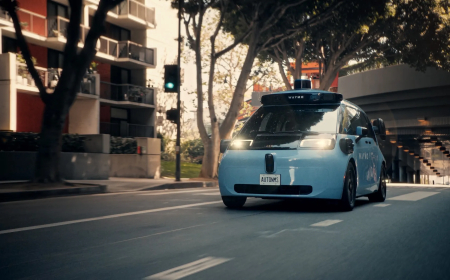
Wayve’s AI-powered self-driving technology is heading to Stellantis vehicles in the US, marking a major step forward for advanced driver assistance and autonomous driving innovation.
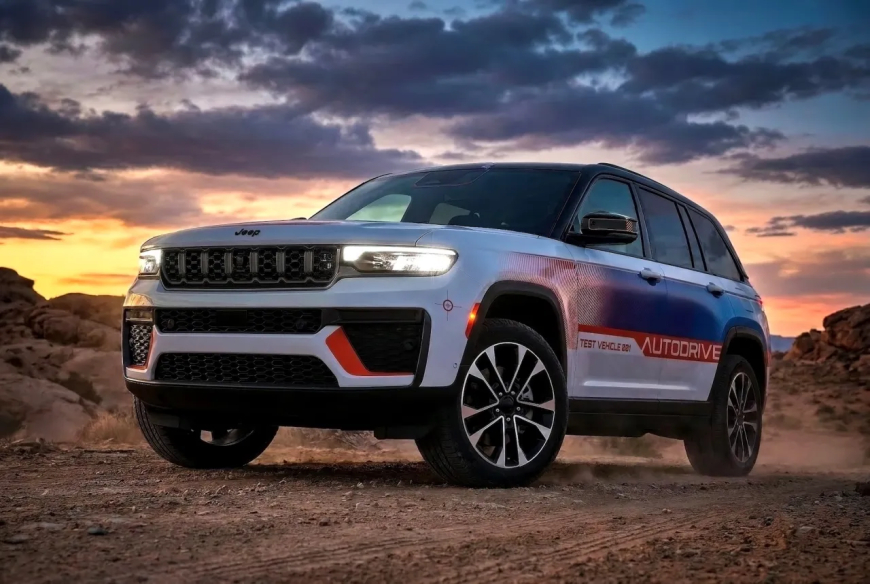
Stellantis, the automotive group behind brands such as Jeep and Ram, has selected autonomous driving startup Wayve to introduce hands-free driving capabilities across its vehicles starting in 2028.
The partnership was officially announced on Thursday during Stellantis’ investor day event held at the company’s North American headquarters in Michigan.
The agreement marks the second major automaker partnership secured by the rapidly growing U.K.-based startup. It also follows Wayve’s recent $1.2 billion Series D funding round, which attracted prominent strategic investors, including Nissan and Stellantis, as well as existing backers such as Microsoft, NVIDIA, and Uber.
Neither company disclosed the financial value of the agreement, nor did they specify which Stellantis vehicles would receive Wayve’s autonomous driving software. However, Wayve CEO Alex Kendall described the arrangement as a commercial-scale contract that will see the company provide its technology across Stellantis’ vehicle portfolio. The initial focus will be on the North American market, narrowing the potential deployment field among Stellantis’ 14 automotive brands, which also include Chrysler and Dodge.
Kendall highlighted Stellantis’ global reach and extensive range of vehicle offerings as a major advantage for Wayve. According to him, the startup’s artificial intelligence platform is designed to adapt to a wide variety of vehicle types, driving environments, and geographic regions, making it well-suited to a manufacturer with such a diverse product lineup.
“One of the amazing things about Stellantis is the global, massive scale they operate at, and the diversity of products they offer,” Kendall said while discussing the partnership. “It’s one of the reasons why it’s such a good match because our AI is so adaptable; we can generalise to the variety of products that they offer, and that means that because of the diversity of sizes, shapes of vehicles, different driving styles, different geographies, our AI is built to scale across them all.”
By the time Wayve’s technology enters production vehicles, Stellantis could have an even broader lineup. During the same investor event, the automaker announced plans to expand its North American market coverage by introducing 11 new vehicle models by 2030 as part of a broader $70 billion turnaround strategy.
According to Stellantis, seven of those future vehicles will carry price tags below $40,000, while two are expected to be priced under $30,000.
It remains unclear whether Wayve’s autonomous driving technology will be integrated into these more affordable vehicles. However, given the company’s emphasis on efficiency and scalability, the possibility remains open.
Wayve has differentiated itself from many autonomous driving competitors by developing software that is not dependent on specific sensor packages, semiconductor platforms, or expensive high-definition mapping systems. This flexibility has proven attractive to cost-conscious automakers such as Nissan and, more recently, Stellantis.
Instead, the company’s platform relies on an end-to-end neural network architecture that learns from sensor data collected directly from vehicles. The AI system uses that information to understand driving environments and make driving decisions without requiring highly detailed pre-mapped road data. Another advantage is that the software can operate on computing hardware already installed in partner vehicles, reducing the need for costly additional components.
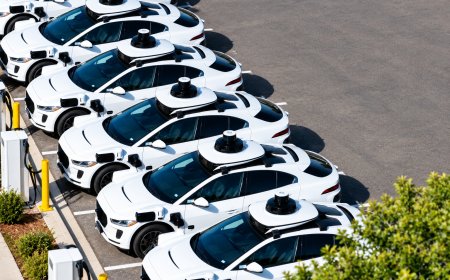
The company currently offers two primary autonomous driving products. The first is a hands-off assisted-driving system comparable to Tesla Full Self-Driving (Supervised). The second is a future driverless platform designed for applications such as robotaxis and eventually fully autonomous passenger vehicles.
For the Stellantis partnership, the automaker plans to deploy the hands-free, eyes-on assisted-driving solution. Kendall revealed that Wayve developed an initial prototype for Stellantis in only two months. Within just a few weeks, engineers reportedly managed to get the AI-powered system to operate and successfully drive a vehicle.
When asked how Wayve’s technology compares with Tesla’s approach, Kendall emphasised the flexibility of the company’s AI architecture.
“I think that what we’ve been able to show is that we’ve been able to build a version of FSD that’s built on an AI model that is truly set up to generalise,” Kendall said. “It’s capable of generalising across different compute stacks, different sensors, different vehicles, shapes, and sizes.”
This partnership is another step for Wayve as it expands into autonomous driving, and it gives Stellantis an AI-driven solution that could eventually be deployed across many vehicles and markets.
What's Your Reaction?
 Like
0
Like
0
 Dislike
0
Dislike
0
 Love
0
Love
0
 Funny
0
Funny
0
 Angry
0
Angry
0
 Sad
0
Sad
0
 Wow
0
Wow
0