




























Tesla Begins Public Road Testing of Driverless Cybercab in Austin
Tesla has started testing its production Cybercab in Austin, Texas. The fully autonomous two-seater has no steering wheel or pedals, marking a major step toward Tesla’s robotaxi future.
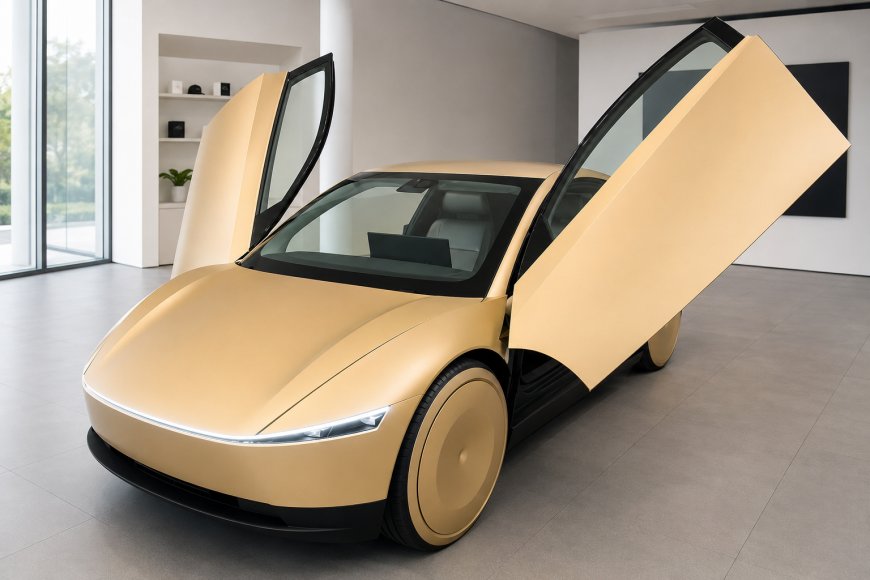
Tesla has started testing a production version of its Cybercab in Austin, Texas, featuring a two-seat design with no steering wheel or pedals. At this stage, the autonomous vehicle is being tested with a safety monitor seated in the front passenger position, according to footage shared on X, the social media platform owned by Tesla CEO Elon Musk.
The latest trial comes nearly two years after Tesla first introduced the Cybercab concept, a fully autonomous robotaxi that customers could summon through Tesla’s mobile app. Around a year ago, the company also launched a Robotaxi pilot programme in Austin using Model Y SUVs, some of which operated with onboard safety monitors during testing.
Over recent weeks, Tesla has been testing prototype Cybercab vehicles fitted with traditional steering wheels and pedals across several cities in the United States. The company has also been seen storing hundreds of Cybercab vehicles in parking facilities across some of those locations, fuelling speculation that Tesla is preparing to roll out a significantly larger robotaxi network.
One major obstacle to that plan may soon disappear. Last week, the National Highway Traffic Safety Administration (NHTSA) published a proposal to eliminate the requirement for brake pedals in vehicles “designed to be driven exclusively by automated driving systems.” Although the proposal remains open for public comment, it is widely expected to be finalised later this year.
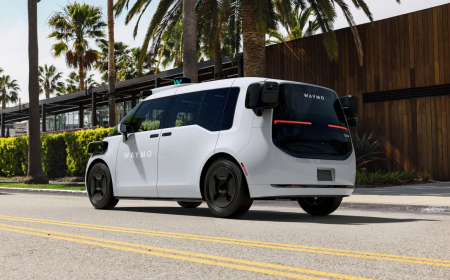
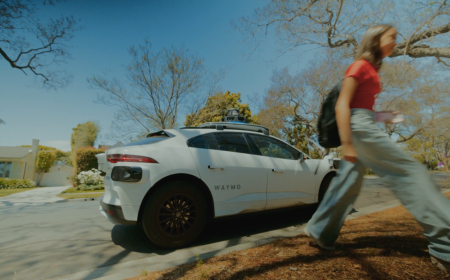
Musk and other Tesla executives have repeatedly argued that the company is well-positioned to outperform the current robotaxi leader, Waymo, for several reasons. One of Tesla’s biggest advantages, they say, is that it develops both the vehicles and the autonomous driving software in-house, allowing greater control over manufacturing costs compared with Waymo, which partners with vehicle manufacturers such as Jaguar and Zeekr. Tesla is also pursuing a camera-only approach to autonomous driving, whereas Waymo relies on a more sophisticated sensor suite that includes lidar and radar technologies.
Tesla, along with Musk, has spent years promising fully autonomous vehicles, yet the company has not deployed such technology at a large scale. Its closest step toward that goal has been the Robotaxi service operating in Austin, whose fleet size has fluctuated over the past year. Several of those vehicles have reportedly been involved in minor collisions, including at least two incidents attributed to remote operators.
Waymo has also experienced its share of challenges. As the Alphabet-owned company expanded its autonomous fleet, it encountered various edge cases and operational issues that continue to be addressed. For example, Waymo’s robotaxis currently avoid highways after difficulties navigating construction zones led to a recall that prevented their operation on highways rather than solving the underlying issue. The company has also faced recalls related to vehicles entering flooded areas during heavy rainfall and has experienced difficulties complying with traffic rules around school buses.
Tesla’s own Robotaxi programme in Austin has also experienced setbacks. However, many have received less public attention, as the service currently relies on lightly modified consumer Model Y SUVs By contrast, Waymo’s highly recognisable sensor-equipped Jaguar I-Pace SUVs and newly introduced light-blue Zeekr vans are much easier for the public to identify whenever operational issues occur.
The introduction of the gold-coloured, two-seat Cybercab into public testing is likely to draw even greater attention to Tesla’s efforts to establish a nationwide robotaxi network, making both the company’s achievements and its challenges considerably more visible as development continues.
What's Your Reaction?
 Like
0
Like
0
 Dislike
0
Dislike
0
 Love
0
Love
0
 Funny
0
Funny
0
 Angry
0
Angry
0
 Sad
0
Sad
0
 Wow
0
Wow
0