







Amazon Expands AI Chip Strategy to Compete More Directly With Nvidia
Amazon is strengthening its artificial intelligence hardware business by expanding sales of its custom AI chips, aiming to offer businesses a competitive alternative to Nvidia for AI training and inference workloads.
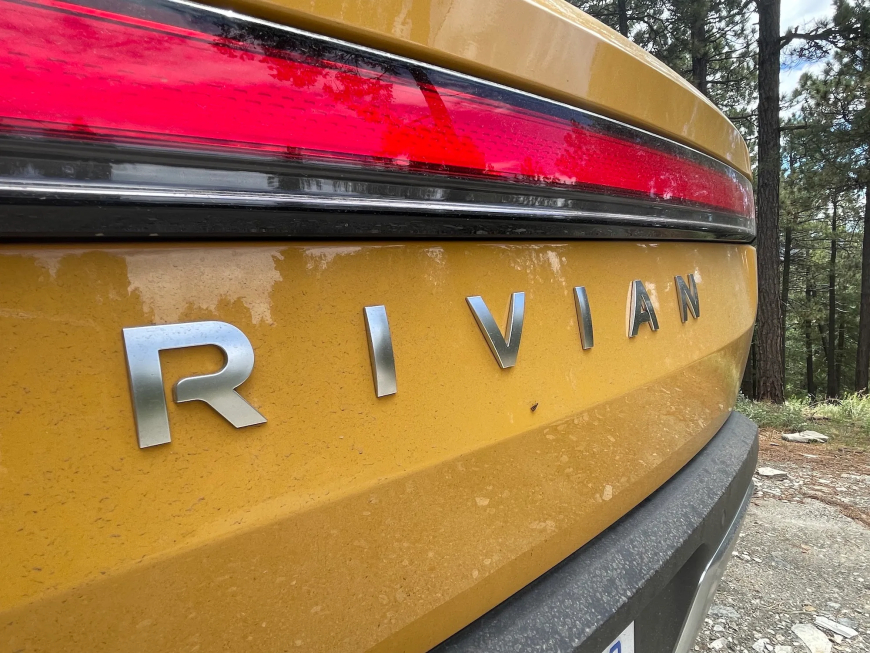
Rivian is facing a class-action lawsuit accusing the electric vehicle manufacturer of making misleading promises about the autonomous driving capabilities of its R1T pickup and R1S SUV.
The complaint, filed Wednesday in the U.S. District Court for the Central District of California, centres on Rivian’s first-generation R1T and R1S models. The lawsuit alleges the company marketed these flagship vehicles as eventually being capable of hands-free, eyes-off driving through future software updates.
This capability is commonly referred to as Level 3 autonomy under the Society of Automotive Engineers (SAE) classification system. At this level, a vehicle can control steering, acceleration, and braking without requiring the driver’s hands on the wheel or constant attention to the road under certain driving conditions, such as on highways or at lower speeds. However, drivers are still expected to remain available to take control whenever necessary.
According to the lawsuit, Rivian spent nearly five years promoting its Driver+ advanced driver-assistance system as a standard feature that would eventually provide hands-free driving across its vehicle lineup.
“No software update—regardless of how advanced—will allow the Gen 1 vehicles to achieve the capabilities Rivian advertised,” the complaint states. “Rivian knew its first-generation vehicles would never be capable of Level 3 autonomy or true hands-free driving, yet continued promoting those future capabilities to encourage consumers to purchase the vehicles.”
Rivian declined to comment on the allegations, citing the ongoing legal proceedings.
The lawsuit, brought by three named plaintiffs, accuses the automaker of fraud, negligent misrepresentation, and unjust enrichment. Attorneys from Coleman Law and Tycko & Zavareei, representing the plaintiffs, have requested that the case be heard before a jury.
This is not the first time Rivian has faced legal action. In 2024, the company agreed to pay $250 million to resolve a shareholder class-action lawsuit stemming from its controversial 2022 decision to raise prices on the R1T pickup and R1S SUV.
Rivian’s first-generation R1T and R1S models do not currently support hands-free driving. That functionality is available only on the second-generation vehicles introduced in 2024. Although the updated models retain a similar exterior appearance, Rivian significantly redesigned its internal systems, including the battery pack, suspension, electrical architecture, seating, and sensor suite.
As part of the redesign, the second-generation R1 models received the new Rivian Autonomy Platform as standard equipment. The platform includes 11 cameras, five radar sensors, and a computing system that Rivian says is ten times more powerful than the previous generation.
At launch, the updated driver-assistance package offered adaptive cruise control, which automatically maintains speed and following distance, and Highway Assist, which allows the vehicle to steer, brake, and accelerate on approved highways.
Last year, Rivian introduced its “Universal Hands-Free” driving feature through a software update for second-generation R1 vehicles. The feature enables drivers to remove their hands from the steering wheel on more than 3.5 million miles of roads across the United States and Canada, including both highways and certain surface streets with visible lane markings.
Rivian is not alone in facing legal scrutiny over self-driving claims. Tesla and CEO Elon Musk have spent years stating that the company’s vehicles would eventually become fully autonomous through its Full Self-Driving software. Several Tesla owners have since filed lawsuits alleging the company failed to deliver unsupervised autonomous driving as promised.
Tesla has also faced regulatory action over marketing claims related to Autopilot and Full Self-Driving. The California Department of Motor Vehicles accused the company of misleading consumers about the capabilities of its driver-assistance systems. Although a judge ruled in the DMV’s favour, the agency ultimately chose not to suspend Tesla’s manufacturing and sales licences, noting that the company had stopped using the term “Autopilot” in its California marketing materials.
What's Your Reaction?
 Like
0
Like
0
 Dislike
0
Dislike
0
 Love
0
Love
0
 Funny
0
Funny
0
 Angry
0
Angry
0
 Sad
0
Sad
0
 Wow
0
Wow
0