






























Andrew Ng-backed IrisGo aims to become the AI desktop assistant users rely on daily
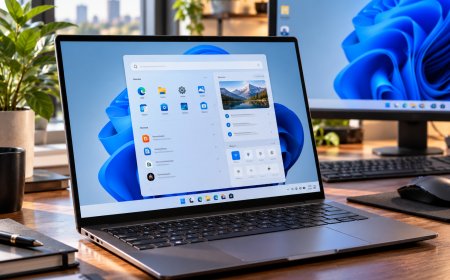
IrisGo, backed by Andrew Ng, is developing an AI-powered desktop assistant designed to streamline workflows, automate tasks, and improve productivity across applications.
Many technology leaders believe the next major phase of artificial intelligence will be defined by proactive systems — AI agents that anticipate users' needs and act before a request is even made. Rather than waiting for instructions, these systems are expected to understand patterns, predict intentions, and automate tasks with minimal human involvement.
One startup attempting to build that future is IrisGo. The company recently raised $2.8 million in seed funding led by Andrew Ng's AI Fund and is developing an AI-powered desktop companion designed to learn how people work and eventually automate many of their daily activities.
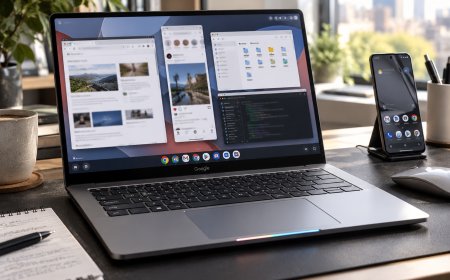
IrisGo's vision centres on creating a personal desktop assistant that observes a user's workflow, learns recurring actions, and gradually takes over repetitive responsibilities. Instead of requiring users to repeatedly instruct the software on how to perform routine tasks, the system is designed to learn processes once and then execute them automatically whenever needed.
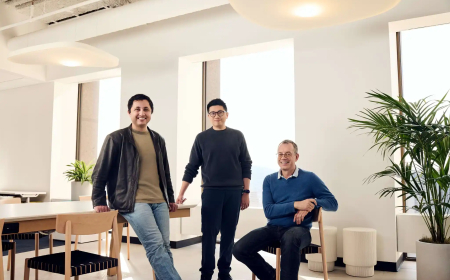
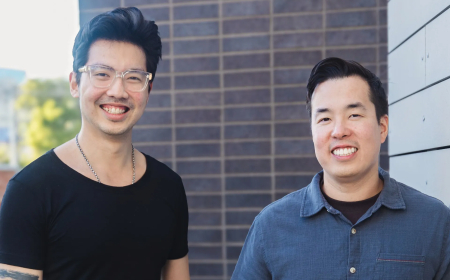
The company was co-founded by Jeffrey Lai, a former Apple engineer who helped develop the Chinese-language version of Siri, Apple's well-known digital assistant. The company's name itself contains a subtle reference to that background, as Iris is simply Siri spelt backwards.
At the heart of IrisGo's platform is a straightforward concept: teach the system how to perform a task once, and it remembers the workflow for future use. Once learned, the AI can independently repeat the process without requiring the user to provide instructions each time.
During a demonstration, Lai showed how the software could learn to complete an online coffee order. The platform recorded every step of purchasing a latte from Philz Coffee, including selecting the beverage, entering payment information, and completing the checkout.
After observing the workflow, IrisGo successfully repeated the purchase independently when instructed. The demonstration illustrated how the system can capture and replicate multi-step activities performed on a computer.
However, ordering coffee is not the primary use case the company envisions. Instead, IrisGo automates a wide range of workplace activities that take time across organisations every day.
The platform includes a built-in collection of predefined skills designed to handle common business functions. These capabilities include drafting emails, processing invoices, generating reports, summarising documents, and performing a variety of other routine workflows commonly handled by office workers.
Beyond those predefined functions, the software continuously learns from user activity. As individuals interact with applications, websites, and digital tools throughout the day, IrisGo can identify recurring patterns and potentially add those activities to its growing library of automated actions.
In addition to workflow automation, the platform includes a coding assistant for software developers. Similar in concept to tools such as OpenAI's Codex and Anthropic's Claude Code, the assistant is designed to help programmers write, review, and manage code while working within their development environments.
According to Lai, the company's primary audience consists of knowledge workers and white-collar professionals whose jobs involve significant amounts of digital administration and repetitive computer-based tasks.
"Our target audience is knowledge workers — white-collar companies. There are a lot of repetitive tasks that those workers do every day," Lai explained.
Despite major advances in artificial intelligence, Lai believes many AI-powered workplace tools still require users to spend considerable time manually interacting with systems, entering prompts, and overseeing processes. He argues that much of today's AI-assisted work remains surprisingly labour-intensive. We aim to move beyond that model by creating a more autonomous environment where people focus on strategic thinking, decision-making, and creative problem-solving. At the same time, the AI systems quietly handle administrative and repetitive responsibilities in the background.
Under this vision, human workers would devote more attention to high-level concepts, planning, and innovation. At the same time, digital agents manage many of the operational details that currently consume large portions of the workday. One of IrisGo's more distinctive features involves its emphasis on privacy and local processing. Unlike many AI applications that depend heavily on cloud infrastructure, IrisGo is designed to perform a significant portion of its processing directly on the user's device.
This approach can provide stronger privacy protections because sensitive information does not always need to leave the user's computer for processing. By keeping more data local, the company hopes to appeal to individuals and organisations concerned about security, confidentiality, and data ownership.
Lai notes that IrisGo still uses a hybrid architecture rather than operating entirely offline. More complex tasks that require additional computing resources may still be processed through cloud services when necessary.
However, the company says cloud-based processing occurs only when explicitly approved by the user and is protected through end-to-end encryption to safeguard information during transmission and execution.
As a young startup in the rapidly expanding AI sector, IrisGo has also built credibility by partnering with respected organisations and industry figures.
Support from Andrew Ng has been particularly significant. Ng is widely recognised as one of the most influential figures in modern artificial intelligence and was a co-founder of Google Brain. This pioneering research group advanced deep learning technologies.
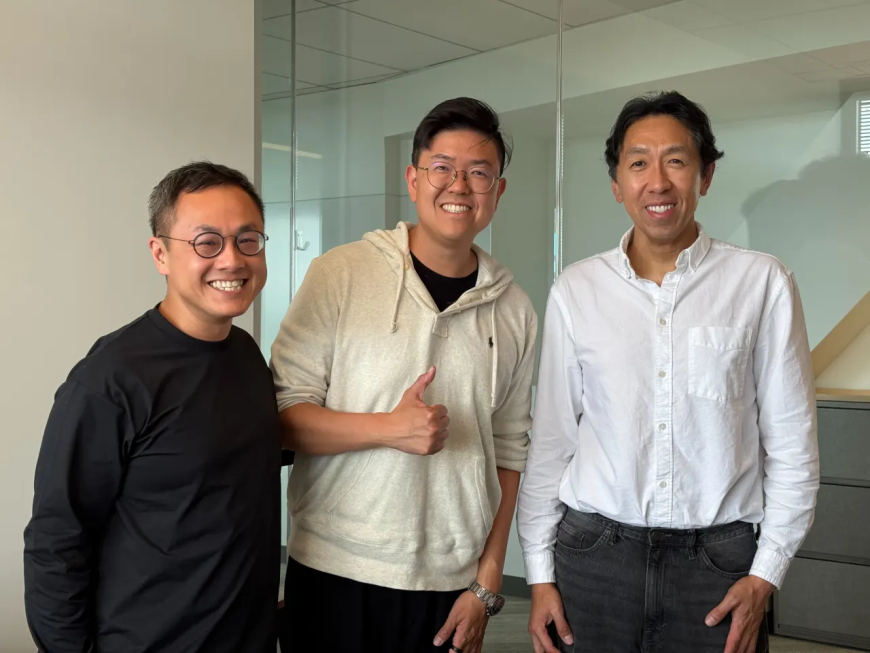
Lai connected with Ng through a shared academic background. Both attended Carnegie Mellon University, providing an opportunity for an introduction. Following that connection, Lai and his co-founder demonstrated the IrisGo platform directly to Ng. The presentation ultimately led the AI Fund to decide to lead the company's seed financing round.
In addition to AI Fund, IrisGo has also received support from NVIDIA and Google, further strengthening the startup's standing within the technology ecosystem. The company has already released beta versions of its software for both macOS and Windows users, allowing early adopters to begin testing the platform's capabilities and providing feedback as development continues.
Beyond direct software distribution, IrisGo is pursuing partnerships with hardware manufacturers as part of its growth strategy. The goal is to have the application preinstalled on new computers, making it immediately available to users without requiring separate downloads or configuration.
The company recently secured one such agreement with Acer. Lai says IrisGo hopes to establish similar partnerships with additional laptop manufacturers in the future, expanding the software's reach and increasing adoption among mainstream consumers and business users.
As interest in proactive AI agents continues to grow across the technology industry, IrisGo is positioning itself as a platform that can move beyond simple chat-based interactions and become an intelligent desktop companion. By learning user behaviour, automating repetitive workflows, supporting software development, and prioritising privacy through local processing, the company hopes to create an AI assistant that becomes an integral part of everyday work rather than just another tool waiting for instructions.
What's Your Reaction?
 Like
0
Like
0
 Dislike
0
Dislike
0
 Love
0
Love
0
 Funny
0
Funny
0
 Angry
0
Angry
0
 Sad
0
Sad
0
 Wow
0
Wow
0