



































Bending Spoons Founder Explains Why Reducing Luck Drives Long-Term Success After $18.4B IPO
Bending Spoons founder Luca Ferrari says lasting business success comes from reducing reliance on luck after the company’s $18.4 billion IPO. Learn how the software giant built its growth strategy through disciplined execution and acquisitions.

AOL is back on the public market—at least indirectly. Its parent company, Bending Spoons, the 13-year-old Italian software firm known for acquiring well-known but struggling internet brands, officially debuted on the Nasdaq today. The stock opened with a valuation exceeding $18 billion before climbing roughly 40% by the close of trading.
Based in Milan, Bending Spoons has spent the past decade building a business by purchasing established digital platforms such as Meetup, Eventbrite, Vimeo, WeTransfer, and several others. While the strategy resembles elements of the private equity playbook, the company says its goal is not to buy, restructure, and sell businesses. Instead, it aims to improve these products through technology and retain them for the long term.
“We want to place ourselves as an operator that takes beloved brands and makes them much better,” said Matteo Danieli, the company’s co-founder and chief product officer.
The methods Bending Spoons has used to achieve that goal have often drawn criticism, particularly for workforce reductions following acquisitions. At the same time, the company says it has consistently increased revenue across its portfolio, with artificial intelligence playing an increasingly important role. “In the past year and a half, we’ve witnessed an incredible acceleration in the pace at which we were able to ship new features and create value for users,” Danieli said.
That message is likely to resonate with investors, who currently show far greater enthusiasm for AI-focused businesses than for mature SaaS companies. However, Bending Spoons argues that its AI strategy is rooted in years of experience rather than recent market trends. Its F-1 filing—the equivalent of an S-1 registration statement for foreign companies—includes a section titled “AI before it was cool,” highlighting the company’s long-standing involvement with artificial intelligence.
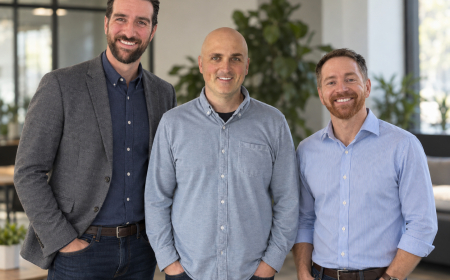
Before launching Bending Spoons, the founders created a startup called Evertale, which developed a product capable of automatically generating a personal digital diary by using technology that would now be described as AI but was then referred to as machine learning. Although Evertale ultimately failed, Danieli said it provided valuable lessons for the founding team, which includes Luca Ferrari, Francesco Patarnello, Luca Querella, and Danieli himself.
“It sparked a reflection around the fact that you don’t always find perfect correlation between how talented entrepreneurs are and the success they have, especially from zero to one. Luck is a very big component of that equation. So we developed an obsession for finding a strategy that would, as much as possible, reduce the role that luck plays in growth and success,” Danieli explained.
That philosophy is also reflected throughout the company’s F-1 filing, with statements such as“Luck plays a big role in finding product-market fit,” alongside another principle that says luck is irrelevant when pursuing operational excellence.
The company says this mindset extends into areas such as pricing strategy. “We try to leverage the sophisticated data tracking, analytics infrastructure and experimentation toolkit that we’ve developed,” Danieli said.
According to him, that approach has sometimes resulted in additional features being made available free of charge to encourage word-of-mouth growth. On other occasions, however, it has led to subscription price increases that generated criticism from long-time customers. Despite those complaints, Danieli said customer retention has remained “remarkably stable.”
Among all of Bending Spoons’ acquisitions, Evernote attracted perhaps the closest scrutiny. “Evernote may be the first product we acquired that was genuinely loved by users, so we had very strict judges,” Danieli said. He described it as the acquisition he is most proud of, pointing in particular to the AI-focused Version 11 update. According to Danieli, many subscribers ultimately embraced the changes, including Evernote co-founder Phil Libin.
Support for Bending Spoons has grown steadily over the years. Before its IPO, the company had already reached an $11 billion valuation during a private funding round. It attracted investment from prominent venture capital firms as well as well-known figures from the technology and entertainment industries. In its early years, however, convincing investors proved much more difficult. Danieli recalled receiving numerous reactions along the lines of “you’re crazy.”
That mindset is reflected in the company’s slogan: “Impossible. Maybe.”
Another lesson carried over from the founders’ experience at Evertale was the importance of recruiting exceptional people. Danieli said co-founder Luca Ferrari dedicated much of the company’s first two to three years to building its culture and refining its hiring process. “We believe we now excel at spotting talent, especially when young and when they don’t have a great track record yet,” he said.
The company’s financial figures appear to support that confidence. According to its SEC filing, “in part helped by progress in AI, revenue per full-time equivalent Spooner increased from $1.12 million in 2023 to $2.57 million in 2025, and was $0.97 million in Q1 2026.”
That success also helps explain why Bending Spoons made the unusual decision to bring its entire workforce to New York for its stock market debut. “It’s one more tool for us to access the liquidity that we need to fuel our acquisitive strategy, but we also thought that for one day it would be the right thing to take it all in and enjoy the moment with all our colleagues,” Danieli said.
The celebration, however, is expected to be short-lived. Once the listing festivities conclude, Bending Spoons plans to continue acquiring software companies while taking advantage of the lower valuations affecting many SaaS businesses—an environment Danieli says his own company has largely avoided. “From a buyer’s perspective and as a company that grows through acquisitions, that’s actually a great opportunity and moment to deploy capital,” he said.
What's Your Reaction?
 Like
0
Like
0
 Dislike
0
Dislike
0
 Love
0
Love
0
 Funny
0
Funny
0
 Angry
0
Angry
0
 Sad
0
Sad
0
 Wow
0
Wow
0