




























Bye-bye corporate conglomerates. Hello personal conglomerates.
Traditional corporate conglomerates are fading as powerful founders build personal business empires spanning tech, media, energy, and space. Here’s why personal conglomerates are reshaping capitalism.
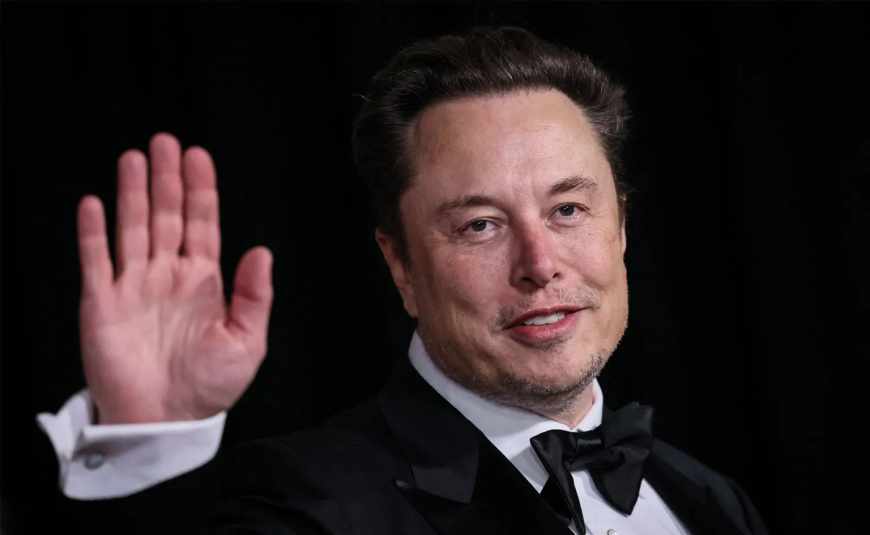
Aerospace, energy, healthcare, mobility, media. Three decades ago, that lineup would have pointed straight to General Electric. In 2026, it points to Elon Musk. He runs Tesla, xAI, and SpaceX, which itself owns the satellite internet provider Starlink. He controls the social platform X. He's working on neural implants and underground tunnel systems. He has reportedly committed at least $10 million to fertility research.
Musk is also consolidating several of these ventures, effectively forming a single, interconnected conglomerate.
He's often compared to Henry Ford. But a closer historical parallel may be John D. Rockefeller or Jack Welch — the executive who transformed GE from a struggling industrial firm into a vast, sprawling conglomerate.
The Welch comparison may prove especially fitting if Musk follows through on persistent reports that he's exploring a merger involving some combination of SpaceX, xAI, and Tesla.
Of course, the parallels aren't perfect. GE was a corporation; Musk is an individual. Still, that line blurs when one person's net worth exceeds the market capitalisation of roughly 97% of the companies in the S&P 500. Musk's personal fortune is nearing $800 billion — close to what GE was worth at its peak, adjusted for inflation.
At its height, GE was almost synonymous with its longtime chairman, Jack Welch.
Musk, too, commands intense attention and admiration from many of today's executives, much like Welch did in his era. Business leaders now talk about being "hardcore" and emphasise "first-principles thinking," echoing the way CEOs in the 1980s chased Welch's playbook of "accretive" acquisitions and sweeping layoffs.
Today, Musk's business portfolio includes Tesla, SpaceX, xAI (and its integration with X), Neuralink, and The Boring Company — enterprises with distinct missions. There are some overlaps: Tesla vehicles travel through tunnels built by The Boring Company; xAI's Grok is available in Tesla cars; and Tesla has supplied Megapack batteries to xAI's data centres. But aside from Musk's ownership or leadership, these companies operated independently until recently, when Tesla and SpaceX each invested in xAI.
The everything company
Not so long ago, GE was the most valuable company on the planet. Its portfolio spanned light bulbs, jet engines, household appliances, medical imaging equipment like X-ray and ultrasound machines, steam turbines, locomotives, and television programming, among many other businesses.
When Welch took over as GE's leader in 1981, he inherited a company that had lost about 20% of its market value over the previous decade. His first significant move was an aggressive cost-cutting effort, including massive layoffs. He eliminated more than 100,000 jobs in his early years, earning the nickname "Neutron Jack" — a reference to the neutron bomb, which wipes out people but leaves buildings standing.
With costs reduced, Welch embarked on an acquisition spree. Many of the companies GE bought were industrial manufacturers aligned with its existing operations. Others, like NBC, acquired in 1986, were not. That deal, in particular, expanded GE's reach and influence well beyond manufacturing. The resemblance to Musk's media ambitions is evident.
During Welch's tenure, he was widely celebrated as a management icon. Competing CEOs sought to replicate his leadership style. GE's internal management training became as prestigious as that of elite business schools, and many of Welch's protégés later rose to lead Fortune 500 companies. Through relentless restructuring and dealmaking, Welch turned GE into a financial powerhouse. The company's valuation grew from roughly $14 billion when he took charge to more than $400 billion by the time he stepped down in 2001. Dividends to shareholders climbed steadily.
But the model had cracks. In Welch's final year, GE's share price fell. By the time the 2008 financial crisis arrived, it became evident that the conglomerate structure had concealed serious weaknesses.
GE Capital's profits had been used to mask underperformance in other divisions. When it emerged that GE Capital was deeply exposed to risky financial products, the company's vulnerabilities became impossible to ignore. The unit ultimately required a $139 billion federal bailout, and GE's reputation never fully recovered. Five years ago, the company announced plans to split itself into three separate businesses, formally ending its era as a conglomerate.
Beyond Welch, Musk may resemble an even earlier archetype, predating GE's definition of the modern conglomerate. "I think it's much more of a robber baron story than a GE conglomerate story," David Yoffie, a professor at Harvard Business School, told TechCrunch.
Gilded Age CEO
During the Gilded Age, Yoffie noted, figures like J.P. Morgan and John D. Rockefeller wielded enormous power by controlling vast enterprises that built entirely new industries, such as railroads and oil. They exerted influence directly or through board seats and could largely rearrange corporate structures as they saw fit.
"I think that's much more the type of approach that Elon is taking," Yoffie said. "It's much more about ego, market power, and trying to be the kingmaker."
The dominance of those industrial titans rested on two main pillars: immense personal wealth and minimal regulation.
Wealth inequality has reached similar extremes today. Rockefeller's fortune once amounted to one or two percentage points of U.S. GDP—roughly comparable to Musk's share today.
"What's different, of course, is that there was no regulatory framework whatsoever during the period of the Gilded Age," Yoffie said. "Today, we obviously live in a much more heavily regulated world, but we're also at the moment living in a world in which regulation is getting pulled back and therefore is less and less of a constraint."
The ultimate fate of Musk's empire will hinge on both his strategic choices — whether he merges his companies or keeps them separate — and how society reacts to the concentration of power he wields. Like his Gilded Age predecessors, Musk has actively tried to influence the political landscape, reportedly spending more than $300 million on elections in the U.S. and abroad.
If Musk does merge one or more of his companies, he would create a full-fledged conglomerate — a structure that has largely fallen out of favour. In the U.S., conglomerates once appealed to investors because they offered built-in risk diversification, allowing a single company to balance counter-cyclical businesses, Yoffie explained. Weakness in one division could be offset by strength in another, smoothing revenue and profits.
"Most of that strategy and approach was debunked in subsequent decades," he said. Investors have generally performed better by backing more focused companies that operate more efficiently, making it harder to separate and accurately value individual businesses. "It's well known in finance that there's a conglomerate discount," Yoffie added.
Beyond merger speculation, the most significant limiting factor for Musk's businesses may ultimately be regulation, which is itself shaped by public sentiment. The industrial titans of the late 19th and early 20th centuries eventually saw their power curtailed by the Progressive Era. Reforms: Musk has shown a remarkable ability to capture the public imagination with futuristic visions and to turn them into operating companies. The open question is how long he can continue doing so.
What's Your Reaction?
 Like
0
Like
0
 Dislike
0
Dislike
0
 Love
0
Love
0
 Funny
0
Funny
0
 Angry
0
Angry
0
 Sad
0
Sad
0
 Wow
0
Wow
0