
































Remote Payroll Platform Boosts Revenue Per Employee by 50% While Maintaining Team Size
Remote increased revenue per employee by 50% without expanding its workforce, highlighting how automation, operational efficiency, and scalable payroll solutions are driving growth in the global HR technology sector.

Remote, the seven-year-old payroll and global employment platform based in Amsterdam, says it has surpassed $300 million in annual recurring revenue and achieved positive cash flow. But according to the company, one of its most notable achievements has been a 50% increase in revenue per employee after integrating AI throughout the organisation.
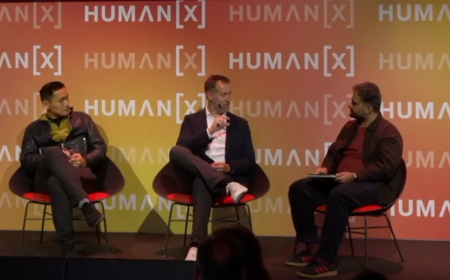
CEO Job van der Voort says AI has become part of his daily workflow and is now deeply embedded across the company. Employees in multiple departments use AI tools to automate tasks, create applications, and improve operational efficiency. The result, Remote says, is stronger revenue growth without a corresponding increase in headcount.
The company has encouraged employees to build tools through Remote Labs, an internal marketplace developed using its own technology. The platform allows staff across different functions to launch applications and automate processes. Many of the capabilities first tested internally are now being adapted for customer use as well.
Building on that experience, Remote recently introduced Remote Build, a service designed to help customers create custom AI-powered workflows within their organisations. The initiative involves engineers working directly with clients to implement automation and AI solutions similar to those already used within Remote.
Van der Voort believes the company is ahead of many organisations in AI adoption. He also says the benefits are beginning to compound. According to the company, its core payroll business has grown by more than 300% year over year, a performance it attributes in part to increased AI utilisation. Remote also says it now serves tens of thousands of businesses worldwide that rely on its platform for payroll and employment compliance.
Payroll management remains a complex process involving regulations and administrative requirements across multiple countries. While automation has always been central to Remote’s business model, the company says AI has made it easier to streamline those processes and reduce repetitive work.
Despite its name, Remote says it is not limited to companies with distributed workforces. Van der Voort emphasises that the platform serves businesses of all types, including those whose employees primarily work from traditional offices.
While many competitors have expanded into broad human resources software suites, Remote has continued focusing on payroll and compliance. The company believes the rise of AI validates its decision to concentrate on solving complex infrastructure challenges rather than pursuing an all-in-one approach.
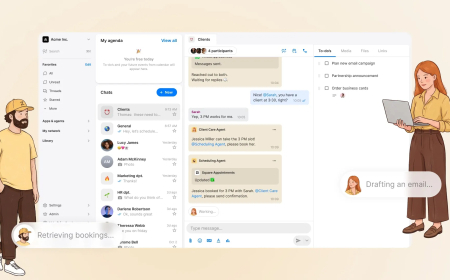
Remote has also launched Remote MCP, an interface built on the Model Context Protocol standard that enables AI agents and external software platforms to access payroll and compliance information securely. This enables platforms such as BambooHR and Workday to use Remote as an underlying service layer while maintaining their own user experiences.
Van der Voort believes the future will increasingly involve AI agents interacting directly with business software. He envisions a scenario where users can manage payroll, compliance, and employment tasks through AI assistants without needing to access traditional software interfaces.
The company has already experimented with this concept through OpenClaw, an open-source AI assistant internally known as Jim. The assistant can interact with Remote’s systems while operating within strict security controls that prevent unauthorised or destructive actions.
Remote has also embraced AI-assisted software development. According to the company, engineering output has increased significantly over the past year, with code contributions rising by more than 60%. Van der Voort says AI now plays a role in generating the majority of the company’s code, accounting for more than 85% of recent software development activity.
Although AI has reduced the need for additional hiring in some areas, Remote says it has not eliminated jobs as a result. Instead, the company has focused on evaluating whether future growth requires more employees or greater investment in AI training and adoption among existing staff.
The company’s spending on AI tools continues to increase, but van der Voort says the productivity improvements and efficiency gains more than justify the investment. Remote’s experience reflects a broader trend among technology companies seeking to scale revenue, expand capabilities, and improve operational performance without significantly increasing workforce size.
For remote work, AI has become more than just a productivity tool. The company sees it as a fundamental shift in how software is built, how organisations operate, and how businesses will grow in the years ahead. Van der Voort says the technology has not only improved efficiency across the company but has also made innovation and experimentation a far more exciting part of running the business.
What's Your Reaction?
 Like
0
Like
0
 Dislike
0
Dislike
0
 Love
0
Love
0
 Funny
0
Funny
0
 Angry
0
Angry
0
 Sad
0
Sad
0
 Wow
0
Wow
0