


































Robinhood Launches Fund Giving Retail Investors Access to Y Combinator Startups
Robinhood is launching a publicly traded venture fund that lets retail investors gain exposure to startups founded by Y Combinator entrepreneurs.
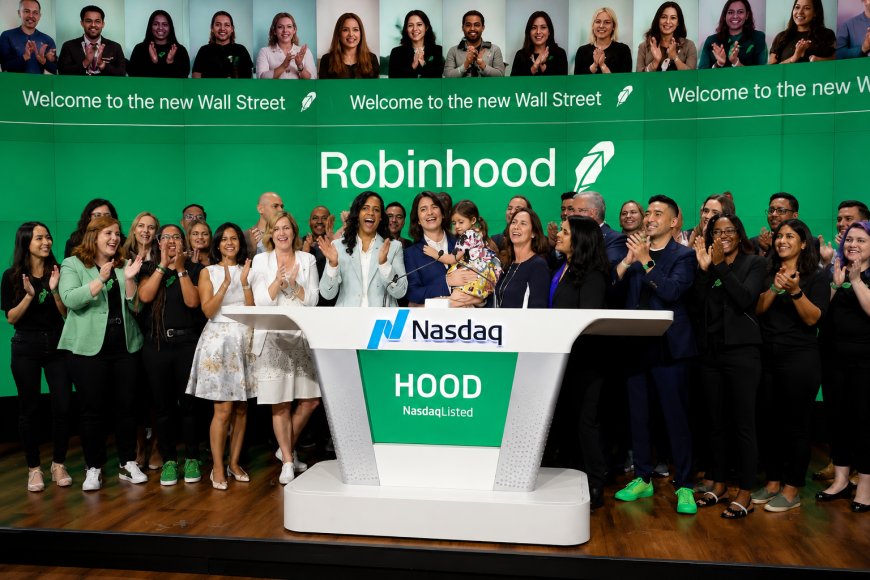
Robinhood is expanding its push into alternative investments with a new publicly traded fund designed to give retail investors exposure to startups founded by current and former Y Combinator entrepreneurs.
Robinhood Venture Fund II (RVII) is scheduled to begin trading on August 13 with an opening price of $25 per share. According to Reuters, the fund aims to raise as much as $200 million, which will be used to purchase shares in eligible Y Combinator-backed startups that agree to participate.
Although individual investors will be able to buy and sell shares of the fund on the public market, they will not directly own equity in the underlying startups. Instead, they will own shares of the fund itself, whose performance will depend on the value of its private startup investments.
Designed to broaden access to startup investing
The new fund gives retail investors a way to gain exposure to venture-backed startups that are typically available only to institutional investors and venture capital firms. However, future returns remain uncertain because investors will not receive direct ownership in portfolio companies, and it is unclear how much they could ultimately benefit if those startups achieve successful public listings or acquisitions.
Robinhood Venture Fund II will follow a fee structure similar to traditional venture capital funds. The fund will pay another Robinhood-owned entity a 2% management fee, along with additional fees that together exceed 4%. It will also pay a 20% carried interest on profits generated by successful investments, mirroring the compensation model commonly used throughout the venture capital industry.
Unlike traditional venture capital funds
Unlike most venture capital funds, which generally have lifespans of around 10 years before distributing remaining proceeds to investors, Robinhood Venture Fund II does not appear to specify a fixed end date. The company also does not guarantee regular cash distributions, meaning investors may rely primarily on appreciation in the fund’s publicly traded share price for potential returns.
Robinhood’s first venture fund offers an example of both the opportunity and risk involved. Robinhood Venture Fund I, which invested in private companies including Databricks, Mercor and OpenAI, continues to trade above its initial public offering price of $21 per share. However, after reaching more than $56 in May, its shares have since fallen back to around $28.
Different from earlier tokenised offerings
The launch also follows criticism of Robinhood’s earlier attempts to link financial products with high-profile private technology companies. In 2025, the company offered crypto assets described as tokenised shares of OpenAI and SpaceX. OpenAI publicly distanced itself from those products, stating that it had no involvement and that the tokens did not represent ownership in the company.
Robinhood Venture Fund II differs from that earlier offering because it is structured to purchase actual shares in participating private companies rather than creating blockchain-based tokens tied to their names. The fund therefore operates more like a special purpose investment vehicle, providing public market investors with indirect exposure to a portfolio of Y Combinator-backed startups while remaining fully tradable on the stock market.
What's Your Reaction?
 Like
0
Like
0
 Dislike
0
Dislike
0
 Love
0
Love
0
 Funny
0
Funny
0
 Angry
0
Angry
0
 Sad
0
Sad
0
 Wow
0
Wow
0