





































London’s King’s Cross Emerges as One of the World’s Leading AI Hubs
London’s King’s Cross has transformed into a major global AI hub, attracting companies including OpenAI, Anthropic, Meta, Wayve and Synthesia as demand for talent and office space surges.

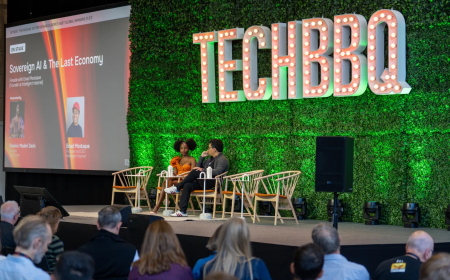
London’s King’s Cross has transformed from one of the city’s most notorious districts into one of the world’s leading artificial intelligence hubs, attracting startups, major AI labs, investors and increasingly scarce technology talent.
Office space in the neighbourhood has become so desirable that securing it can reportedly help venture capital firms win investment deals. The rush reflects how important proximity to other AI companies and researchers has become for startups trying to compete in the rapidly expanding sector.
The transformation began gaining momentum in 2016, when DeepMind, which Google had already acquired, moved into the area. AI startups soon followed, drawn by the opportunity to locate themselves near one of the industry’s most prominent research labs.
Today, King’s Cross is part of London’s so-called “Knowledge Quarter” and hosts a growing concentration of technology companies and research organisations. OpenAI, Meta, Isomorphic Labs, Cusp AI, Wayne and Recursive have established a presence in the area, while Synthesia and Anthropic are located nearby. University College London is also within walking distance.
The neighbourhood’s transportation links add to its appeal. Founders can reach Cambridge by train in roughly 45 minutes, providing access to another major source of scientific and technical talent, while direct Eurostar connections make Paris accessible in around two hours.
From troubled district to AI centre
The current technology boom represents a dramatic change for King’s Cross. In the 1980s and 1990s, the area was associated with drugs, prostitution and crime.
Hussein Kanji, an investor at Hoxton Ventures, recalled the neighbourhood’s history, including widespread heroin and crack use and gangs operating in the streets. Major redevelopment beginning in the early 2000s helped reshape the district into the commercial, residential and technology-centred it is today.
AI companies are now actively relocating there to be closer to the growing ecosystem. BioCorteX moved from Holborn to the Jellicoe building in King’s Cross around 18 months ago. Co-founder Nik Sharma said the company wanted to be near the activity as more large technology companies established operations in London.
Jeff Bezos’ AI company Prometheus has also reportedly considered taking space in the Jellicoe building.
AI startups drive London office demand
London is home to approximately 3,600 AI startups. According to Dealroom, those companies have raised about $12.1 billion of the $14.8 billion raised across the city since late July.
The growth is reshaping London’s commercial property market. Since the beginning of June, AI-related companies have leased more than 1 million square feet of office space across London, according to real estate firm Knight Frank.
Prime rents in King’s Cross have increased 18% over the past three years, while the vacancy rate for conventional office space has fallen to just 0.9%.
Those figures include major leases of at least 10,000 square feet, such as the type of space being taken by companies including OpenAI. Smaller and shorter-term deals can command even higher prices as demand continues to exceed available supply.
AI sovereignty becomes a bigger concern
The rapid expansion has also intensified debate over whether the U.K. and Europe need greater control over their own AI infrastructure.
Phoenix Court co-founder Robin Klein said recent restrictions on access to advanced AI systems served as a reminder that Europe cannot simply depend on AI capabilities provided by foreign companies.
Phoenix Court itself is based around King’s Cross and has several portfolio companies nearby, including Olix, Early Health and CoMind.
Klein said the larger challenge is whether the U.K. can develop the compute infrastructure, energy resources and capital required to create lasting AI independence rather than simply becoming a location for European offices of major U.S. AI labs.
Founders increasingly choose London
Several prominent founders say London has become increasingly competitive with other global centres.
Latent Labs founder Simon Kohl operates offices in both King’s Cross and San Francisco, but said his London operation is currently expanding faster. He described London as increasingly becoming a default location for founders building serious AI companies rather than an ecosystem trying to catch Silicon Valley.
Autonomous driving startup Wayve is another prominent example. The company was founded in 2017 and moved into King’s Cross the following year while searching for a location that could combine office space with a garage for its autonomous vehicles.
Wayve co-founder Alex Kendall said building a frontier AI company from London once seemed like an unusual decision but now feels increasingly obvious. He said the ecosystem has matured to the point where companies can raise substantial capital, recruit world-class AI talent and remain globally competitive while staying in London.
Other companies expanding around the district include AI agent developer Sierra and AI video company Synthesia. Synthesia moved into a larger office building in the area about a year ago as its workforce expanded.
Synthesia chief of staff and head of people Laura Gonzalez Florez said the location offers convenient access to transportation and investors. About two-thirds of the company’s engineers work remotely, allowing Synthesia to recruit across Europe while maintaining London as an important base.
London’s AI boom fuels talent competition
The concentration of AI companies is also intensifying competition for workers. U.K. AI job postings have risen sharply, according to PwC data, while major AI labs are offering compensation packages significantly above typical London technology salaries.
When Anthropic expanded in London, for example, it advertised a machine learning research engineer position with a salary range of £260,000 to £630,000. The average London salary for a comparable position is around £102,000. That competition is putting pressure on startups to raise larger funding rounds so they can compete with well-funded international AI companies for researchers and engineers.
Zain Ali, founder of King’s Cross-based AI legal company Centuro, said the long-term test will be whether globally important AI businesses continue to be founded, financed and scaled from the U.K. while attracting international talent.
If that continues, King’s Cross could become more than a successful technology district. Its growing concentration of AI companies, researchers, investors and infrastructure could make the neighbourhood an increasingly important strategic asset for the U.K.’s ambitions in artificial intelligence.
What's Your Reaction?
 Like
0
Like
0
 Dislike
0
Dislike
0
 Love
0
Love
0
 Funny
0
Funny
0
 Angry
0
Angry
0
 Sad
0
Sad
0
 Wow
0
Wow
0