

































Thrive’s Joshua Kushner Warns Against AI Investment Euphoria
Thrive Capital’s Joshua Kushner cautions against AI investment euphoria as the firm defends its concentrated strategy and reports $60 billion in assets under management.
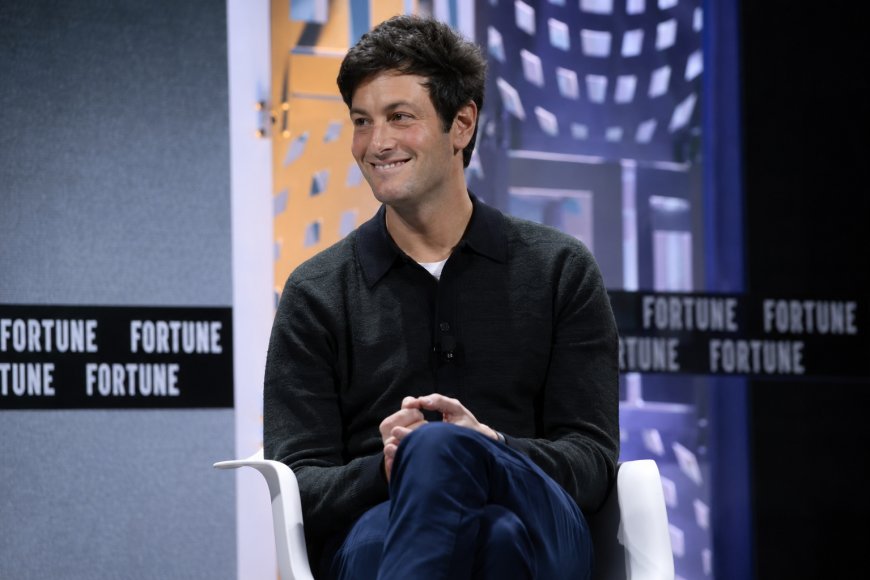
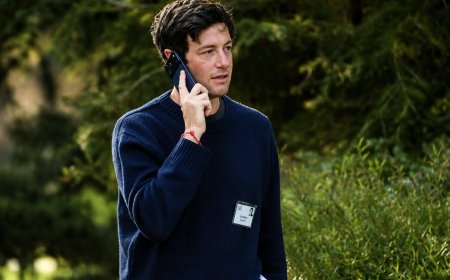
Thrive Capital founder Joshua Kushner is warning venture investors not to let enthusiasm for artificial intelligence weaken their investment discipline, even as his own firm commits heavily to some of the industry’s biggest AI companies.
In Thrive’s first formal letter to investors, obtained by Bloomberg, Kushner described AI as an enormous opportunity but cautioned that excitement alone should not determine where capital goes. He argued that parts of Silicon Valley have become overly focused on incremental technological shifts rather than on the technology’s longer-term direction.
The message stands out because Thrive is hardly sitting on the sidelines of the AI boom. The New York-based investment firm has built major positions in companies including OpenAI and has also backed businesses such as Anduril, SpaceX, Stripe, Ramp and Wiz.
Thrive is defending a concentrated investment strategy
Kushner’s argument centres on how Thrive deploys its capital. Rather than spreading investments broadly in hopes that a handful of extraordinary winners will offset many losses, the firm concentrates much of its money in a relatively small group of companies in which it has developed strong conviction.
About 90% of Thrive’s 2022 early-stage fund was invested in its 15 largest positions, according to data obtained by Bloomberg. Kushner said Thrive was built around the idea that an investment firm could operate across different stages, sectors and geographies while remaining highly concentrated in a limited number of people and ideas.
That approach differs from a long-established venture capital philosophy centred on finding outliers. Under that model, investors accept that many startups will fail, because a small number of exceptional investments can generate returns that more than compensate for the losses.
Kushner is not arguing that AI lacks transformative potential. Instead, his warning is about valuations and investment standards during periods when enthusiasm makes capital easier to deploy.
His message is that rapid growth does not automatically make a company exceptional, and even an exceptional company may not be an attractive investment at every valuation.
OpenAI relationship showsThrive’ss broader AI thesis.
Thrive’s strategy extends beyond investing in startups that could replace established businesses. Kushner also believes AI can transform existing industries from within, a thesis the firm is pursuing through Thrive Holdings.
Thrive Holdings acquires businesses in traditional service industries and works to integrate AI into their operations. OpenAI took an ownership stake in the company in December 2025, reversing the usual relationship between the two organisations, as Thrive has long been an OpenAI investor.
As part of that partnership, OpenAI agreed to embed research, product and engineering teams within Thrive Holdings companies. The initial focus included accounting and IT services, where repetitive and workflow-heavy operations can be redesigned around AI tools.
Thrive Holdings has since assembled a portfolio spanning more than 70 businesses. Kushner said its accounting operations are using AI agents to prepare tax returns 30% faster while achieving 98% accuracy, while agents at an IT services operation are independently handling about half of help-desk tickets.
The strategy reflects Kushner’s view that AI disruption will not come exclusively from startups attacking incumbent businesses. Established companies may also be transformed internally as AI becomes embedded in their workflows.
Thrive’s biggest bets have produced substantial gains
Kushner’s warning about investment discipline comes as Thrive reports strong performance from some of its most concentrated funds.
A $516 million early-stage fund raised in 2022, which made early investments in OpenAI, SpaceX and Anduril, was worth more than $3.7 billion at the end of June, according to Bloomberg. Roughly 90% of the fund was concentrated in its 15 largest positions.
Kushner disclosed that Thrive manages about $60 billion in assets and reported a gross IRR of 41% across its funds, with a net IRR of 33%. Thrive provided those figures in the investor letter.
The firm has also generated more than $1 billion in liquidity for investors during the past 12 months. Kushner said there could be opportunities for billions of dollars in additional liquidity in coming quarters, although he did not identify which portfolio holdings could produce those returns.
Thrive’s concentrated model carries its own risks because performance depends heavily on a relatively small group of companies. So far, however, early positions in some of the most valuable technology businesses have given the firm significant exposure to the growth of AI, defence technology, space and financial technology.
AI enthusiasm puts investment discipline to the test
Kushner’s comments come as venture firms continue to pour substantial capital into AI infrastructure, foundation model companies, and applications. The competition to back potential category leaders has pushed investors toward increasingly large rounds and high private-market valuations.
Thrive is participating in that market while arguing that participation does not require abandoning traditional investment discipline. Kushner’s distinction is between believing deeply in AI as a technological shift and assuming every company benefiting from that shift deserves capital at any price.
That position also separates Thrive’s philosophy from the idea that venture investing must depend primarily on making large numbers of bets in search of rare outliers. Kushner instead argues that investors should be prepared to concentrate both capital and attention when they believe they have identified exceptional companies.
For Thrive, that approach has already produced large paper gains and meaningful cash returns. The challenge will be maintaining the same selectivity as enthusiasm and competition around AI continue to increase.
What's Your Reaction?
 Like
0
Like
0
 Dislike
0
Dislike
0
 Love
0
Love
0
 Funny
0
Funny
0
 Angry
0
Angry
0
 Sad
0
Sad
0
 Wow
0
Wow
0