





































Travis Kalanick Says Only 1% of VCs Are Actually Helpful
Travis Kalanick says only 1% of venture capitalists are truly helpful as he reflects on Uber, Benchmark and lessons shaping his robotics company, Atoms.
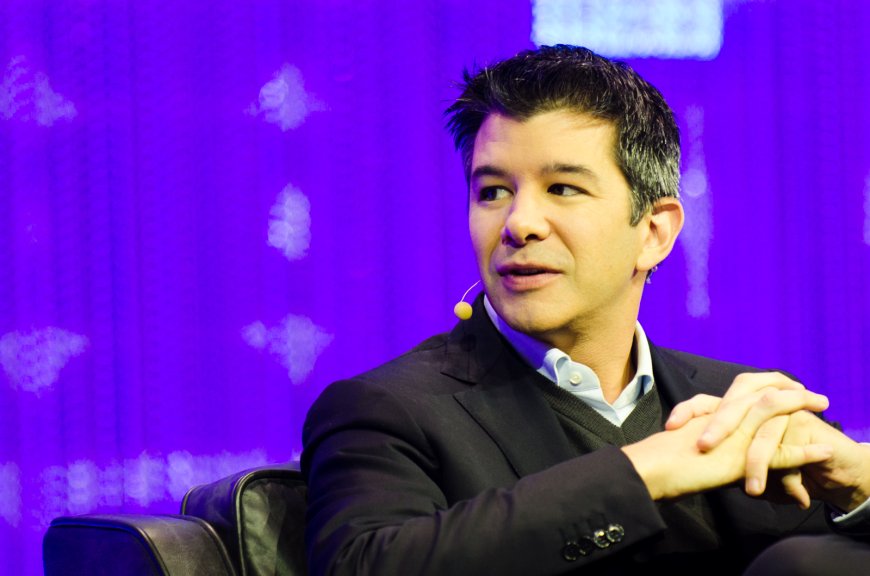
Travis Kalanick built Uber with billions of dollars in venture capital, lost control of the company during a bruising boardroom fight and is now raising another massive round for his latest startup. None of that has made him particularly enthusiastic about venture capitalists.
Speaking on David Senra’s podcast, Kalanick estimated that only about 10% of venture capitalists meet what he considers a basic standard of doing no harm to a company. An even smaller group, roughly 1% by his estimate, are actually helpful to founders.
Kalanick’s scepticism comes despite a career closely tied to venture funding. During his tenure at Uber, the company raised roughly $15 billion, an extraordinary amount at the time as it expanded aggressively around the world. Uber’s unusually large fundraising strategy became one of the defining features of its rapid growth.
Kalanick still carries lessons from the Uber board fight.
His relationship with investors changed dramatically in 2017, when a boardroom confrontation involving Benchmark partner Bill Gurley contributed to Kalanick stepping down as Uber’s CEO. The struggle became one of Silicon Valley’s most prominent examples of tension between a powerful founder and the investors backing his company. Later accounts of Kalanick’s removal detailed the internal pressure that ultimately led to his departure.
Kalanick made clear on the podcast that the episode still influences his views. He said he advises founders against taking money from Benchmark. The criticism comes even as Benchmark remains a major venture firm and raised another $2 billion across two funds in June.
He argued that the basic structure of venture capital makes meaningful investor involvement difficult. Kalanick compared a founder to a chess master who plays the game every day, while an investor is more like a chess enthusiast who occasionally checks in.
That gap, he said, can become more complicated when investors expect their advice to influence the company. VCs hold board seats, control capital, and can exercise significant authority, but they are rarely as immersed in the details of the business as the people operating it full-time.
He still wants founders competing for VC money
Despite those criticisms, Kalanick is not suggesting that entrepreneurs reject venture funding. His advice is closer to the opposite: create enough investor demand that firms compete to finance the company.
He recommends developing a pitch that provides investors with enough detail to understand the opportunity without pretending that every aspect of the company’s future can already be predicted. That balance is particularly important in AI, he argued, because the technology and market are changing too quickly for founders to map out every step years in advance credibly.
Too little detail can make a company difficult to evaluate, while an excessively rigid plan can make a founder appear unrealistic about how quickly conditions may change.
Kalanick is applying those lessons while building Atoms, his new robotics company. The startup recently raised $1.7 billion in a round led by Andreessen Horowitz, with Ben Horowitz joining its board. The financing puts Kalanick back in the familiar position of running a heavily funded technology company while managing relationships with some of Silicon Valley’s most influential investors.
Kalanick also examined his own role at Uber
His reflections were not limited to blaming venture capitalists. Kalanick warned founders about developing what he called a “victim mentality” when relationships with investors or employees break down.
Instead, he said founders should examine what they contributed to the conflict. Looking back on Uber, Kalanick acknowledged that he did not manage every strained relationship effectively and said his leadership style had become part of the problem.
Kalanick said he continues to stand behind the decisions he made and does not believe he broke rules. But he now sees a distinction between whether an action was technically defensible and whether it created damaging perceptions around a company operating under intense scrutiny.
He described his mistake as running too close to the line too often. That approach, he said, became harder to defend as Uber grew into a company valued at roughly $70 billion and faced much greater public and regulatory attention.
His management style began before Uber
Kalanick connected that intensity to Red Swoosh, the peer-to-peer technology company he founded before Uber. He described the early years as a financial struggle in which he went without a salary, repeatedly ran short of money and focused heavily on survival before eventually selling the business.
That experience taught him to operate with extreme precision and urgency. Kalanick believes those qualities were important to Uber’s growth. Still, he also acknowledged that he continued to manage as though the company could run out of money the following week, even after it had become one of the world’s most valuable startups.
The same management style that helped create Uber’s aggressive culture therefore became more difficult to sustain as the company grew, employees multiplied, and scrutiny increased.
Other founders are revisiting their own VC conflicts
Kalanick’s comments have also helped reopen a broader discussion among technology founders about their relationships with venture firms. Zynga founder Mark Pincus used the podcast discussion to revisit his history with Accel, which had invested in his earlier company, Support.com, during the dot-com era.
Pincus accused the firm of aggressively trying to replace him as CEO because of concerns about his age and lack of experience running a public company. Other founders subsequently shared their own accounts of investors attempting to remove or replace company leaders.
Andreessen Horowitz, which is leading the new Atoms financing, amplified Kalanick’s podcast appearance on social media. The firm also has its own history with Benchmark. Marc Andreessen and Bill Gurley have publicly disagreed over Silicon Valley investing strategies, and Andreessen once jokingly compared Gurley to Newman, Jerry Seinfeld’s nemesis on the television show “Seinfeld.”
Kalanick’s argument ultimately stops short of saying founders can succeed without investors. Instead, his experience has left him advocating for a more guarded relationship in which entrepreneurs understand how much power they are giving away, compete for the best financing terms and remain accountable for their own decisions when those relationships go wrong.
What's Your Reaction?
 Like
0
Like
0
 Dislike
0
Dislike
0
 Love
0
Love
0
 Funny
0
Funny
0
 Angry
0
Angry
0
 Sad
0
Sad
0
 Wow
0
Wow
0