


































Status AI secures $17M to transform social media into interactive entertainment
Status AI has raised $17 million to reimagine social media as an interactive entertainment platform that blends AI-driven experiences, digital personas, and user engagement.

For Fai Nur, spending countless hours online was a defining part of growing up. Like many members of her generation, she described herself as a “chronically online teenager,” deeply immersed in music fandoms, television series, movies, and the communities built around them. She regularly discussed her favourite fictional worlds and characters online and became fascinated with the ways digital platforms allowed fans to connect around shared interests.
When ChatGPT arrived in 2022, Nur immediately recognised what she believed was a major opportunity. Rather than simply consuming content or talking about favourite stories and characters, she saw artificial intelligence creating the possibility for users to participate in those worlds actively.
According to Nur, AI could finally make it possible for anyone to simulate and interact with virtually any character at scale. Instead of merely watching stories unfold or discussing fictional universes with other fans, users could potentially become part of those experiences themselves. “The role-play and immersion that fans had always wanted was suddenly possible at scale,” she said.
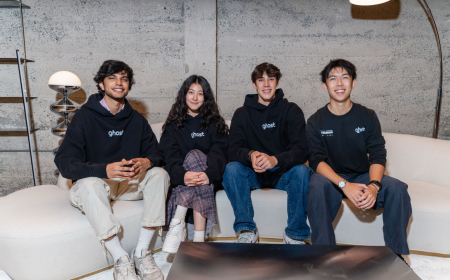
Inspired by that vision, Nur joined forces with her friend Amit Bhatnagar, who had spent years building experiences within Minecraft, as well as Pritesh Kadiwala. Together, the trio founded Status AI, a gamified social media platform that allows users to step into virtually any character role across a wide range of fictional and social universes. The company officially emerged from stealth mode last year.
The platform is designed around identity creation and interactive storytelling. Nur explained that users begin by building a custom persona, after which they are placed into an AI-powered social world specifically structured around that identity.
“A user can become a celebrity with millions of followers, step inside their favourite show or book, run for president, or go viral on the internet,” Nur said.
The experiences available on Status AI are largely generated through user participation. Rather than relying solely on pre-written storylines, the platform allows settings, narratives, and characters to emerge from player interactions. According to Nur, users start their journey by selecting a character who becomes their first follower, and then gradually expand their audience and influence as the story develops.
The company offers both multiplayer and single-player experiences. Users who want to engage with friends can participate in shared environments, while those seeking solo adventures can explore worlds independently. Nur noted that the concept has already begun attracting attention from entertainment companies and content creators interested in developing communities around their intellectual property.
“We’re fielding interest from studios and streamers,” she said. “They see Status as a way to develop audiences before bringing fans together in theatres or arenas.”
On Tuesday, the startup announced it had secured $17 million in seed and Series A financing. The funding round included participation from investors such as Abstract, General Catalyst, Union Square Ventures, Y Combinator, and LightShed Partners.
The investment reflects growing confidence among venture capital firms that the future of consumer social platforms may move beyond traditional content feeds toward more immersive forms of digital entertainment. Investors increasingly view interactive experiences and intellectual property-driven communities as a potentially significant evolution of social networking.
Nur believes traditional forms of passive entertainment are gradually losing relevance. In her view, users are becoming less interested in simply watching content or scrolling through updates about other people’s lives and more interested in participating directly in experiences themselves.
She also suggested that the earliest generation of AI-powered social applications, many of which focused primarily on chatbot interactions, such as those popularised by platforms like Character.AI and chai, may already be showing signs of maturity as consumer expectations continue to evolve.
“Status is built on the premise that the next generation doesn’t want to watch stories,” she said. “They want to engage with the stories and even live inside them.”
The concept has also drawn attention from media industry executives who are exploring new methods of audience engagement. Rich Greenfield, a partner at LightShed and an investor in Status, said media companies are increasingly seeking opportunities that enable consumers to become active participants in the fictional worlds and characters they create.
According to Greenfield, many entertainment businesses are actively exploring ways to extend audience engagement beyond traditional viewing experiences into more interactive formats, where fans can spend meaningful time in story-driven environments. Nur explained that Status is attempting to rethink what consumer applications might look like in an era increasingly shaped by artificial intelligence. “We’re using AI to create immersive, fun experiences that are brand-safe, interactive, and endlessly dynamic,” she said.
The company also aligns with a broader trend emerging across social media. Rather than building massive general-purpose networks designed to appeal to everyone, many newer platforms are focusing on highly engaged fandoms and niche communities. These communities often centre around shared interests, entertainment properties, creators, or specific cultural identities.
Consumer technology investor Natalie Dillon of Maveron has previously argued that the most successful social platforms of the future will combine intimacy, usefulness, and creativity within a single ecosystem. According to that perspective, future social experiences may resemble multiplayer environments more than traditional social networks, allowing users to build, purchase, create, and establish a sense of belonging simultaneously.
The newly raised capital will primarily be directed toward expanding and scaling the platform’s infrastructure and user experience. Nur said the company has already generated substantial engagement metrics, which she believes validate the growing demand for immersive social entertainment experiences.
According to the company, users have created more than 13 million unique worlds on the platform to date. In addition, more than 5 million character profiles have been generated, suggesting significant early adoption and participation within the platform’s community.
Nur describes the category Status is building as immersive social entertainment, a blend of gaming, storytelling, artificial intelligence, and social networking designed to offer experiences that extend beyond traditional content consumption.
She also highlighted the demographic profile of the platform’s earliest adopters, noting that young women have represented a significant portion of the user base from the beginning. “Our early users were predominantly young women,” Nur said. “And this has consistently been the audience that decides which platforms become culture.” With fresh funding, growing user engagement, and increasing interest from investors and media companies, Status AI is building interactive online experiences at the intersection of AI, social, gaming, and digital entertainment.
What's Your Reaction?
 Like
0
Like
0
 Dislike
0
Dislike
0
 Love
0
Love
0
 Funny
0
Funny
0
 Angry
0
Angry
0
 Sad
0
Sad
0
 Wow
0
Wow
0