


































Valve Steam Frame Review: A Powerful VR Headset That Might Have Arrived Too Late
Valve Steam Frame review covering its lightweight design, PC gaming integration, VR hardware improvements, Steam ecosystem advantages, and the challenges facing VR adoption in a market dominated by standalone headsets.
Virtual reality has been promising the future of computing for more than a decade. Every few years, a new headset arrives claiming to finally make VR more accessible, more comfortable, and more mainstream. Valve’s Steam Frame enters this race with a familiar advantage: the company already understands PC gaming better than almost anyone. But building a great headset is only one part of the challenge. The harder question is whether people are still waiting for VR’s future.
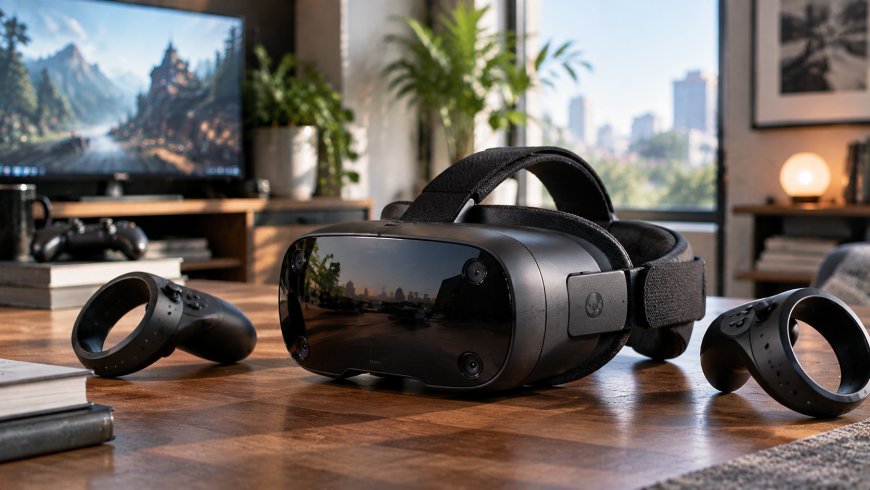
The Steam Frame is Valve’s attempt to create a more flexible VR experience that combines the freedom of a standalone headset with the power of PC gaming. It is lightweight, technically impressive, and built around the massive Steam ecosystem. However, after years of rapid progress from competitors like Meta, Valve’s latest headset also feels like a product fighting against the timing of the market itself.
A Different Approach to VR
Valve has never approached VR like a traditional hardware company. Unlike companies focused on selling millions of consumer devices, Valve has always treated VR as an extension of PC gaming. Its previous hardware, the Valve Index, became popular with enthusiasts for its excellent tracking, high-quality controllers, and impressive gaming experience.
The Steam Frame follows a similar philosophy but takes a different direction. Instead of requiring users to connect directly to a powerful gaming PC, it focuses on being a standalone device while still maintaining access to PC-based VR content.
This approach makes sense because VR’s biggest weakness has always been convenience. Many people want to play VR games but don’t want complicated setups, expensive gaming computers, external sensors, or cables running across their room.
Valve is clearly trying to remove those barriers.
Lightweight Design Makes a Big Difference
One of the most important improvements in modern VR headsets is not just better graphics or faster processors. It is comfort.
A headset can have impressive technology, but if wearing it for an hour feels uncomfortable, most people will stop using it.
The Steam Frame focuses heavily on reducing weight and improving long-term usability. Compared with earlier high-end VR devices, it feels closer to something people could realistically use for longer gaming sessions.
The design shows that Valve understands one of VR’s biggest challenges: people don’t want a device that feels like wearing a heavy computer on their face.
Comfort alone, however, is not enough to make VR mainstream. The headset still needs strong software, affordable pricing, and a reason for everyday users to choose it over existing alternatives.
Hardware That Shows Valve’s Experience
The Steam Frame brings together several technologies that show Valve’s understanding of VR hardware.
The headset offers modern displays, improved tracking, wireless capabilities, and performance designed for both standalone VR and PC streaming. These features make it a more complete package compared with some earlier VR attempts.
Valve also benefits from years of experience developing SteamVR. The company already has a large library of VR games and a community of dedicated users who understand the platform.
For VR enthusiasts, this is a major advantage. A new company entering the market has to convince people to try VR. Valve already has millions of PC gamers who are familiar with its ecosystem.
The Biggest Problem: The VR Market Has Changed
The Steam Deck’s biggest challenge isn’t the hardware. It is the timing.
When Valve launched the Index, the VR market looked very different. High-end PC VR was considered the future, and enthusiasts were willing to invest in expensive equipment for the best possible experience.
Today, the market has shifted.
Standalone VR has become the dominant direction, largely because companies like Meta have pushed affordable headsets that require no gaming PC. Products such as the Quest lineup have introduced VR to a much wider audience by focusing on simplicity and accessibility.
This puts Valve in a difficult position.
The Steam Deck may be technically impressive, but convincing regular consumers to choose another VR headset is much harder when cheaper alternatives already exist.
Steam Library Is a Huge Advantage, But Also a Challenge
Valve’s biggest strength is also its biggest problem
The Steam ecosystem is enormous, but PC gamers are already used to traditional gaming. Many players have invested thousands of hours and hundreds of dollars into normal PC games.
VR still requires a different type of gaming experience.
The headset needs exclusive experiences that make people think, “I need this device.” Without enough unique content, even excellent hardware can struggle.
This is something the entire VR industry still faces. Better technology helps, but software is what creates lasting demand.
How It Compares With Meta Quest
The Steam Deck and Meta Quest devices represent two different philosophies.
Meta has focused on making VR accessible to the largest possible audience. Affordable pricing, social features, and simple setup have been central to its strategy.
Valve is approaching VR from the perspective of serious gamers who want higher-quality experiences and deeper integration with PC gaming.
Neither approach solves every problem.
Meta has the advantage of a larger consumer audience, while Valve has a strong gaming community and years of VR development experience.
The question is whether Valve can attract new users, not just existing VR enthusiasts.
Is the Steam Frame Worth Buying?
For dedicated PC gamers who already understand VR and want a device connected to Valve’s ecosystem, the Steam Frame could be an exciting option.
It offers the kind of thoughtful engineering that Valve is known for. The company clearly understands what experienced VR users want, from comfort improvements to better PC integration.
However, for someone buying their first VR headset, the decision is more complicated.
The VR market is now crowded, and consumers have more choices than ever. A headset needs to offer not only good hardware but also a strong reason to become part of someone’s daily life.
Final Thoughts
The Valve Steam Frame represents something interesting: a company with deep VR knowledge pushing the technology forward in its own way.
It is not a failed experiment. In many ways, it shows that Valve still understands what makes a great VR experience. The hardware direction is promising, and the connection to Steam remains a powerful advantage.
But the VR industry has moved quickly. The biggest battle is no longer just creating better headsets. It is convincing people that they need one.
The Steam Frame proves that Valve still has ambitious ideas for virtual reality. Whether those ideas can bring a new wave of users into VR remains the challenge.
What's Your Reaction?
 Like
0
Like
0
 Dislike
0
Dislike
0
 Love
0
Love
0
 Funny
0
Funny
0
 Angry
0
Angry
0
 Sad
0
Sad
0
 Wow
0
Wow
0