































Venice AI Reaches Unicorn Status After Securing $65M Series A Funding
Venice AI has achieved unicorn status after raising $65 million in Series A funding. Discover how the privacy-first AI platform reached a $1 billion valuation with rapid user growth and strong investor backing.
Growing concerns about AI chatbots—including their potential effects on mental health, misinformation, harassment, and personal safety—have prompted developers to introduce stricter safeguards that limit how AI systems respond and what they are permitted to generate.
Even so, those concerns have done little to reduce public interest in AI. People continue to embrace the technology for its capabilities. At the same time, many increasingly seek platforms that offer greater freedom and stronger privacy protections rather than relying on large technology companies to decide what they can and cannot access.
That demand has fuelled rapid growth for Venice AI, a platform that provides users with access to more than 200 AI models while placing a strong emphasis on privacy. Just two years after its launch, the company says its website attracts more than 850,000 unique visitors and now serves over 3 million active users, processing an average of 1.7 million API requests every day.
Venice AI operates a combination of open-source and proprietary models. The company hosts uncensored open-source models within its own data centres while routing requests for closed-source systems, including models from OpenAI and Anthropic, through external providers. User prompts are encrypted and decrypted on the client side before being transmitted through an external proxy, ensuring that no customer data is stored on Venice’s own infrastructure. Certain models also support end-to-end encryption, though it is available only through the company’s paid subscription plans.
According to CEO Erik Voorhees, the business has already reached profitability and is generating an annualised run-rate exceeding $70 million.
That momentum has attracted significant investor interest. On Wednesday, Venice AI announced it had secured a $65 million Series A funding round at a $1 billion valuation, marking the company’s first external investment. The financing was led by crypto-focused venture capital firm Dragonfly, with participation from Coinbase Ventures, North Island Ventures, and several other investors.
The relationship between Venice AI’s privacy-first approach, its founder’s background, and its new group of cryptocurrency investors is hardly surprising. Voorhees has long been recognised as a prominent advocate and previously founded several cryptocurrency businesses, including the bitcoin gambling platform Satoshi Dice and digital asset exchange ShapeShift. Throughout his career, he has consistently argued in favour of protecting individual privacy online.
His views on privacy have occasionally generated controversy. Following a Wall Street Journal investigation that alleged ShapeShift had processed millions of dollars in suspicious funds during a period when the platform did not require customer identification, Voorhees reportedly responded by saying, “I don’t think people should have their identity recorded to catch an occasional criminal.”
He expressed a similar philosophy when discussing Venice AI’s approach to offering unrestricted access to AI models despite growing concerns surrounding AI-related psychological harm and misuse. According to Voorhees, the company considers its platform to be a neutral technology rather than a gatekeeper.
“This is the same principle that you have in Bitcoin, where Bitcoin, as a neutral protocol, works the same way for all people,” he explained. “I think it’s actually quite dangerous from a safety perspective for the world to enter this next phase and have everyone be constantly watched. To me, that is actually much more dangerous than any particular person asking a controversial question or something that might be considered bad.”
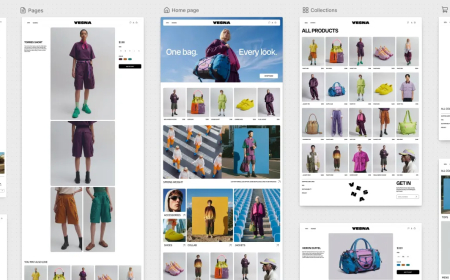
Venice AI also places considerable emphasis on user choice. Customers can freely select from a wide range of AI models capable of generating text, images, audio, and video, each offering different performance characteristics, creative quality, and varying levels of content moderation. The platform also highlights several AI-powered characters that users can customise while promoting what it describes as an uncensored AI experience.
“We’re optimising for actually respecting users as adults, which is, I think, rare these days,” Voorhees said.
He also noted that Venice modifies the system prompts of certain open-source models to encourage more open responses, while intentionally avoiding adding further restrictions or limitations.
The platform also incorporates two cryptocurrency tokens into its broader ecosystem. Venice introduced its VVV token earlier this year to attract new users. It later added a second token, DIEM, during August of last year. Users who purchase and stake VVV can mint DIEM, generating approximately one dollar in daily AI usage credits that can be spent across the Venice platform. Despite those crypto integrations, Voorhees said only around 8% of users currently pay for services using cryptocurrency.
According to the founder, both the performance of the company’s crypto ecosystem and rapid product improvements have contributed to Venice AI’s expansion. However, he believes the biggest factor has been closing the feature gap with ChatGPT.
“When we launched, we were very far away from what ChatGPT could do, but people would use us because it was private. And today, we’re very close to what ChatGPT can do… so as we’ve closed that gap, it’s become an increasingly compelling alternative,” he said.
Looking ahead, Venice AI plans to use the newly raised capital to purchase its own GPUs and expand its data centre infrastructure. By owning more of its computing resources instead of leasing GPU capacity, the company expects to improve gross margins while supporting continued long-term growth.
What's Your Reaction?
 Like
0
Like
0
 Dislike
0
Dislike
0
 Love
0
Love
0
 Funny
0
Funny
0
 Angry
0
Angry
0
 Sad
0
Sad
0
 Wow
0
Wow
0