


































Vint Cerf Backs New Initiative to Create Identity Standards for AI Agents
Vint Cerf has joined Innovation Labs to help develop open identity standards for AI agents, aiming to improve trust, accountability and interoperability online.
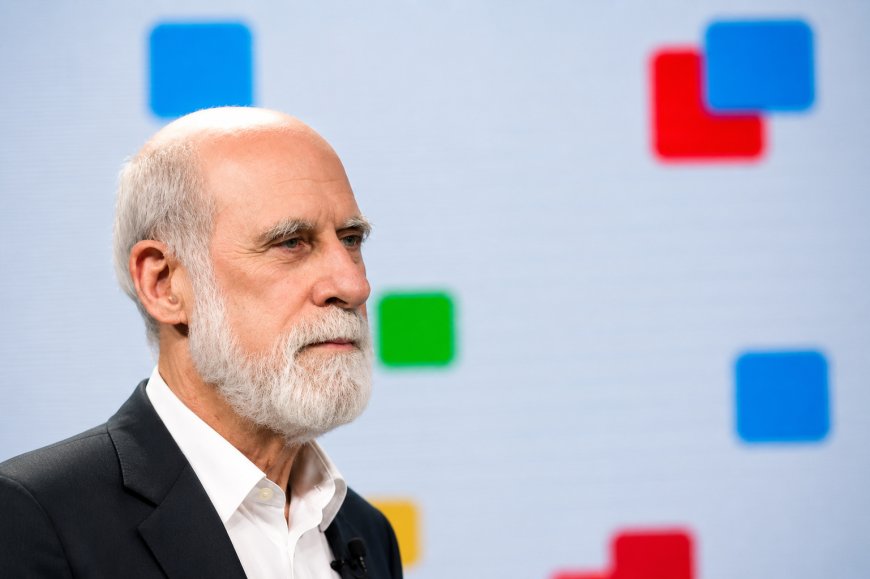
Internet pioneer Vint Cerf has joined Innovation Labs as an adviser to help develop an open framework for identifying artificial intelligence agents on the internet, supporting efforts to establish common standards as autonomous AI systems become more widely used across online services.
Cerf, who helped develop the foundational protocols that power the modern internet, recently concluded a 20-year career at Google. He is now working with Innovation Labs, a subsidiary of Identity Digital, which is developing technology designed to give AI agents verifiable digital identities and improve accountability as they interact across the open web.
The initiative addresses a growing challenge facing the AI industry. While many AI agents currently operate within proprietary platforms, businesses increasingly envision systems that can independently communicate, exchange information and complete tasks across the broader internet. A common method for identifying and verifying those agents has yet to emerge.
Innovation Labs has proposed a framework known as DNSid, which links each AI agent to an existing internet domain through cryptographic proofs that record and verify its registration over time. According to interim Chief Executive Officer Allie Kline, the organisation is already testing the proposed standard with several unnamed hyperscale technology companies and identity providers.
Cerf said the effort focuses on establishing trusted identities for AI agents while enabling determination of who is responsible for an agent’s actions and what authority it has been granted. He noted that these questions become increasingly important as autonomous systems begin to perform more complex tasks on behalf of individuals and organisations.
He also acknowledged that defining standards for AI agents presents new challenges because they are significantly more active than traditional internet domains. Questions remain about what commitments organisations make when registering an AI agent and how trust should be established as those agents interact with people and other software systems.
Multiple organisations are exploring different technical approaches to AI agent identity, making interoperability a key issue. Cerf said widespread adoption will ultimately depend on whether competing technologies can work together effectively, drawing a comparison to the early adoption of TCP/IP, which became the common language of the internet through broad user demand.
Innovation Labs said one distinguishing feature of its proposal is that it does not seek to own registration data or build a broader AI business around the standard. Kline said that approach could encourage wider adoption by reducing concerns that a single large technology company would control both the identity framework and the underlying data.
Although Cerf stopped short of saying an internet dominated by AI agents is inevitable, he said people are likely to adopt technologies that simplify everyday tasks whenever practical. As autonomous AI systems continue to evolve, efforts such as DNSid aim to provide the trusted digital identity framework needed to support secure and accountable interactions across the open internet.
What's Your Reaction?
 Like
0
Like
0
 Dislike
0
Dislike
0
 Love
0
Love
0
 Funny
0
Funny
0
 Angry
0
Angry
0
 Sad
0
Sad
0
 Wow
0
Wow
0