





































India’s Airbound Raises $37M to Scale Rocket-Like Delivery Drones
Airbound raised $37 million to scale autonomous delivery drones in India, targeting healthcare and logistics while pursuing cost parity with trucking.
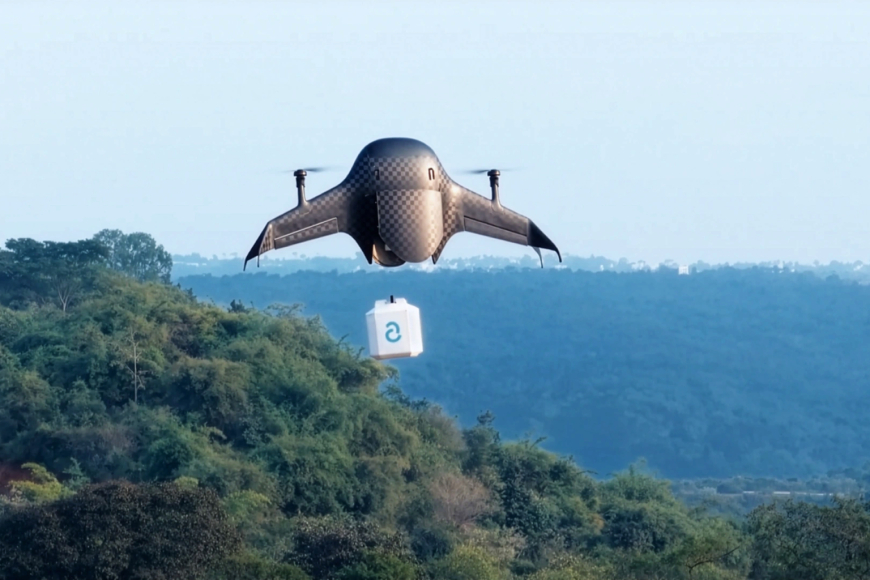
Indian aerospace startup Airbound has raised $37 million in Series A funding as it works to make autonomous drone delivery economically competitive with road transport.
The round was led by Greenoaks, with participation from DoorDash, Lachy Groom, Lightspeed and Humba Ventures. Combined with an $8.65 million seed round announced less than a year ago, the financing brings Airbound’s total funding to nearly $50 million.
Airbound is redesigning drones around payload efficiency
Founded in 2023 by CEO Naman Pushp, Airbound is developing lightweight, autonomous aircraft designed to carry increasingly large payloads without depending on runways.
The company’s current TRT aircraft weighs about 3.3 pounds and can carry roughly 2.2 pounds. Airbound is developing a larger version, expected to weigh about 6.6 pounds and carry up to 11 pounds of cargo.
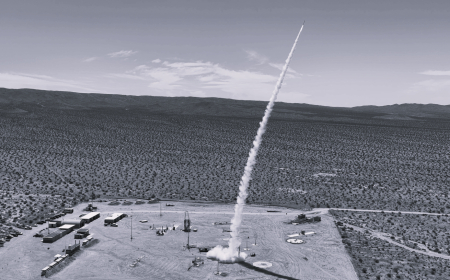
The aircraft uses a tail-sitter configuration that resembles a small rocket while on the ground. It takes off vertically, transitions to horizontal flight and returns to an upright position for landing. Airbound intends to retain vertical takeoff and landing as its aircraft become larger.
Pushp said the long-term goal is to bring aerial transportation closer to the cost of trucking, particularly for goods where fast delivery and relatively small payloads make road transportation inefficient.
Healthcare deliveries provide an early test.t
Airbound says it has completed more than 13,000 autonomous flights in Bengaluru and Guntur. More than 1,000 have been conducted with the hospital operator Narayana Health, which transports diagnostic samples between healthcare facilities.
One current route covers about 2.5 miles in roughly seven minutes. Pushp said transporting the same samples on a two-wheeler can take several hours, as laboratories wait until there are enough samples to justify a road trip.
The partnership is expanding to Narayana Health’s Banashankari hospital in Bengaluru, which was designed to rely on centralised laboratory and blood bank facilities rather than maintaining those services entirely on-site.
Airbound targets a three-city delivery network
The startup has also signed an agreement with the Andhra Pradesh government to develop a network connecting Amaravati, Vijayawada and Guntur. Airbound ultimately aims to support 10,000 daily flights for healthcare, retail and e-commerce deliveries.
Pushp said the agreement does not include a government subsidy or delivery contract. Instead, state officials are working with Airbound on the regulatory framework required for the network, while commercial customers would pay for delivery services.
The largest obstacle to scaling remains regulation, particularly approvals for beyond-visual-line-of-sight operations, which allow drones to fly outside the direct view of an operator. Those approvals are essential for building large autonomous delivery networks.
Airbound manufactures its aircraft at a 43,000-square-foot facility in Bengaluru and employs more than 150 people. The company remains broadly pre-revenue, but Pushp said its strategy is focused on developing an aircraft platform that could eventually be used by logistics operators rather than becoming only a delivery service itself.
What's Your Reaction?
 Like
0
Like
0
 Dislike
0
Dislike
0
 Love
0
Love
0
 Funny
0
Funny
0
 Angry
0
Angry
0
 Sad
0
Sad
0
 Wow
0
Wow
0