






































Could General Compute Be the Next Big AI Chip Challenger After Cerebras?
As demand for AI inference infrastructure grows, General Compute is drawing attention with its focus on next-generation AI chips and high-performance compute solutions. Explore how the company is positioning itself in the rapidly expanding AI hardware market.
Demand for computing infrastructure capable of running AI models continues to accelerate, creating two major challenges for companies operating in the sector: securing the right hardware and finding suitable facilities to deploy it quickly enough to generate revenue.
General Compute, a newly launched inference-focused neocloud provider, believes it has solutions to both issues. The startup, which specializes in providing computing power for AI inference — the stage when trained models generate responses for users — announced that it has raised a $15 million seed round at a $60 million post-money valuation. The funding was led by FUSE VC, with participation from Carya Venture Partners and Village Global Ventures.
One of the key questions facing the AI industry today is which chips will dominate the inference market. While GPUs remain the backbone of AI training, many industry observers increasingly believe they are not the most efficient option for running models once training is complete. Inference workloads have distinct computational requirements, prompting the development of specialized chips for this phase of AI operations.
Recent developments in the market have highlighted this trend. NNVIDIA’s acquisition of Groq and the recent IPO activity surrounding Cerebras have reinforced growing investor interest in inference-focused hardware.
General Compute founders CEO Finn Puklowski and CTO Jason Goodison have chosen a different path. Rather than relying solely on GPUs or chips from more widely discussed AI hardware companies, they are partnering with SambaNova, an Intel-backed chip manufacturer focused on inference computing that has received less attention in recent years compared to some of its competitors.
That could change with SambaNova’s next-generation chips, expected later this year. According to the company, the new architecture offers greater flexibility and increased memory capacity for storing context during inference workloads. SambaNova claims its technology can outperform not only GPUs but also specialized AI chips from companies such as Groq and Cerebras.
Puklowski said the upcoming chips are expected to deliver between 600 and 700 tokens per second during inference tasks, compared to approximately 250 tokens per second typically achieved by GPUs.
General Compute has already placed orders for $300 million worth of SambaNova’s SN50 chips and says it will become the first neocloud provider to deploy the hardware at scale.
The choice of chips also addresses another major industry challenge: data centre deployment. Unlike many high-performance AI systems that require advanced liquid-cooling infrastructure, SambaNova’s chips are air-cooled and consume less power. This allows them to be installed in existing data centres without significant infrastructure upgrades.
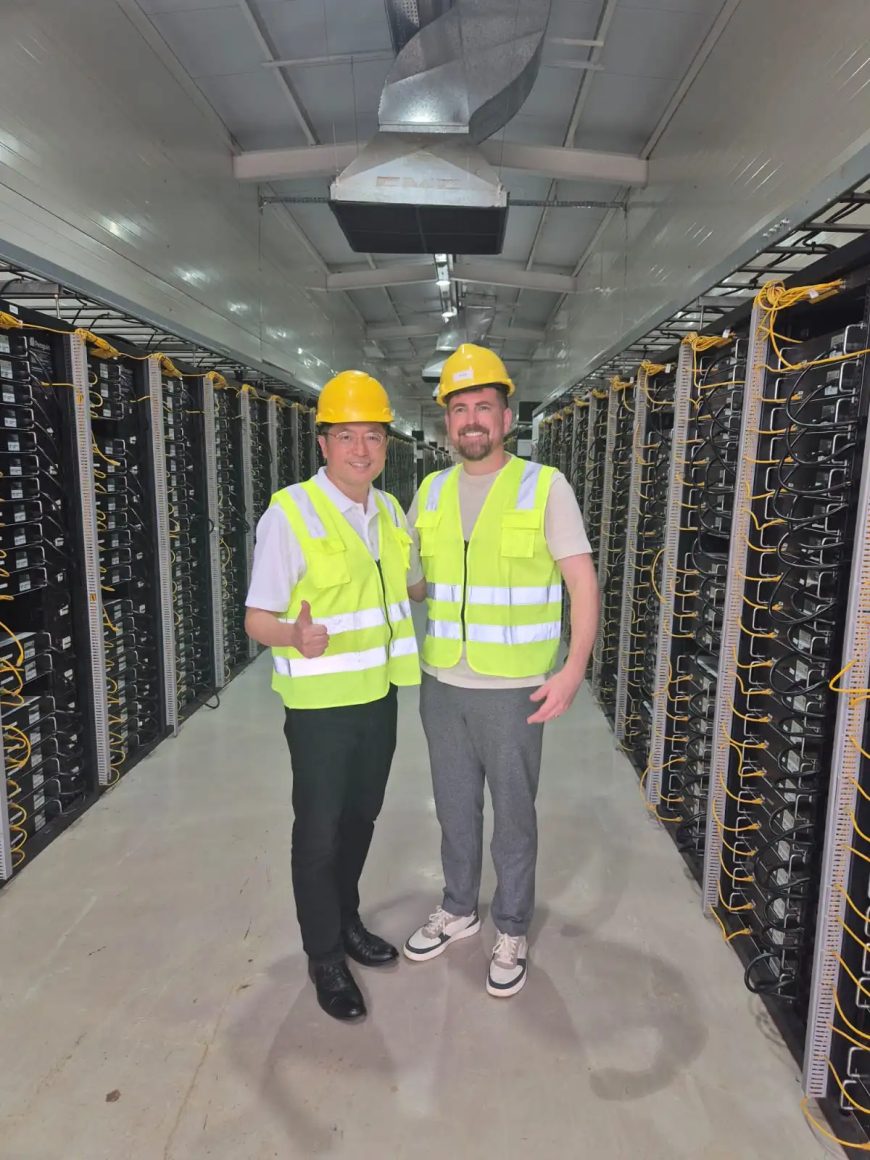
To expand capacity quickly, General Compute is pursuing colocation agreements that allow it to install its hardware in third-party facilities. The company is not only targeting traditional data-centre operators but is also exploring partnerships with cryptocurrency mining operators seeking alternative uses for their infrastructure as bitcoin mining economics become increasingly challenging.
The startup officially launched its cloud platform last week and claims it currently offers the fastest performance available for running MiniMax 2.7, an open-source large language model.
Investor Joe Hasselmann, who previously backed Groq in 2021 before launching AI-focused investment firm Evercrest Capital Partners this year, participated in General Compute’s funding round. He believes the relationship between SambaNova and General Compute resembles other successful partnerships in the AI infrastructure sector.
According to Hasselmann, hardware companies need customers capable of deploying chips in rapidly growing environments. In that sense, he views the relationship as mutually beneficial, with both companies relying on each other’s success.
The broader question remains which computing architectures will ultimately capture the most value as AI adoption expands. Inference cloud providers are effectively betting on a future where multiple AI models and autonomous agents coexist, rather than a market dominated by a single provider. In that environment, speed, efficiency, and inference costs become critical competitive factors.
Recent investments in companies such as OpenRouter, which raised a significant funding round this week to support multi-model AI access, reflect growing demand for flexible AI infrastructure that allows customers to optimize performance and costs across different models.
Puklowski believes faster inference speeds will unlock entirely new applications. Tasks that currently take coding agents an hour could potentially be completed within minutes, while customer-service voice agents would become more practical and affordable as response times improve.
While human users may already find current AI systems fast enough, Puklowski argues that the future increasingly belongs to AI agents communicating directly with other AI systems and databases, where speed becomes far more important.
As the AI infrastructure market evolves beyond training models and toward powering billions of real-time interactions, companies like General Compute are positioning themselves to benefit from the growing importance of inference-focused computing.
What's Your Reaction?
 Like
0
Like
0
 Dislike
0
Dislike
0
 Love
0
Love
0
 Funny
0
Funny
0
 Angry
0
Angry
0
 Sad
0
Sad
0
 Wow
0
Wow
0