



































Imperagen secures £5 million to advance enzyme engineering with quantum physics and AI
Imperagen has raised £5 million to combine quantum physics and artificial intelligence for enzyme engineering, accelerating biotechnology research and industrial innovation.
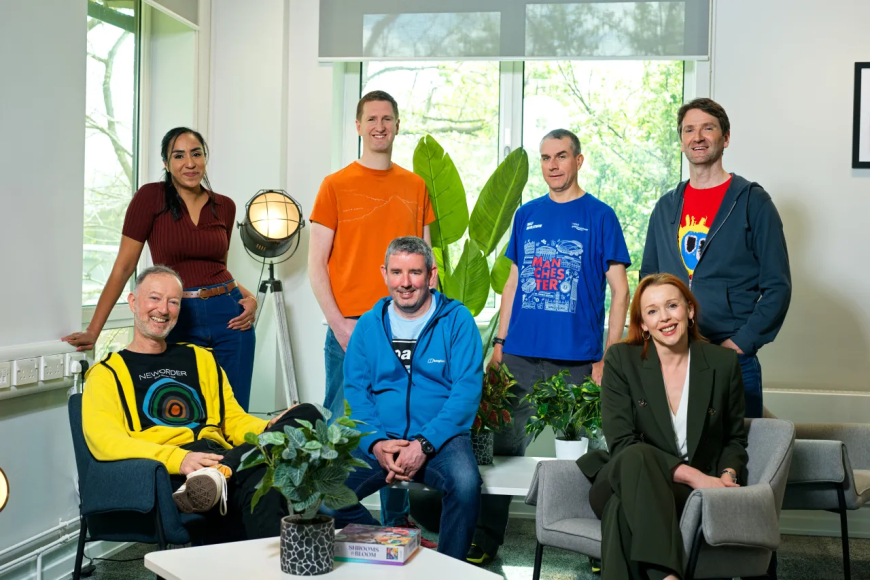
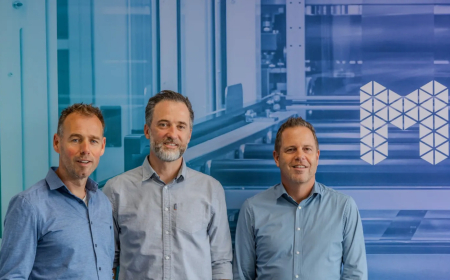
Biotechnology startup Imperagen announced Thursday that it has secured a £5 million ($6.7 million) seed funding round led by PXN Ventures, with additional backing from IQ Capital and Northern Gritstone. The company was established in 2021 by researchers at the Manchester Institute of Biotechnology, Dr Andrew Currin, Dr Tim Eyes, and Dr Andy Almond, before being spun out of the university.
Imperagen’s goal is to transform enzyme engineering by making the process faster, more effective, and less expensive than traditional approaches, which often rely on lengthy laboratory experimentation and repeated trial and error.
To achieve this, the company combines three core technologies designed to modernise enzyme development. Rather than relying primarily on laboratory-based physical enzyme mutation experiments, Imperagen first uses quantum-physics-based simulations to predict how enzyme variants will behave. According to the company, its computational models can analyse millions of potential mutations using advanced quantum-physics calculations.
The resulting data is then incorporated into proprietary artificial intelligence models specifically trained on the enzyme-related challenges the company is investigating. To continually improve those AI systems, Imperagen employs robotics and automation to generate fresh experimental results. This data is then fed back into the models through a process known as closed-loop simulation, allowing the technology to refine itself over time.
Enzymes play a critical role across numerous industries, particularly in pharmaceuticals, where they are essential components of drug discovery and development. Companies such as Imperagen are working to accelerate enzyme engineering because advances in the field can create broader benefits across biotechnology, including faster, more efficient drug development pipelines. Beyond healthcare, enzymes are widely used in industries such as food production, biofuels, and agriculture.
Researchers focused on sustainability are also increasingly interested in enzymes and the artificial intelligence technologies being developed around them. Many believe these innovations could help make manufacturing processes and industrial production systems more environmentally sustainable and resource-efficient.
Other companies operating in the enzyme engineering and AI-driven biotechnology space include Biomatter, Cradle Bio, and Absci.
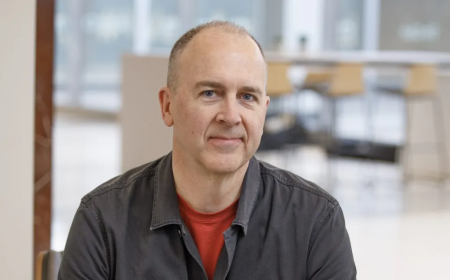
Alongside the funding announcement, Imperagen revealed that Guy Levy-Yurista will assume the role of chief executive officer. Levy-Yurista stated that current enzyme engineering methods often fail to meet industry requirements, noting that even some modern AI-powered approaches can perform well during testing but struggle when deployed at an industrial scale.
According to Levy-Yurista, Imperagen aims to make enzyme development “faster, more reliable, and more commercially accessible,” helping organisations bring improved bio-based products to market while avoiding the lengthy development cycles and uncertainty that have traditionally limited progress in the sector.
Levy-Yurista brings experience spanning artificial intelligence, life sciences, and enterprise technology. While the company’s founders will continue to play active roles within the business, he was recruited to help expand Imperagen’s next-generation technologies. His responsibilities include developing a vertical AI infrastructure focused on biocatalysis—a process that accelerates chemical reactions using natural catalysts such as enzymes—while also advancing the company’s AI strategy, commercial offerings, and industrial partnerships.
To date, Imperagen has secured a total of £8.5 million ($11.42 million) in funding. The newly raised capital will support several growth initiatives, including recruiting additional AI specialists, increasing investment in research and development, expanding laboratory capabilities, and building a dedicated go-to-market operation over the next two years.
Looking ahead, Levy-Yurista said the company believes broader adoption of engineered enzymes can help industries manufacture products that are cleaner, safer, and more beneficial for both consumers and the environment, while also delivering practical commercial value for the businesses that implement the technology.
What's Your Reaction?
 Like
0
Like
0
 Dislike
0
Dislike
0
 Love
0
Love
0
 Funny
0
Funny
0
 Angry
0
Angry
0
 Sad
0
Sad
0
 Wow
0
Wow
0