



















OpenAI Is FALLING Apart ,Sam Altman Panics
OpenAI leadership departures explained, including executive exits, company restructuring, employee stock sales, and what they could mean for its future.
On August 10, OpenAI completed one of the largest private share sales in corporate history. The company bought back roughly $7 billion worth of stock from its current and former employees. The deal valued OpenAI at $ 852 billion, making it one of the most valuable private companies on Earth. Within 48 hours, two of its most senior executives announced they were leaving.
That is not the sequence a company getting ready for the biggest IPO of the decade wants to be writing.
OpenAI would like you to see all of this as routine. A planned tender offer. A leadership reshuffle ahead of a major transition. The kind of natural turnover that happens at any fast-growing company. And maybe that is all it is. But when you look at who is leaving, and how many have left, the “pre-IPO housekeeping” explanation starts to feel a little thin.
What a Tender Offer Actually Is
Before getting into who left, it helps to understand what just happened with the money, because it is not as straightforward as it sounds.
A tender offer is when a company makes a formal bid to purchase shares from its own shareholders. In OpenAI’s case, those shareholders are current and former employees who were paid in part with equity over the years. They own a stake in the company on paper, but since OpenAI is private, they cannot simply sell those shares on a public stock market. The tender offer gives them an exit ramp: sell some of your stake now, in cash, before the company goes public.
This particular tender offer was unusual in one specific way. In past rounds, outside investors like Thrive Capital and SoftBank came in as buyers, bringing fresh capital into the company and adding new names to the shareholder list. This time, OpenAI used its own cash to buy the shares directly. No new outside shareholders. No new external validation of the price. The valuation remained at the level set during the March funding round: $ 852 billion.
Why does that matter? Because when a company runs a tender at the same valuation as its last funding round rather than a higher one, it signals something. Either the market believes the price is already right, or no outside buyers were willing to bid it higher. OpenAI has not said which. What we know is that seven billion dollars went to employees, the headline number stayed the same, and two days later, the COO and the chief revenue officer both announced they were going.
The Two Departures
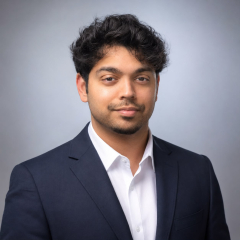
Brad Lightcap joined OpenAI in 2018. He built the company’s finance, legal, and people operations from scratch, then served four years as chief operating officer, growing the go-to-market organisation from roughly 50 people to over 700. He and Sam Altman knew each other from Y Combinator. He was, by any measure, one of the people most responsible for turning a research lab into a company.
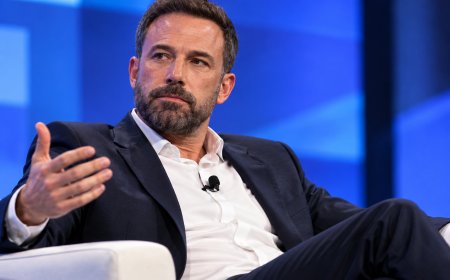
In April, OpenAI moved Lightcap out of the COO role and into a position focused on “special projects.” Four months later, on August 11, he posted a message to staff saying he was leaving to start something new. “It is bittersweet to share that I’ll be moving on from OpenAI,” he wrote. Sam Altman responded publicly on X, calling Lightcap one of the few people who understood what OpenAI was trying to do from the very beginning. Warm words. The kind you write when someone leaves on their own terms. But also the words of a CEO watching one of his most trusted operators walk out the door with an IPO on the horizon.
Forty-eight hours later, Denise Dresser announced she was also leaving. Dresser had been hired in December as OpenAI’s chief revenue officer, coming from the CEO chair at Slack with over a decade of enterprise experience at Salesforce. OpenAI had brought her in specifically to grow the company’s enterprise business, the part that turns ChatGPT users into corporate contracts. She had been there for less than a year. In her note, she said she made “the difficult decision to leave OpenAI to pursue other opportunities.” OpenAI named a replacement immediately, Dali Rajic, formerly president and COO of the cybersecurity company Wiz.
Two senior leaders, gone in two days. One who had been there almost a decade, one who had been there eight months. Both departing right as the company enters what should be its most consequential period.
The Longer List
Here is where the story gets harder to dismiss as coincidence.
Lightcap and Dresser are not the only items on the list. They are the latest entries on a much longer one. In the months before their departures, OpenAI also lost Fidji Simo, the former Instacart CEO who had become OpenAI’s effective second-in-command overseeing its applications business. Kevin Weil, who led the Science division, left. Bill Peebles, who worked on Sora, left. Kate Rouch, the chief marketing officer, left. Chloé Bakalar, OpenAI’s head of ethics, left. Johannes Heidecke, the head of Safety Systems, left. OpenAI’s Mission Alignment team, which was formed to ensure the company stayed true to its stated purpose, was disbanded in February 2026 after about 17 months.
OpenAI described each of these departures as a natural part of a growing organisation. And some of them clearly are. Brad Lightcap leaving to start a company is a predictable move for a person with his experience and connections. That is what operators do after long tenures at successful startups. But the cumulative picture, a string of exits that spans product, safety, ethics, revenue, and operations, is harder to wave away with a single explanation.
The IPO Question
OpenAI confidentially filed its IPO prospectus with the SEC in June. It has not set a date for the public offering, and there are reports it has considered delaying the listing amid broader market uncertainty. The seven-billion-dollar tender offer may actually be a signal in that direction. When a company conducts a secondary sale and allows employees to cash out before going public, it reduces the urgency to rush the IPO. Employees who need liquidity now have some. The pressure valve got released.
If OpenAI goes public at its current private valuation of 852 billion, it would need to justify a price that values the company at roughly 65 times its 2025 revenues by some estimates. That is an enormous ask, and it requires the company to show public market investors a stable, functional leadership structure with clear accountability for revenue growth. Right now, the company does not have a COO, recently replaced its chief revenue officer, and is rebuilding significant parts of its senior team less than a year before a plausible IPO date.
OpenAI will tell you this is what a healthy pre-IPO restructuring looks like. And maybe it is. Companies reorganise before going public all the time. New leadership is installed, old structures are streamlined, and roles are redesigned for a different kind of scrutiny than a private company faces.
But there is a version of this story in which the departures are not part of the restructuring. Where the restructuring is the cover story, and the departures are the signal. Where people who have built something extraordinary, who know it better than anyone from the inside, are deciding this is the right moment to take their chips off the table. Not because OpenAI is failing. Because something has shifted in the calculus of what comes next.
Companies on the way to becoming the most valuable thing in the room tend to keep their best people in the building. The question OpenAI cannot yet answer is why so many of them are choosing to leave right now.
What's Your Reaction?
 Like
0
Like
0
 Dislike
0
Dislike
0
 Love
0
Love
0
 Funny
0
Funny
0
 Angry
0
Angry
0
 Sad
0
Sad
0
 Wow
0
Wow
0