
























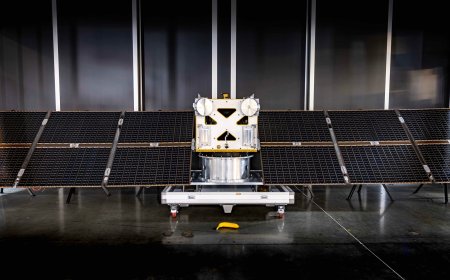










Startup secures $43M to create a connected intelligence network for ships
A maritime technology startup has raised $43 million to develop a connected intelligence platform that enables ships to share data, improve efficiency, and enhance operational decision-making.
The world's oceans cover vast stretches of the planet, making it difficult for governments, shipping operators, insurers, and maritime organisations to maintain an accurate understanding of what is happening across them at any given moment. The challenge is compounded by the fact that many vessels still rely on outdated technology and limited software, preventing them from effectively collecting, sharing, and analysing critical information in the waters they navigate.
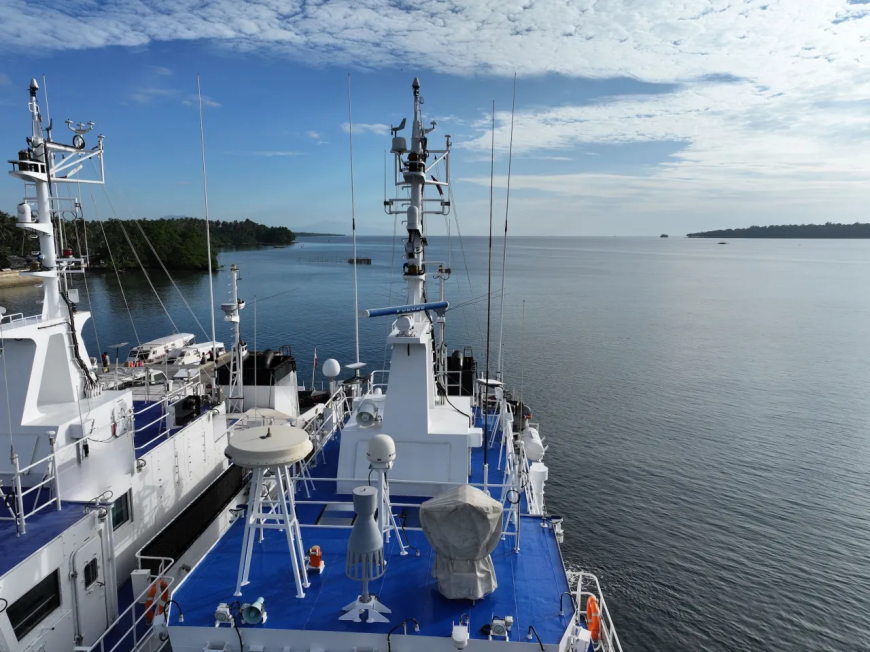
Quartermaster, a startup based in Arlington, Virginia, believes it has developed a solution to address this long-standing problem. The company has created a system known as SmartMast, a package of ruggedised maritime sensors designed to be installed directly on a ship's mast. Equipped with hardware such as cameras, radios, and other weather-resistant sensors, SmartMast is designed to gather and transmit real-time maritime data from vessels operating worldwide.
When combined with Quartermaster's analytics platform, which processes and interprets the collected information, the company says the technology creates a continuous, distributed sensing network. The broader vision is to transform millions of ships into interconnected sources of intelligence that can share data and provide a far more comprehensive view of activity across the world's oceans.
According to Quartermaster founder and CEO Neil Sobin, SmartMast offers capabilities that go well beyond the maritime industry's current standard tracking system, known as AIS (Automatic Identification System). AIS is primarily used to transmit basic information such as a vessel's location and identification data. However, Sobin argues that the system has significant limitations and vulnerabilities that reduce its effectiveness.
He explained that AIS depends largely on self-reported information and voluntary participation, making it susceptible to misuse. Individuals or organisations engaged in illegal activities can disable the system, manipulate transmitted information, or generate false signals to conceal their operations."
"In maritime, AIS is a completely broken system. It's opt-in, [you] enter your own data, and if you want to do anything nefarious on the ocean, from petty smuggling all the way up to sanctions evasion, you can opt out of the system, or spoof it," Sobin said during an interview. You can take advantage of just how fragile it is. T"" QuarQuartermaster's soach is intended to provide a more reliable, harder-to-manipulate source of maritime intelligence. By collecting data directly from onboard sensors and analysing it with advanced software systems, the company believes it can create a more accurate picture of activity at sea while reducing opportunities for fraud and deception.
Sobin has spent the past several weeks presenting this vision to investors, and those efforts have now resulted in a major funding milestone for the company. Quartermaster announced that it has raised $43 million in a Series A financing round.
The investment was co-led by First Round Capital and Quiet Capital, a firm known for supporting founders at the earliest stages of company development.
Among the investors backing the round is Bill Trenchard, who led Uber's seed investment and is also an investor in Flexport. Trenchard said that Quartermaster is fundamentally changing how maritime organisations gather information and make decisions about ocean operations."
"Mo t "attempts to bring intelligence to the ocean have run into the same wall: The cost of bespoke hardware does not scale to a planet that is mostly water. Neil and his team have solved that," Tr"" chard said.
Quartermaster reports that more than 600 vessels equipped with SmartMast technology have collectively monitored over 10 million square miles of ocean so far. The company's long-term objective is to build an infrastructure layer that can support a wide range of maritime intelligence applications.
Potential uses for the network include identifying and tracking vessels, generating training datasets for organisations developing autonomous marine systems, supporting scientific research projects, assisting robotics developers, and providing valuable information and insights to government agencies and maritime authorities.
Sobin believes the platform's versatility means there are very few limitations on how the collected data can ultimately be applied. As the network expands, the company continues to discover new and unexpected use cases for the technology.
One example involves maritime rescue operations. According to Quartermaster, ships equipped with SmartMast have already contributed to more than 20 successful rescues of people in distress at sea. While those operations are not a direct source of revenue, Sobin says they reflect the company's commitment to supporting mariners and improving safety across the maritime industry.
He also believes that creating meaningful value for sailors and vessel operators can strengthen adoption of the platform and encourage more participants to join the growing network."
"That's work we 'reely proud of, but also [those are] the dynamics that help us lock in our network, you know, and create that incentive for mariners to work with us in this way," So n said. Our approach is to be pro-mariner and to create an incentive for the mariner, and I think very few others will figure out how to operate that model as successfully as we have."
"Bin contrasted Quartermaster's strategy with that of other companies attempting to enter the maritime technology sector. Many competitors focus on selling individual sensors directly to ship owners or fleet operators. He argues that such business models can be challenging because shipping remains a low-margin industry, and operators are often cautious about investing in additional equipment without clear, immediate benefits."
"I think there are a bunch of players in the market who try to sell a sensor to a boat, try to sell a sensor to a fleet operator, and I think those are really challenging pitches to make, because fleet operations are low-margin businesses," he added.
Looking ahead, Sobin expects a substantial portion of the newly raised capital to be invested in expanding Quartermaster's engineering team and accelerating the development of the company's technology platform.
He believes the maritime sector presents unique opportunities for engineers, particularly those working in fields such as artificial intelligence and computer vision. Because many challenges within the industry remain largely unexplored, individual engineers can have an outsized impact compared with more mature technology sectors.
"The ocean has so much low-hanging fruit in computer vision tasks," Sobin said. For engineers currently working at social media platforms or large AI companies, he noted, it can sometimes be difficult to see the direct impact of their work. In contrast, maritime technology offers the chance to solve problems that have received relatively little attention despite their importance.
"On the ocean, a single engineer can come in and make a significant impact in relatively short periods of time, simply because no one has worked on the space before," he said.
With fresh funding, growing adoption, and a vision to turn vessels into a connected intelligence network, Quartermaster is modernising how information is collected and shared across the world's oceans. The world's slieves that by turning ships into active sensing platforms, it can help improve maritime awareness, support emerging technologies, strengthen safety efforts, and provide valuable intelligence for a wide range of organisations operating at sea.
Tags:
What's Your Reaction?
Like
0
Dislike
0
Love
0
Funny
0
Angry
0
Sad
0
Wow
0