

























What a $300 Toaster That Watches Your Bread Brown Actually Changes
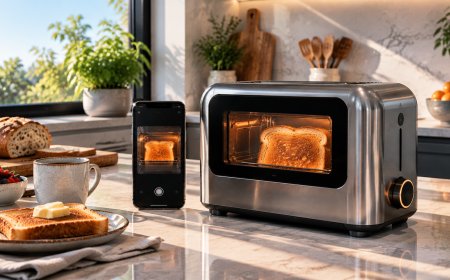
Breville’s Eye Q Auto Toaster uses optical sensors and real-time browning detection to create consistently perfect toast without relying on traditional timers.
The toaster has not changed in a century. That is not an exaggeration. The basic mechanism- resistive heating coils inside a box with a timer and a spring to eject the bread- has been essentially the same since the 1920s. You put bread in, you guess how long it needs, and you hope for the best. Sometimes you get golden perfection. Sometimes you get charcoal. The toaster does not know and does not care. It runs a timer, and when the timer ends, you get what you get.
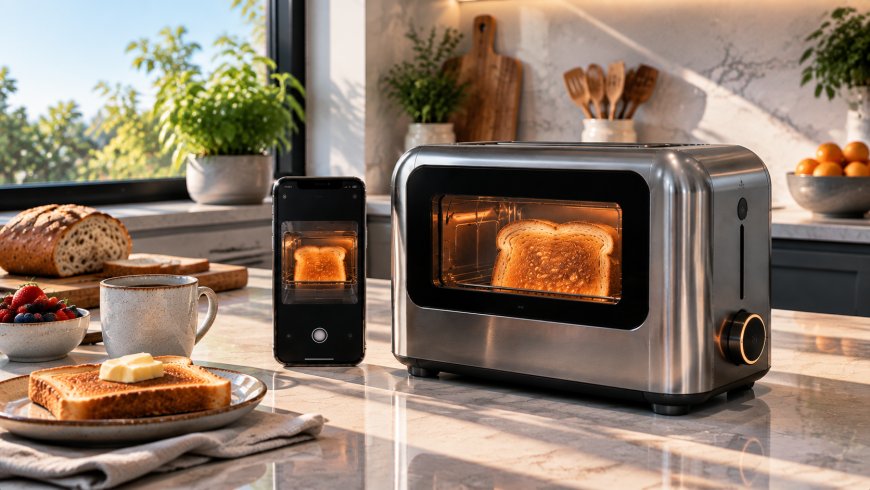
Breville just spent ten years trying to fix that. The result is the Eye Q Auto Toaster, and it does something no toaster has done before: it watches your bread change colour in real time and stops when it reaches the shade you asked for. The two-slice model costs $ 30, and the four-slice costs $40. That is roughly ten to fifteen times what a basic toaster costs. Whether that is reasonable depends on how you feel about toast, how much counter space you are willing to dedicate to a single-purpose appliance, and honestly, how much disposable income you have.
But the technology inside is genuinely interesting, and the problem it solves is one everyone who has ever used a toaster has experienced.
The Problem With Every Toaster You Have Ever Used
Traditional toasters work on time. You pick a setting (usually a numbered dial from one to seven), and the coils heat your bread for that duration. The problem is that time is a terrible proxy for doneness.
How brown your toast gets depends on at least four variables that a timer cannot account for: how hot the coils already are (a toaster that just finished a round is hotter than one that has been sitting cold on the counter), what kind of bread you are using (white sandwich bread, dense whole wheat, thick sourdough, and frozen waffles all brown at completely different rates), how thick the slice is, and how much moisture is in the bread.
Setting three on a cold toaster with fresh white bread produces a different result than setting three on a hot toaster with frozen rye. The dial number means nothing absolute. It is a duration, not a doneness level. And because most people use whatever setting they used last time and hope for the best, the result is a daily lottery that occasionally produces perfect toast and frequently produces something either too pale or too burnt.
This is not a complex engineering insight. Everyone who has ever made toast knows it. But for a hundred years, nobody built a toaster that addressed it, because toaster economics have always rewarded cheapness over precision.
What the Eye Q Actually Does
Breville’s solution took a decade to develop. It required a team of electrical, mechanical, and software engineers plus a mathematician and a scientist, which is a sentence that should not make sense about a toaster and yet does.
Inside the Eye Q, tucked between the heating elements and the wall of the toasting cavity, are two optical sensors built by a company called Sensability. These sensors fire green and infrared light at the bread ten times per second and measure the reflected wavelengths to track the rate of colour change in real time.
The system does not measure absolute colour. It measures the rate of colour change. That distinction matters because different breads start at different base colours (white bread starts pale, pumpernickel starts dark. The sensor needs to know when the browning progression reaches the target shade, regardless of where it began.
When the bread reaches the shade you selected, out of seven presets from barely warm to deep brown, the toaster stops. No timer involved. No guessing. The bread rises smoothly on a motorised platform rather than spring-loaded ejection, and a beep lets you know it is done.
Across every type of bread tested in multiple reviews, the result is remarkably consistent. The same setting produces the same shade every time, whether the toaster is cold or hot, whether the bread is fresh or frozen, whether it is white sandwich bread or dense whole wheat. That consistency is the point, and it’s what no timer-based toaster can reliably deliver.
What It Is Like to Use
The physical experience is different from any toaster you have used before.
There is no lever to push down. You place your bread in the slot, press a large button on the front, and the motorised mechanism clamps down and lowers it smoothly into the cavity. It feels more deliberate and more precise than slamming a spring-loaded lever, though functionally the result is the same: bread goes in and heat begins.
The controls are minimal. A central shade selector lets you move lighter or darker across the seven presets. There is a dedicated bagel button and an “A Bit More” button for when your toast needs a little extra time after the initial cycle. The interface is intuitive enough that you could figure it out without reading anything.
The exterior has a non-stick ceramic coating that makes cleaning easy. Crumbs slide into a removable tray rather than accumulating in crevices. The rounded, minimalist design looks more like consumer electronics than a kitchen appliance. It weighs just under six pounds, so you can move it off the counter when not in use.
A sourdough mode gives the toaster more latitude with thick, unevenly shaped artisan slices. Dense bread with large holes and crusty edges browns differently than uniform sliced bread, and the sourdough mode adjusts the sensor algorithm to account for that.
Where It Falls Short
The Eye Q is not perfect, and honesty about its limitations matters at this price point.
Thick bagels are a problem. A proper bakery bagel, sliced in half, is often too thick to fit comfortably in the slot. Stuffing it in pushes the bread too close to the heating elements, which can cause uneven browning or slight burning on the edges. Thinner grocery store bagels fit fine. If your bagel comes from a real bakery, it may not.
Similarly, very large artisan bread slices, the kind you get from a wide French miche or a big country loaf, may need to be cut down to fit. The slot dimensions are generous by toaster standards, but they have limits, and bread that presses against the sides does not toast evenly.
The single-purpose limitation is real. A $300 toaster does one thing. A toaster oven at the same price does many things. For anyone with limited counter space, dedicating that footprint to a device that only toasts bread is a meaningful tradeoff, even if it toasts bread better than anything else available.
And the price itself is the biggest obstacle. A basic toaster costs $20 to $30. The Eye Q costs ten to fifteen times that. The technology is genuinely superior. Whether it is ten times the price and still superior is a personal financial question, not a product-quality question.
Who This Is Actually For
The Eye Q is not for everyone, and it does not pretend to be.
It is for people who care about toast the way some people care about coffee. Just as a $300 espresso grinder produces a meaningfully better cup than a $30 blade grinder, the Eye Q produces meaningfully better toast than a $30 timer-based toaster. The difference is real and repeatable. Whether that difference matters enough to justify the price depends on how much toast you eat, how much you care about consistency, and how much disposable income you have available for kitchen upgrades.
It is also a genuinely interesting piece of engineering. The idea of using optical sensors to measure browning in real time, adjusting for bread type, ambient coil temperature, and moisture content, is the kind of problem-solving that usually shows up in industrial food processing, not consumer appliances. Breville spent ten years on it because the sensor package had to be reliable, cost-effective, and durable enough to survive the hostile environment inside a toaster: extreme heat, smoke, crumb buildup, and the thermal cycling of daily use.
The Eye Q is what happens when someone takes a hundred-year-old appliance and redesigns it from scratch using modern sensor technology and a decade of engineering patience. It works. It works better than any timer-based toaster. And it costs enough that most people will decide the toast they already make is fine.
That is a perfectly reasonable decision. But if you have ever pulled a slice out of a toaster, looked at it, and thought, “not quite,” the Eye Q is the first toaster that would have agreed with you and done something about it.
What's Your Reaction?
 Like
0
Like
0
 Dislike
0
Dislike
0
 Love
0
Love
0
 Funny
0
Funny
0
 Angry
0
Angry
0
 Sad
0
Sad
0
 Wow
0
Wow
0