





























What the iPhone 18 Pro Camera Actually Changes (And What It Doesn’t)
The iPhone 18 Pro introduces a variable aperture camera system, new manual controls, improved video features, and major photography upgrades.
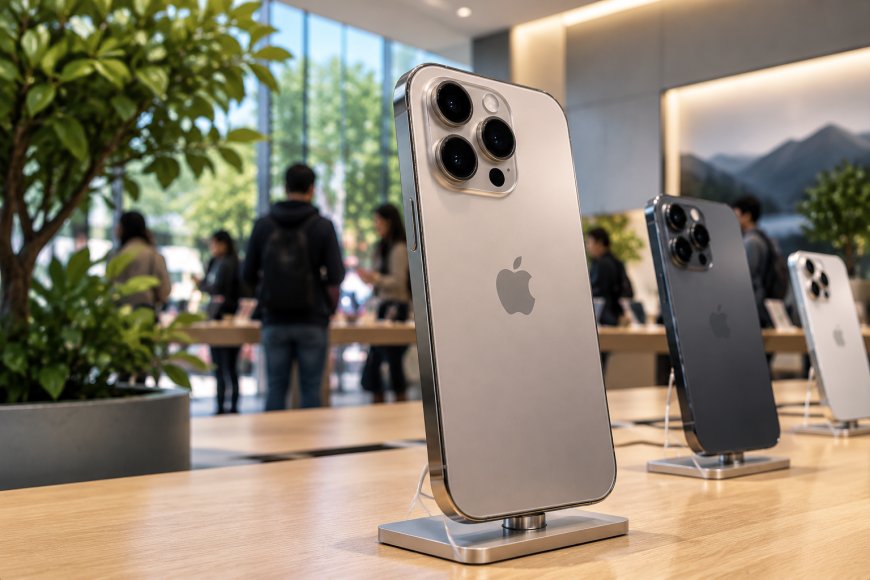
For the first time in the iPhone's history, the camera lens physically opens and closes.
That sentence does not sound dramatic. It is. Every iPhone camera ever made has had a fixed aperture, a single unchangeable opening that determines how much light reaches the sensor. Photographers working with iPhones have always worked around this limitation using software: computational photography, Night Mode processing, and portrait-mode background blur simulated by algorithms rather than produced by optics.
The iPhone 18 Pro changes that. Its 48-megapixel main camera now has a mechanical variable aperture built from six laser-cut blades, controlled by a rotor mechanism that smoothly transitions between four settings: f/1.48 at its widest, f/1.8 for portraits, f/2.8 for general shooting, and f/4 for landscapes and group shots where you want everything in focus.
If you are not a camera person, here is what that means in practice. A wider aperture (lower number) lets in more light, which means better photos in dark environments and a naturally blurred background behind your subject. A narrower aperture (higher number) keeps more of the scene sharp from front to back, which means a group photo where the people in the back row are actually in focus.
Until now, iPhones faked the background blur with software. The 18 Pro can do it with optics. That is a real, physical difference in how the image is captured, not just how it is processed afterward.
Why Variable Aperture Is the Headline
Apple announces a lot of camera features every year. Most of them are software improvements: better processing, new styles, smarter scene detection. Those matter, but they build on a fixed optical foundation. The lens itself has not meaningfully changed in years.
Variable aperture is a hardware change. It alters what the lens physically does. At f/1.48, the widest setting, the lens opening is larger than any previous iPhone, pulling in more light than the f/1.78 aperture on the iPhone 17 Pro. That means Night Mode exposures can be shorter, digital noise is reduced, and low-light photos come out cleaner without the processing artifacts that long exposures sometimes introduce.
At f/4, the narrowest setting, the depth of field extends far enough that landscape shots and group photos maintain sharpness across the frame. Previously, getting everything in focus in a group shot required the software to make judgment calls about what should be sharp and what should not, and those judgments were not always right.
The system adjusts automatically based on scene detection, but it can also be controlled manually through four distinct aperture settings in the camera app. Apple is also releasing an API that gives third-party developers access to the full aperture range, which means photography apps can offer aperture control that was previously impossible on an iPhone.
This is not entirely new to smartphones. Samsung's Galaxy S9 introduced a simpler dual-aperture system years ago. Xiaomi's 14 Ultra offered variable aperture from f/1.42 to f/4.0. But Apple bringing it to the iPhone, with the ecosystem, the processing pipeline, and the developer API behind it, is what turns it from a spec-sheet feature into something that will actually change how hundreds of millions of people take photos.
The Pro Controls Nobody Expected
Alongside the hardware change, Apple added a set of manual controls to the camera app that the company has historically resisted offering.
White balance, shutter speed, aperture, and a live histogram are now directly accessible while shooting. These are the tools that professional and enthusiast photographers have used on dedicated cameras for decades. Apple has historically kept the iPhone camera simple and automatic, trusting its computational photography to make the right decisions. This is the first time the company has opened up this level of manual control in the native app.
New Photographic Styles now include texture and grain controls. If you have seen Google's "Looks" feature on the Pixel 11 series, which adds film-like character to digital photos, Apple's version is a direct response. You can dial in grain that mimics specific film stocks and control the texture rendering independently from color processing. The result is photos that look less like they came from a phone and more like they came from a camera loaded with Kodak Portra or Fuji Superia.
For video, the 18 Pro records 4K in Dolby Vision HDR and adds the ability to apply cinematic effects after the footage has been captured. Post-capture cinematic processing means you can shoot first and make creative decisions later, adjusting depth of field, focus transitions, and color grading in the editing phase rather than committing to them at the moment of capture.
Everything Else That Changed
The camera is the headline, but the rest of the spec sheet is not empty.
The A20 Pro chip is built on a 2-nanometer process, the first 2nm silicon in a smartphone. A newly designed vapor chamber cooling system replaces the thermal architecture from the previous generation, which should help sustained performance during long recording sessions or heavy processing tasks.
Battery life improved meaningfully. Apple claims 36 hours of video playback on the 18 Pro and 45 hours on the 18 Pro Max. Those are Apple's own testing numbers and real-world usage will vary, but the jump from the previous generation is significant enough to suggest a real improvement rather than a rounding exercise.
The Dynamic Island on the front of both phones is physically smaller, and it now supports tracking three live activities simultaneously instead of two. That is a small change on paper but a practical one for anyone who uses live sports scores, delivery tracking, and a timer at the same time.
Siri AI, Apple's rebuilt voice assistant powered by on-screen awareness and contextual intelligence, launches in English beta with iOS 27 this month. French, Japanese, Korean, Portuguese, and Spanish support arrives in October. The new Siri can read what is on your screen, understand context across apps, and execute multi-step commands without you switching between applications.
A new iPhone Handoff feature in iOS 27 allows two iPhones to share a single eSIM and switch between them. If you carry a personal and a work phone, or if you are transitioning between devices, you can move your active line back and forth without contacting your carrier.
The color lineup adds burgundy, replacing the orange from the iPhone 17 Pro series. The other options are black, silver, and glacier.
Pricing and Availability
The iPhone 18 Pro starts at $1,199. The 18 Pro Max starts at $1,299. Both are $100 more than the previous generation's launch prices.
Pre-orders open Saturday, September 12. The devices ship and are available in stores on September 18.
Whether the $100 price increase is justified depends on how much the variable aperture matters to you personally. If you take photos in low light regularly, shoot portraits, or care about the difference between optical and computational background blur, this is the most meaningful iPhone camera upgrade in years. If you are happy with how your current iPhone takes pictures and do not shoot in challenging conditions, the improvement may not be visible enough in your daily use to justify the cost.
The camera has always been the reason most people upgrade their iPhone. This year, for the first time, the reason is not software getting smarter. It is the lens physically getting better. That is a different kind of upgrade, and it is the one photographers have been waiting for.
What's Your Reaction?
 Like
0
Like
0
 Dislike
0
Dislike
0
 Love
0
Love
0
 Funny
0
Funny
0
 Angry
0
Angry
0
 Sad
0
Sad
0
 Wow
0
Wow
0