







































Why Google’s AI Struggles With Simple Words and Spelling Mistakes
Google’s AI search tools are facing criticism after failing basic spelling and word-related queries. Learn why AI models make these mistakes, how Google AI Overviews work, and what it means for search users.
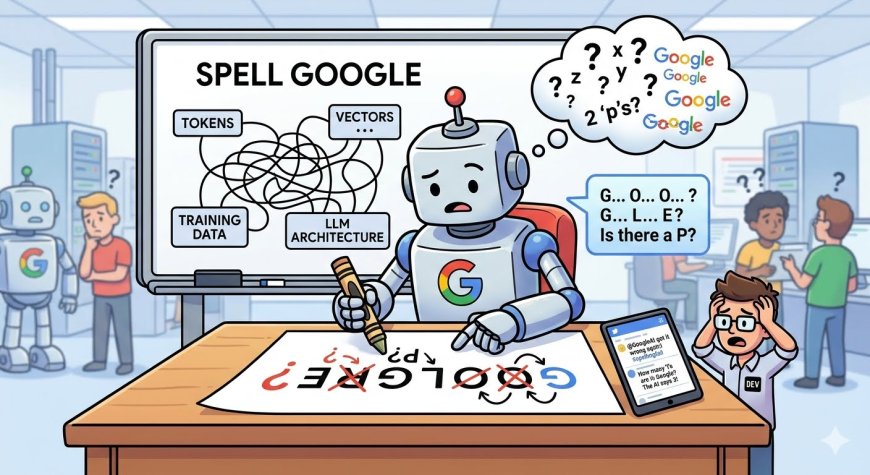
Google's AI-powered Search features continue to face scrutiny after users discovered a series of basic spelling and word-count mistakes in AI Overviews. In several examples, the system incorrectly counted letters in common words and even misspelt terms while explaining them, raising fresh questions about the limitations of large language models.
For example, Google's AI Overview incorrectly stated that the word "Google" contains two letter Ps. In other cases, it claimed there was exactly one "r" in the word "poop," miscounted letters in "journalism," and even misspelt the word while attempting to explain it. Similar mistakes occurred when the AI tried to spell the U.S. president's surname.
The errors come as Google continues expanding AI-generated answers within Search. The company's latest search overhaul places conversational AI features at the centre of the user experience, building on its AI Overviews feature, which has already faced criticism. Earlier versions of AI Overviews generated questionable responses, including citing satirical sources and offering inaccurate recommendations that quickly went viral online.
Google acknowledged the issue, telling TechCrunch that counting letters within words remains a known challenge for large language models and that the company is working on improvements.
These kinds of mistakes are not new in the AI industry. For years, researchers and users have pointed to spelling-related questions as simple ways to expose weaknesses in language models. While modern AI systems can generate code, solve complex problems, and produce detailed explanations, they often struggle with tasks that require accurately counting individual letters within words.
The reason lies in how these systems process language. Large language models do not read text the same way humans do. Instead of understanding words as collections of letters, they break text into tokens, which may represent words, parts of words, or other language fragments. These tokens are then converted into numerical representations that help the model predict the most likely response.
According to AI researchers, this token-based architecture makes spelling and letter-counting tasks surprisingly difficult. Because the models focus on patterns and probabilities rather than individual characters, they may fail at questions that seem straightforward to humans.
Researchers have also noted that there may not be a perfect solution to the problem. The way language models divide text into tokens is fundamental to how they operate, and changing that structure could create new challenges elsewhere.
While these spelling errors are unlikely to limit the broader usefulness of AI systems, they serve as a reminder that generative AI remains imperfect. Despite their growing capabilities, AI models can still make simple mistakes, highlighting the importance of verifying information rather than relying entirely on automated responses.
As AI becomes increasingly integrated into search engines and everyday tools, experts continue to emphasise the need for human oversight, especially when accuracy matters.
What's Your Reaction?
 Like
0
Like
0
 Dislike
0
Dislike
0
 Love
0
Love
0
 Funny
0
Funny
0
 Angry
0
Angry
0
 Sad
0
Sad
0
 Wow
0
Wow
0