































Coca-Cola Suspends Fairlife Production After Ransomware Attack
Coca-Cola has temporarily suspended production at its Fairlife dairy operations in the United States following a ransomware attack that affected the company’s production systems.

AI infrastructure startup General Compute has secured a $400 million loan from technology investment firm Upper90 in what the companies describe as the first financing deal backed by inference-specific AI chips. Instead of using traditional graphics processing units (GPUs) as collateral, the agreement is built around specialised processors designed to run already-trained artificial intelligence models quickly and efficiently.
The financing reflects a broader shift in the AI market as companies seek more affordable ways to deploy AI. While much of the industry’s spending has focused on expensive GPUs used to train large language models, demand is increasingly moving towards infrastructure that can deliver AI services at lower cost using open-source models. That trend is encouraging investors to back companies specialising in AI inference rather than model training.
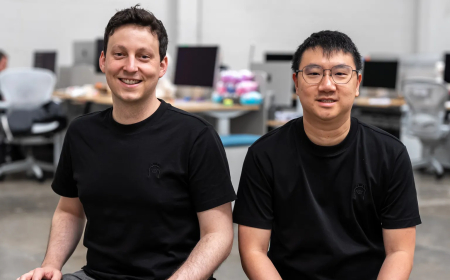
General Compute was founded by CEO Finn Puklowski and CTO Jason Goodison and raised a $15 million seed round in May to build an AI inference neocloud powered by chips from Intel-backed semiconductor company SambaNova. Unlike traditional cloud providers such as AWS and Microsoft Azure, neocloud operators are purpose-built to handle AI workloads, allowing them to optimise performance and efficiency for machine learning applications.
The company’s SN50 chips have been designed specifically for inference workloads. According to General Compute, the processors consume less power than GPUs and do not require expensive water-cooling infrastructure, allowing them to be installed in a wider range of data centres. The company also claims its platform can deliver inference speeds up to 16 times faster than GPU-based cloud services while reducing operating costs.
Securing enough specialised chips remains one of the biggest challenges for emerging AI infrastructure providers. The $400 million financing is intended to help General Compute rapidly expand its hardware deployment without relying solely on traditional venture capital funding. Using the chips themselves as collateral gives the company access to significantly more capital to build out its cloud platform.
Upper90 has experience financing AI hardware purchases. In 2021, the investment firm provided funding for GPU acquisitions by energy-focused data centre company Crusoe, a transaction that its co-founder and chief executive, Billy Libby, believes was the first loan secured against the value of advanced AI chips. At the time, many traditional lenders were unwilling to finance such a purchase due to uncertainty about how quickly the hardware might depreciate.
Since then, the market has evolved considerably. Companies including CoreWeave have demonstrated that AI chips can serve as valuable collateral, making hardware-backed lending an increasingly common funding model. With GPUs now widely deployed across the industry, Upper90 believes the next growth opportunity lies in companies focused on efficient inference infrastructure rather than large-scale model training.
The investment firm’s thesis is supported by growing demand for open-source AI. Businesses offering access to open models, including OpenRouter and Fireworks, have attracted fresh investment at high valuations. In contrast, newer open models have continued to narrow the performance gap with offerings from OpenAI and Anthropic. At the same time, alternative chipmakers such as Groq, Cerebras and SambaNova are attracting increasing attention from customers, investors and potential acquirers.
General Compute believes avoiding dependence on Nvidia’s hardware ecosystem could become a long-term competitive advantage as more specialised AI processors enter the market. The company argues that the financing is more significant than simply raising money to purchase computing equipment, describing it as an early indication that investors are beginning to support a broader range of AI hardware platforms as competition in the inference market continues to expand.
What's Your Reaction?
 Like
0
Like
0
 Dislike
0
Dislike
0
 Love
0
Love
0
 Funny
0
Funny
0
 Angry
0
Angry
0
 Sad
0
Sad
0
 Wow
0
Wow
0