























Former Bose Sleep Division Leader Launches SOND With $7 Million Funding for AI-Powered Dreambuds
SOND, a Boston-based sleep technology startup founded by former Bose sleep products executive Yadid Ayzenberg, has emerged from stealth with $7 million in funding. The company introduced Dreambuds, AI-powered sleep earbuds designed to track biometric signals and improve sleep quality through personalised audio experiences.
Sleep-focused earbuds have traditionally been built to block unwanted sounds and create a calmer environment through soothing audio. Boston-based startup SOND is taking a different approach, introducing earbuds that actively monitor users and respond in real time to help improve sleep quality.
The company emerged from stealth on Wednesday, announcing $7 million in funding alongside the launch of its first product, Dreambuds. Developed as a closed-loop sleep system, the earbuds capture multiple physiological signals from the wearer and use artificial intelligence to adapt sleep experiences throughout the night.
The funding round included backing from E14 Fund, which is affiliated with MIT, as well as Crosslink Capital, Ubiquity Ventures, Alumni Ventures, Meach Cove Capital, and Boston Scientific co-founder John Abele.
Dreambuds continuously track 12 physiological indicators, including breathing patterns, heart rate variability, sleep stages, body position, snoring activity, cardiorespiratory coupling, and seismocardiography (SCG), which measures the subtle mechanical vibrations generated by heart activity.
All of this information is processed through a cloud-based AI sleep coach that analyses incoming data and determines which audio program is most effective for the user. The system can choose from an existing library of sleep content or dynamically generate new audio experiences, learning over time which approaches deliver the best results.
Users can also communicate directly with the AI assistant through voice commands. The coach can provide personalised sleep insights, recommend specific programs, generate custom sleep stories based on requested themes, and access a catalogue of more than 500 proprietary audio experiences. For those who prefer familiar content, podcasts can also be streamed through the system.
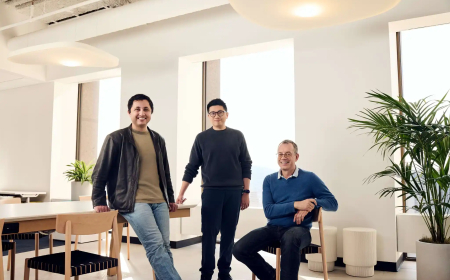
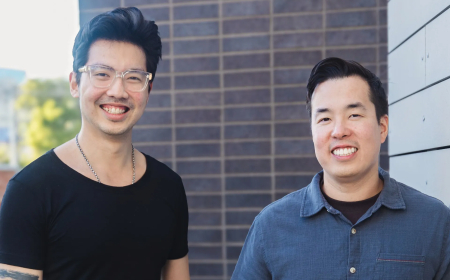
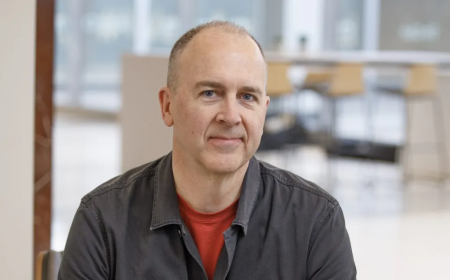
The company is led by CEO and co-founder Yadid Ayzenberg, who previously served as Bose’s Head of Sleep Products and helped launch the company’s Sleepbuds 2. After Bose exited the sleepwearables market, Ayzenberg saw an opportunity to build a company dedicated entirely to advancing sleep technology and founded SOND in early 2022.
Ayzenberg said years of experience working with sleep physiology, audio systems, and wearable sensors convinced him that the timing was right to create something entirely new in the category.
His co-founder and CTO, Amir Lazarovich, previously worked as a senior software engineering manager at Google. The two first met at MIT more than a decade ago, beginning a friendship that eventually evolved into a business partnership.
Before joining Bose, Ayzenberg founded The Sync Project, a startup focused on understanding how music affects physiological signals such as heart rate and heart rate variability. Bose later acquired the company, ultimately leading to his work on the second generation of Sleepbuds.
According to Ayzenberg, many Bose customers wanted more than simple noise masking. They wanted devices capable of tracking sleep and helping them improve it. At the time, however, hardware limitations made it difficult to fit advanced sensors into compact earbuds without sacrificing battery life. Advances in sensor technology have since changed that equation.
Despite the similarities in appearance, Ayzenberg stressed that Dreambuds are not simply an evolution of Bose’s previous sleep products.
“We built something completely different,” he said, noting that while the product shares an earbud form factor, the underlying technology and purpose are fundamentally distinct.
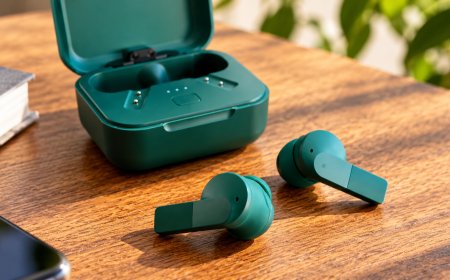
A key feature of the system is that it operates independently without requiring constant interaction with a smartphone. The charging case includes Wi-Fi connectivity, Bluetooth, physical controls, an OLED display, and a built-in speaker. That speaker can even function as an alarm if users fall asleep before inserting the earbuds.
The company’s goal is to eliminate the need for people to reach for their phones while trying to sleep.
Ayzenberg joked that handing an insomniac a smartphone is like holding a support group meeting inside a liquor store. Instead, users remove the earbuds from the case and resume their personalised sleep plan. Through a simple double-tap gesture, they can also speak directly to the AI coach and request assistance with falling asleep.
The AI assistant can recommend interventions based on previous success rates, whether those involve breathing exercises, relaxing soundscapes, calming audio tracks, binaural beats, or other sleep-support techniques. Importantly, the assistant remains silent unless explicitly activated by the user, preventing unexpected interruptions at night.
Lazarovich explained that responses are tailored to the user’s situation. Someone interacting with the coach before bedtime may be guided through a wind-down routine. At the same time, a user who has just awakened could receive questions about sleep quality and overnight experiences.
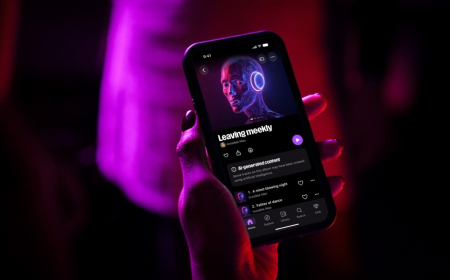
In addition to voice interactions, users can access detailed sleep data through the companion app, including sleep-stage visualisations and hypnograms that provide a deeper understanding of sleep patterns over time.
The earbuds themselves feature a distinctive design. Rather than hiding sensors, SOND intentionally placed them on the exterior, creating a unique visual pattern that highlights the technology. The earbuds also include high-fidelity audio drivers, motion sensors, and microphones.
The company has already completed multiple comfort studies and beta programs. SOND now plans to move toward large-scale manufacturing, targeting commercial production by the second quarter of 2026. To support that effort, the startup intends to launch a crowdfunding campaign and is currently accepting reservations through its website.
What's Your Reaction?
 Like
0
Like
0
 Dislike
0
Dislike
0
 Love
0
Love
0
 Funny
0
Funny
0
 Angry
0
Angry
0
 Sad
0
Sad
0
 Wow
0
Wow
0