





















Futuristic Tech Is Finally Becoming Useful
Futuristic tech is moving beyond flashy concepts as smart glasses, accessibility devices, holographic displays, robotics and intelligent hardware begin solving real everyday problems.
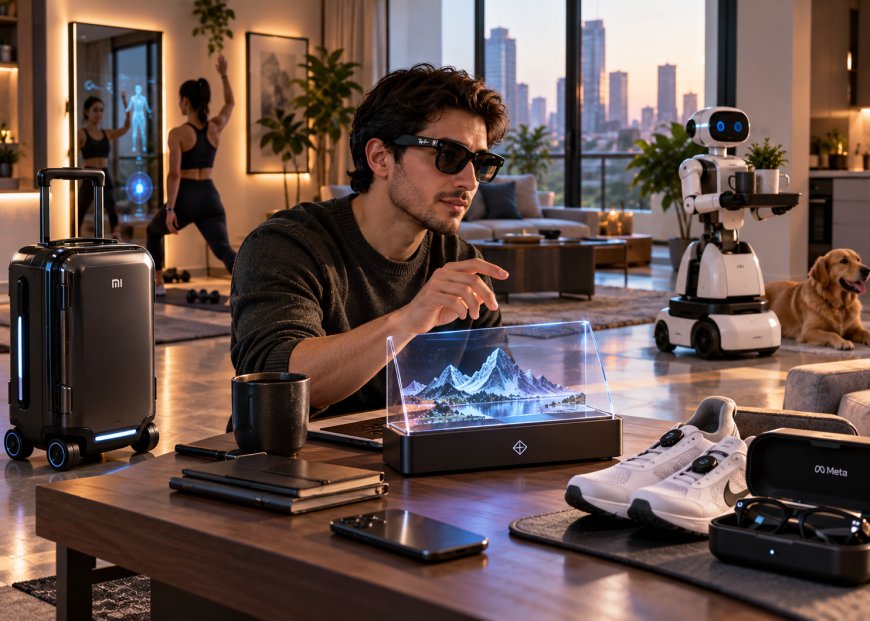
For years, consumer technology has treated the future as a visual style. Transparent screens, self-driving luggage, holographic displays, robotic machines and glowing accessories have all been sold with the promise that ordinary life is about to start looking like science fiction. Some of that hardware is genuinely impressive, but the more interesting shift is happening elsewhere. The most convincing futuristic products are increasingly the ones that stop demanding attention and simply remove friction from something people already do.
A wide-ranging hands-on test of emerging products made that distinction unusually clear. The lineup included smart glasses, accessible footwear, directional speakers, holographic displays, smart fitness hardware, motorised luggage, advanced robotics and a transparent OLED television. Some of the products felt genuinely forward-looking because they solved familiar problems in new ways. Others looked spectacular while struggling to justify why their futuristic design was actually useful.
Smart Glasses Are Starting to Make Sense
Smart glasses have spent years trying to become miniature computers for the face, and that ambition often made them less practical. Early attempts focused heavily on displays and augmented-reality overlays, which added bulk, cost and awkwardness without always providing a convincing everyday use case.
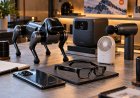
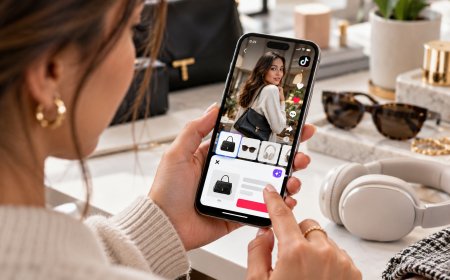
Ray-Ban Meta took a more restrained approach. Instead of putting a visible display in front of the wearer’s eyes, the glasses combine cameras, microphones, speakers and voice controls inside a form that still resembles conventional eyewear. That makes the technology less dramatic, but it also makes the product easier to use naturally. Taking a photo, recording a short video, listening to audio or using voice-based AI can happen without constantly reaching for a phone.
The hands-on test reflected that advantage. The glasses weren’t futuristic in the movie sense, because no information floated in front of the user’s eyes. Still, they felt much closer to a finished consumer product than many more ambitious wearable concepts. Their limitations were also practical rather than experimental. Users cannot frame a photo through an internal display, for example, which means some images may need to be cropped later, but the core experience still works without turning the glasses into a headset.
That may be the direction smart eyewear needed all along. The category becomes more credible when the technology disappears inside something people already want to wear.
Accessibility Tech May Be More Important Than Flashy Hardware
Nike’s Go FlyEase represents a different kind of futuristic design. The shoe was developed around accessibility, using a hinged structure and tensioning mechanism that allows it to open and close without requiring the wearer to use their hands. The design can help people who struggle with conventional laces or bending down, but the convenience extends well beyond that original use case.
This is one of the most important patterns in technology. Some of the most useful mainstream features begin as solutions for people with specific physical limitations. Once the engineering works well, the same idea becomes valuable to a much wider audience.
The FlyEase design succeeds because it concentrates complexity where it matters. Putting the shoe on becomes easier, taking it off becomes easier, and after that the unusual mechanism fades into the background. The user does not need to interact with an app, charge a battery or learn a new interface. The technology improves one task and then gets out of the way.
That makes it a stronger vision of the future than many products that look more advanced but require constant attention.
Holographic Displays Are Getting Closer to a Real Use Case
Light-field displays still feel more experimental, but they are beginning to move beyond the trade-show stage. Looking Glass and siGlass companies use multiple viewing angles to create the perception of depth without requiring a headset. Instead of showing one flat image, the display presents slightly different views depending on where the viewer is standing.
The effect is compelling because the user can physically move around an image and see the perspective change. In the source test, ordinary photographs gained depth, while animated characters appeared to occupy space inside the display. It was not true science-fiction holography, but the visual experience was far more convincing than a conventional flat screen.
The bigger challenge is content. A new display technology has limited value if users need specialist 3D software every time they want to use it. The category becomes more interesting when ordinary photos and videos can be converted automatically into light-field content. That would turn the display from a technical demonstration into something closer to a new kind of photo frame, communication tool or design interface.
This is a recurring theme in emerging technology. The hardware often arrives before the workflow that makes it useful.
Transparent TVs Look Like the Future but Expose a Basic Tradeoff
Few products look more futuristic than a transparent OLED television. Xiaomi’s Mi TV LUX Transparent Edition showed how striking the concept can be by letting bright imagery appear on a panel users can still see through.
The problem is that transparency and conventional television performance pull in opposite directions. A premium television benefits from deep blacks, strong contrast and a controlled visual background. A transparent panel is designed to let the background remain visible. The better it performs as transparent glass, the more it compromises some of the qualities people normally expect from a high-end display.
That tradeoff was obvious in use. Bright graphics and specially designed visuals could look remarkable, but normal video exposed the limitations more quickly. Resolution was also modest for the panel size, making the product feel more like an installation piece than the obvious next step for home entertainment.
Transparent displays may still have an important future in retail, vehicles, public spaces or architecture, where information can be layered onto the environment without blocking the view. The technology doesn’t need to replace the television to be valuable.
Smart Luggage Shows Why Reliability Matters More Than Novelty. Motorised luggage sounds like exactly the kind of product airports should have adopted years ago. Some models can carry their owners, while others use tracking systems and obstacle sensors to follow automatically.
The concept works well enough to be impressive, but luggage has a much higher reliability requirement than many smart gadgets. A smart speaker can misunderstand a command without creating a serious problem. A suitcase containing a passport, laptop and personal belongings cannot afford to lose track of its owner even occasionally.
The following suitcase in the source test could track movement and respond to the wearer, but inconsistent obstacle avoidance made it difficult to trust completely. The rideable version delivered more immediate fun, yet the motor and battery hardware reduced the space available for actual luggage.
That is the problem with combining product categories. A suitcase and a personal electric vehicle can technically coexist, but every component added for mobility competes with the basic requirements of storage, weight and simplicity.
The future only becomes useful when the new technology improves the original product rather than distracting from it.
AI Fitness Mirrors Are Useful Without Replacing Trainers
Smart fitness mirrors sit in another interesting middle ground. They combine large displays, cameras, workout software and movement tracking to create a more interactive alternative to following an exercise video on a television.
The technology can count repetitions, adjust workout difficulty and provide feedback while displaying an instructor inside the mirror. In the hands-on test, the experience felt polished enough to make solo exercise more engaging, particularly because the system could react to the user instead of simply playing a prerecorded class.
The limits became clearer when the device was treated as a complete replacement for a personal trainer. A single camera cannot observe the body from every angle, and automated rep counting can be fooled by movements that resemble the expected exercise. Human coaching still has advantages in judgment, injury prevention and form correction.
That does not diminish theproduct’ss value. For someone who cannot access regular coaching, intelligent fitness hardware can provide far more guidance than training alone. The technology becomes more credible when it is described as assistance rather than replacement.
Robotics Still Has the Biggest Gap Between Capability and Purpose
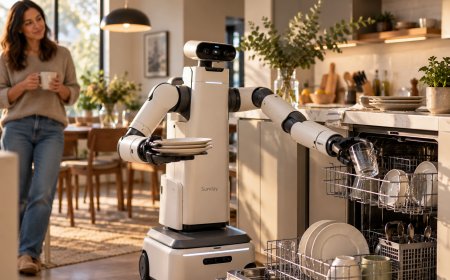
The most technically impressive products in the test were robots capable of dynamic balancing, jumping and carrying weight. Machines that can continuously sense their position and correct themselves in real time represent a significant engineering achievement, especially when they can remain stable across changing terrain.
The harder question is what consumers or businesses actually need them to do. Carrying equipment, inspecting dangerous locations, moving through warehouses or supporting field work are more compelling applications than making a robot jump simply because the hardware allows it.
This is where robotics is beginning to mature. The engineering challenge is no longer only whether a machine can move in a complex way. The commercial challenge is finding repetitive, expensive or dangerous tasks where that mobility creates enough value to justify the cost.
The same principle applies across the entire category of futuristic technology. Directional speakers, translation devices, holographic displays, smart eyewear and autonomous machines are becoming technically possible much faster than they are becoming necessary.
The products most likely to last are the ones that eventually stop feeling futuristic. They will become useful because they fit naturally into existing behaviour, remove a recurring inconvenience and demand very little attention after that. The future of consumer technology may still contain transparent displays and sophisticated robots, but the most important innovations will probably be the ones people stop noticing.
What's Your Reaction?
 Like
0
Like
0
 Dislike
0
Dislike
0
 Love
0
Love
0
 Funny
0
Funny
0
 Angry
0
Angry
0
 Sad
0
Sad
0
 Wow
0
Wow
0