





































Global EV Market Splits as US Falls Behind in Electric Vehicle Growth
The global EV market is expanding rapidly, but growth is increasingly uneven, with China and emerging markets surging ahead while the US loses momentum.
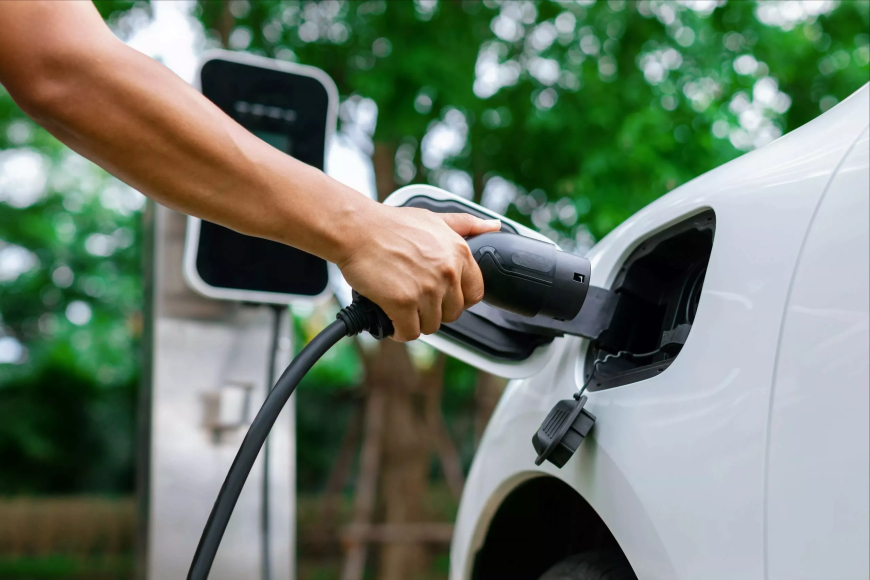
Concerns surrounding the future of the electric vehicle industry may appear justified when viewed through the lens of the United States, but globally, the picture looks very different. According to a new report from the International Energy Agency (IEA), demand for electric vehicles continues to accelerate across much of the world, with many regions experiencing strong growth and rising adoption rates.
The report shows that global EV sales exceeded 20 million units last year, accounting for approximately 25% of all vehicle sales worldwide. While some markets continue to expand rapidly, others have slowed considerably, creating what many observers describe as a K-shaped market in which growth trajectories are increasingly diverging across regions.
China remains the strongest contributor to global EV adoption, while other emerging and developed markets are also recording significant gains. In contrast, the United States has struggled to maintain momentum, with electric vehicles continuing to represent roughly 10% of total vehicle sales and showing limited growth compared with other parts of the world.
The divergence highlights how dramatically the global EV landscape has evolved. Automakers, whether established manufacturers or newer startups, increasingly face different realities depending on the markets in which they operate.
In the United States, several factors have weighed on EV growth. Among them was the passage of the One Big Beautiful Bill Act, which eliminated federal tax incentives for electric vehicle purchases. At the same time, policies restricting Chinese vehicle manufacturers' entry into the U.S. market have reduced competitive pressure and limited the availability of lower-cost electric models.
For EV-focused companies such as Rivian and Lucid Motors, both of which rely heavily on the American market, the slower pace of domestic adoption presents a more challenging business environment. Their growth strategies depend largely on increasing EV demand, making stagnation a significant concern.
Traditional automakers are somewhat better positioned in the near term because they continue to generate substantial profits from gasoline-powered vehicles. However, industry analysts caution that this advantage may be temporary. Manufacturers that fail to establish strong electric-vehicle strategies risk losing global market share as consumer preferences increasingly shift toward electrification.
Outside the United States, Chinese automakers have emerged as a major force behind EV growth. Their influence has been particularly evident in China, where nearly 55% of all newly sold vehicles were electric.
Affordability has played a critical role in this success. According to the IEA report, more than two-thirds of electric vehicles sold in China were priced below the average cost of conventional internal combustion vehicles. Competitive pricing has helped accelerate consumer adoption and expand the overall market.
Chinese manufacturers have also become important contributors to EV growth in international markets. Their vehicles have gained significant traction across Southeast Asia, Latin America, and Europe.
In Southeast Asia, more than half of all electric vehicles sold originated from Chinese manufacturers. Europe has also become a major destination for Chinese EV exports, with imports exceeding half a million electric vehicles.
The rapid expansion of EV sales in Southeast Asia and Latin America challenges a long-standing assumption that electric vehicles would remain too expensive for consumers in developing economies. Instead, falling prices and increased availability have allowed EVs to compete directly with traditional gasoline-powered vehicles in many emerging markets.
Thailand serves as one notable example. According to the report, electric vehicle prices in the country have been comparable to those of internal combustion vehicles over the past two years, making EV ownership more accessible to a broader range of consumers.
"Imports of affordable electric cars from China have brought down prices and driven up EV sales in many emerging markets in recent years," the IEA report stated.
However, some analysts caution that current growth trends may not continue indefinitely without adjustments. Chinese automakers exported significantly more vehicles than international markets absorbed, shipping more than 25% above actual foreign sales demand.
As inventories accumulate, dealerships outside China may become reluctant to accept additional shipments until existing stock is sold. Furthermore, governments in some countries may begin to introduce tariffs or other trade restrictions in response to rising imports of low-cost Chinese vehicles.
Even if such measures are implemented, many industry observers believe it would be a mistake to underestimate the long-term competitiveness of Chinese automotive manufacturers.
Over the years, the Chinese government has invested heavily in building a globally competitive automotive sector. As a result of these efforts, China now possesses manufacturing capacity sufficient to satisfy approximately 65% of total global vehicle demand.
State support has provided Chinese automakers with financial and operational advantages that allow them to maintain production levels and withstand competitive pressures longer than many rivals could sustain independently.
Looking further ahead, industry forecasts suggest that electric vehicles will eventually gain an economic advantage over traditional gasoline-powered vehicles even without government subsidies.
Research firm Gartner has projected that battery-electric vehicles could become less expensive to manufacture than internal combustion vehicles as early as next year. If that milestone is achieved, it would further strengthen the long-term economic case for electrification.
Meanwhile, the administration of President Donald Trump has sought to encourage continued reliance on fossil fuels within the American automotive market. Supporters of this strategy argue that U.S. consumer preferences may differ from those in other regions.
However, market data suggests significant structural changes are already underway. According to BloombergNEF, sales of fossil fuel-powered passenger vehicles and light trucks peaked in 2017. While hybrid and plug-in hybrid vehicles continue to gain popularity, fully electric vehicles are generally expanding at a faster pace globally.
One of the clearest examples of the risks associated with slowing EV investment is Japan's automotive sector.
Honda recently cancelled three electric vehicle projects, a move that some analysts believe could weaken its long-term competitive position in the global automotive market.
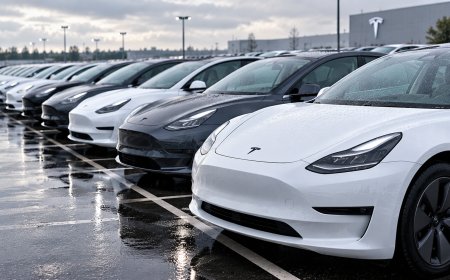
By reducing its commitment to EV development, Honda risks missing valuable opportunities to gain manufacturing expertise and operational efficiencies that companies such as Tesla and BYD have used to significantly lower production costs.
Electric vehicles are also increasingly viewed as ideal foundations for software-defined vehicles, another major transformation reshaping the automotive industry. Advanced software platforms have enabled manufacturers to streamline operations, reduce costs, and deliver new features through software updates rather than hardware modifications.
Companies that slow EV development may therefore risk falling behind in two important areas simultaneously: electrification and software integration.
Taken together, these developments paint a challenging picture for legacy automakers that have scaled back electric vehicle ambitions in recent years.
As EV adoption continues to accelerate across many international markets, manufacturers that don't strengthen their electric vehicle strategies may fall behind competitors better positioned to meet evolving consumer expectations. In an industry undergoing one of the most significant transitions in its history, the companies that successfully adapt to electrification may secure long-term growth opportunities. At the same time, those who hesitate could sacrifice market share, revenue, and future competitiveness in the global automotive landscape.
What's Your Reaction?
 Like
0
Like
0
 Dislike
0
Dislike
0
 Love
0
Love
0
 Funny
0
Funny
0
 Angry
0
Angry
0
 Sad
0
Sad
0
 Wow
0
Wow
0