



































Internet Pioneer Vint Cerf to Retire After Two Decades at Google
Vint Cerf, widely known as the Father of the Internet, is retiring from Google after more than 20 years. Learn about his legacy, TCP/IP innovation, and lasting impact on the internet.
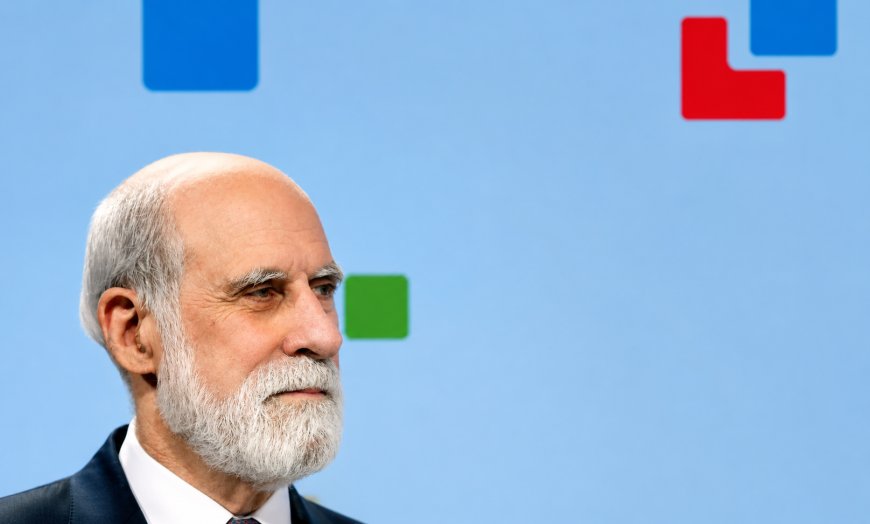
Vinton Cerf will retire from his position as Google’s Chief Internet Evangelist next week, bringing to a close one of the most remarkable careers in the history of modern computing and the internet.
During a live video appearance at the Open Frontier conference, organised by the Laude Institute, Cerf was recognised by UC Berkeley professor Dave Patterson, who is widely known for co-developing the RISC processor architecture.
“Vint … has been at Google for more than 20 years, and he is retiring a week from today, and so I think we ought to give him a round of applause for a relatively good career,” Patterson said, drawing applause from attendees.
Google had not responded to requests for comment by the time of publication.
Now 83 years old, Cerf is widely regarded, alongside longtime collaborator Robert Kahn, as one of the principal architects of the modern internet. Beginning in the 1970s, the pair developed and promoted the TCP/IP networking protocols, the fundamental communication standards that enable computer networks worldwide to connect and exchange information. Their contributions have earned Cerf numerous honorary degrees, the Presidential Medal of Freedom, the Turing Award, and many other prestigious honours.
Since joining Google in 2005, Cerf has served as the company’s Vice President and Chief Internet Evangelist, helping promote internet technologies and policy initiatives worldwide. After more than two decades in that role, few would argue that the internet no longer needs an evangelist.
Cerf appeared on a panel featuring several leading computer scientists recognised for building influential open-source technologies. The discussion included Dave Patterson, François Chollet, creator of the Keras deep-learning library and co-founder of Ndea; Stanford computer scientist John Ousterhout, creator of the Tcl programming language and co-founder of Electric Cloud; and Databricks co-founder and Chief Technologist Matei Zaharia. Together, the panel explored what it takes to build open-source systems that can last for decades, a topic that is increasingly relevant as developers continue to build open infrastructure for the next generation of AI applications.
Much of the conference focused on concerns about the growing concentration of advanced AI development in a small number of heavily funded companies, contrasting this trend with the decentralised architecture of the internet that helped make Cerf’s networking protocols so successful. Looking ahead, however, Cerf predicted that the emergence of AI agents—software capable of acting independently while collaborating with other AI systems—will encourage companies to embrace common technical standards once again.
“The agentic model of AI, with multiple agents from multiple sources interacting with each other, is going to force composability and a requirement for interoperability and standardisation,” Cerf said.
If that prediction proves correct, the organisations that establish these interoperability standards early could gain significant influence over how the emerging AI agent ecosystem develops, much like the companies and researchers that shaped the iinternet’sfoundational protocols decades ago.
While several panel members suggested that large language models could eventually communicate effectively using natural language alone, Cerf argued that formal communication standards would still be necessary.
“I don’t think English is going to be the best choice. There’s flexibility in it, but there’s ambiguity, and I think precision for interagent interaction is going to be very, very important. An agent really needs to be sure the other agent understands what it is that they just agreed to do together,” Cerf explained.
“Remember the old telephone game where you whisper in somebody’s ear and then by the time it got to 10 people away the message was totally different? Imagine a bunch of agents talking to each other in natural language—you know, that’s terrifying.”
The discussion also included a lighter moment as Patterson reflected on first meeting Cerf during graduate school in the 1970s, recalling that his distinctive wardrobe always stood out among fellow computer scientists.
“He’s always been the best-dressed computer scientist I’ve ever met,” Patterson said. “My memory of Vint is that he came as a grad student with a shirt and tie in the ’70s.”
Cerf laughed and confirmed the memory.
“It absolutely is true,” Cerf said. “I even had a vest, and for some reason I always wanted to stick out, and instead of having long hair and something in my nose, I thought just dressing differently was one way to do it.”
What's Your Reaction?
 Like
0
Like
0
 Dislike
0
Dislike
0
 Love
0
Love
0
 Funny
0
Funny
0
 Angry
0
Angry
0
 Sad
0
Sad
0
 Wow
0
Wow
0