


































Marvel’s Wolverine: Brutal Combat Gives Insomniac’s PS5 Exclusive a Sharper Focus
Marvel’s Wolverine delivers aggressive claw combat, cinematic set pieces and a focused linear campaign, though its story and exploration are less distinctive.
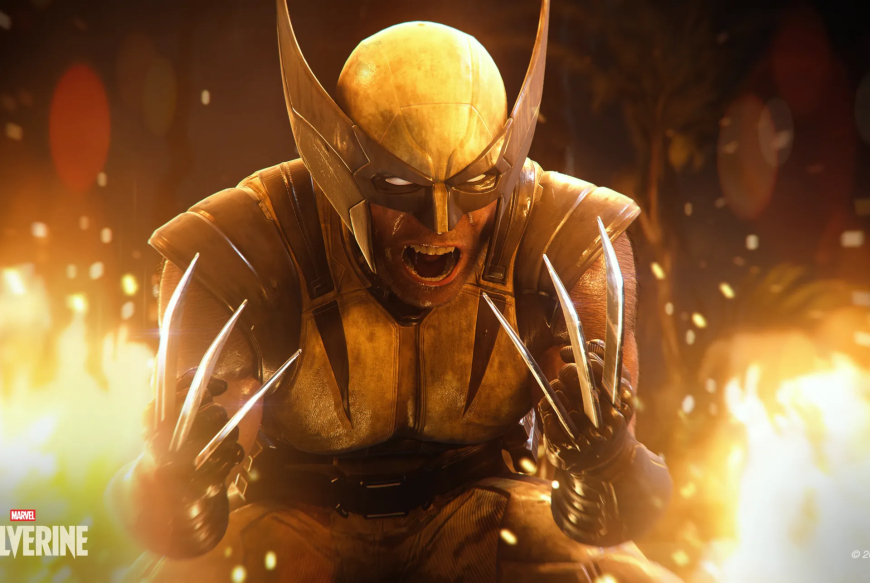
Marvel’s Wolverine is a very different kind of superhero game from Insomniac’s Spider-Man series. Instead of building another enormous city around traversal and side activities, the studio has created a more focused action-adventure where almost every system reinforces Logan’s aggression, durability, and tendency to solve problems at close range.
The narrower structure suits the character. Wolverine does not need a sprawling map filled with icons to justify his abilities. He needs enemies tough enough to survive his claws, environments that can support destructive encounters and a combat system that makes aggression more rewarding than hesitation. Insomniac largely builds the game around those priorities, producing a PS5 exclusive that feels intentionally more focused than its previous Marvel projects.
Combat Is the Main Reason Wolverine Works
Insomniac describes the combat as fast, fluid and built around aggressive momentum, and that philosophy defines nearly every system around Logan. Basic claw attacks, kicks, critical strikes and defensive moves keep fights moving at close range rather than encouraging the player to hang back.
The studio’s official breakdown of Wolverine’s combat systems explains that players can unlock Techniques for additional moves and equip up to four Special Techniques at once. Abilities such as Tornado Spin, Knee Breaker and Spiral Strike give Logan ways to control groups, interrupt dangerous enemies and quickly redirect momentum during a fight.
The system works conceptually because it doesn’t try to turn Wolverine into a highly technical, weapon-switching character. His identity comes from closing distance and staying dangerous once he gets there. Techniques add options without losing that straightforward physicality.
Rage Rewards Staying on the Offensive
Rage provides the clearest mechanical expression of Wolverine’s personality. The meter develops through three tiers as Logan maintains offensive pressure, giving players stronger benefits as combat intensifies.
At higher Rage levels, his attacks become more powerful and his survivability improves. Last Stand lets you use accumulated Rage to recover after Logan is brought down. At the same time, the highest tier turns him into a much more destructive fighter capable of brutal critical attacks.
That creates a useful tension. Rage can provide a safety net when a fight goes badly, but spending or maintaining it also influences how much offensive power is available. The mechanic encourages players to remain involved in the fight rather than constantly retreating and resetting encounters.
Adaptations provide another layer of customisation. They can improve characteristics such as Rage effectiveness, damage resistance or parry timing, allowing players to adjust Logan’s strengths without dramatically changing the fundamental style of combat.
The Violence Is Deliberate, Not Decorative
Marvel’s Wolverine is considerably more violent than Insomniac’s Spider-Man games. Claws cut through enemies, environmental destruction is common, and combat includes visible blood and dismemberment.
Insomniac has been explicit about that direction. In a developer discussion about defining Wolverine, the team explained that physical damage, destruction and Logan’s rougher fighting style were essential to making the character distinct from Peter Parker or Miles Morales.
The important point is that the violence supports the mechanical design. Wolverine is supposed to look physically committed to each encounter rather than performing elegant acrobatics around enemies. His movement is heavier, collisions look harsher, and the battlefield becomes visibly more damaged as fights progress.
Insomniac also offers options to reduce dynamic blood, dismemberment, and adult language, giving players more control over how graphically the game presents that material.
The Smaller Structure Fits Logan Better Than Another Open World
One of Insomniac’s more important decisions was not to reproduce the open-world structure of Marvel’s Spider-Man. Creative director Marcus Smith has explained that Wolverine’s relationship with his environments is fundamentally different. Spider-Man is closely connected to New York and movement across the city, while Logan is more grounded and physically connected to whatever is immediately around him.
The result is a linear narrative supported by explorable spaces rather than one seamless open world. Locations include the Canadian wilderness, Tokyo and the fictional island nation of Madripoor, allowing the story to change tone and visual identity without requiring hundreds of repetitive activities between major missions.
Exploration still matters. Logan’s Enhanced Senses can identify trails, sounds and environmental clues, while optional areas can contain upgrade materials, collectables, and small pieces of character information.
This structure feels more appropriate for Wolverine because it allows Insomniac to control pacing. The game can move from a dense interior fight to a slower investigative sequence, then into a cinematic set piece, without requiring the player to cross a large map to reach the next meaningful encounter.
Exploration Is Useful but Not the Main Attraction
The more open locations include optional rooms, conversations and collectables, but exploration remains secondary to combat. During PlayStation’s official hands-on session, Enhanced Senses could be used to follow scent trails, locate characters and uncover smaller environmental details around Madripoor.
Nightmare Doors add another activity. These lead to timed Nightmare Trials that reinterpret familiar areas as more surreal challenges and can unlock memories connected to Logan’s past.
These additions give reasons to explore the environments without turning the game into a checklist-heavy open world. The downside is that players hoping for extensive exploration may find these systems relatively light compared with the depth of the combat.
The Story Focuses on Logan’s Past and Mutant Survival
The narrative centres on James “Logan” Howlett confronting parts of his forgotten history while mutants face an escalating threat. Bolivar Trask plays a major antagonistic role, with his Reavers forming part of the opposition Logan encounters across the campaign.
Sony’s official game page frames the story around identity, loyalty and Logan’s attempt to understand his past while protecting mutantkind. Familiar Marvel characters, including Mystique, Sabretooth, and Omega Red, also appear.
The premise gives Insomniac plenty of material, particularly because Wolverine’s history naturally supports stories about memory, manipulation and relationships damaged by violence. The campaign is strongest when those themes intersect directly with Logan’s actions rather than when the story expands into conventional superhero stakes.
The supporting cast also works best when characters challenge Logan personally rather than through functionally recognisable Marvel cameos. Sabretooth in particular carries weight because the conflict between the two characters is tied to Logan’s history rather than merely providing another boss encounter.
Wolverine’s Healing Factor Changes the Rhythm of Combat
Regeneration is difficult to balance in a game because Wolverine should feel unusually difficult to kill without removing all tension. Insomniac approaches the problem by tying survivability into the same aggressive systems that drive combat.
Logan can recover from damage, but that does not make defensive decisions irrelevant. Parrying, positioning, and controlling dangerous enemies still matter because the game can overwhelm him when several attacks arrive at once.
The Rage system reinforces this balance. Staying aggressive can increase Logan’s survivability, creating a loop in which effective attacking becomes part of defence. That fits the character far better than making regeneration a passive excuse for ignoring damage.
Customisation Is Focused on Play Style Rather Than Gear Management
Progression revolves around Techniques and Adaptations rather than an elaborate loot economy. That keeps the focus on what Logan can do rather than constantly replacing equipment for small statistical improvements.
Cosmetic customisation is available through different suits and claw appearances. Insomniac has included interpretations ranging from recognisable comic-inspired costumes to more grounded looks, but these options do not change combat statistics.
The distinction is welcome. Wolverine doesn’t need a stream of colour-coded equipment drops to make progression interesting. Expanding his moves, improving Rage and changing how certain combat systems behave provides a cleaner fit for the character.
Accessibility Is Extensive
Insomniac has carried over and expanded accessibility work from its previous games. The studio says Marvel’s Wolverine includes more than 100 new, returning and improved accessibility features.
Options include High Contrast visuals, English Audio Description, Global Game Speed and Strong Haptic Signals. Separate controls for violence and language also allow players to reduce blood, dismemberment and certain adult language without changing the underlying combat mechanics.
The breadth of the accessibility menu matters especially for a game built around rapid melee encounters. Adjustments to timing, visuals and game speed can make those systems usable by players who might otherwise struggle with the default presentation.
There Is More to Do After the Campaign
Insomniac includes several post-game and replay systems at launch. New Game Plus raises level caps and adds Techniques, while Mission Replay lets you revisit individual parts of the campaign.
Nightmare Challenges provide score-focused activities, and Photo Mode is available through the game’s day-one update. These features don’t turn the game into an endlessly replayable service, but they give players reasons to return to combat after completing the story.
That approach suits the overall design. Marvel’s Wolverine is presented as a finite action-adventure, not a platform built around seasonal content or multiplayer progression.
Pros and Cons
Pros:
- Fast close-range combat fits Wolverine’s abilities and personality.
- Rage creates a strong connection between aggression, power and survivability.
- Techniques and Adaptations provide meaningful combat customisation without excessive gear management.
- Linear structure keeps the campaign more focused than a traditional open-world superhero game.
- Violence and environmental damage give Wolverine a distinct identity from Insomniac’s Spider-Man games.
- Varied global locations prevent the campaign from relying on a single visual setting.
- Extensive accessibility options provide significant control over difficulty, presentation and graphic content.
Cons:
- Exploration systems are less substantial than the combat.
- Players expecting another large Insomniac open world may find the structure restrictive.
- The broader superhero storyline can be less distinctive than Logan’s more personal conflicts.
- Some optional activities serve progression more than they add substantial new gameplay ideas.
Final Verdict
Marvel’s Wolverine works best when Insomniac allows Logan to be fundamentally different from its other superheroes. The tighter campaign, destructive close-range combat and Rage-driven progression create a game that feels built around Wolverine rather than around an existing studio formula.
The action is clearly the strongest part of the package. Techniques, Adaptations and regeneration provide enough tactical depth without diluting the direct satisfaction of getting close to an enemy and using the claws. Exploration and the wider narrative are less distinctive, but the decision to avoid another enormous open world keeps those weaker elements from dominating the experience.
For players looking for a focused single-player Marvel action game rather than another map full of recurring activities, Marvel’s Wolverine makes a convincing case for restraint. Insomniac has not tried to make Logan bigger than Spider-Man. It has made him heavier, harsher and more personal, which is exactly the direction this character needed.
What's Your Reaction?
 Like
0
Like
0
 Dislike
0
Dislike
0
 Love
0
Love
0
 Funny
0
Funny
0
 Angry
0
Angry
0
 Sad
0
Sad
0
 Wow
0
Wow
0