



























Playdate Season 3 Adds Eight Games for $39, Making Panic’s Handheld More Appealing
Playdate Season 3 brings eight new indie games for $39, including Soggy Froggy and Gloom Gate, expanding the $229 handheld’s growing library of creative titles.
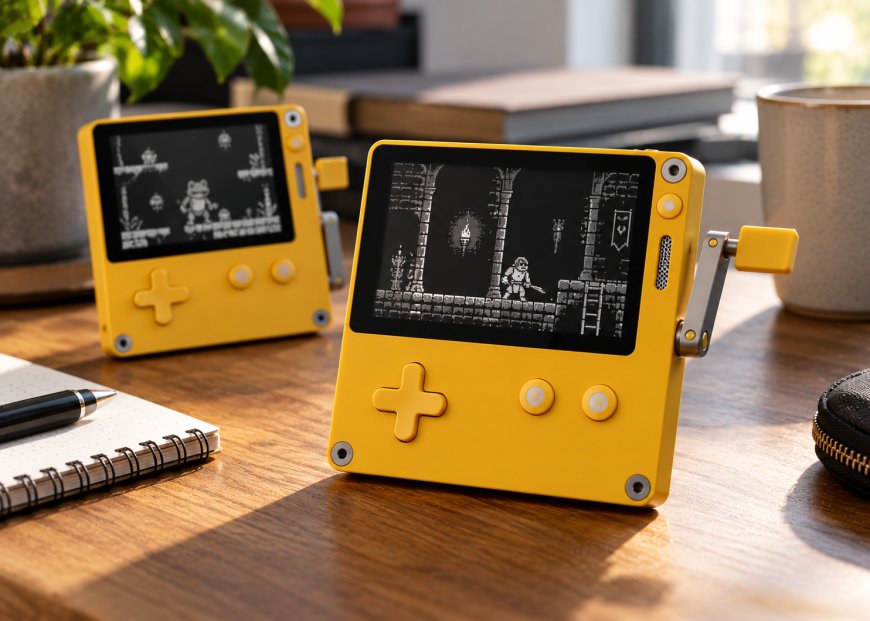
Panic has launched Playdate Season 3, bringing eight new indie games to its distinctive yellow handheld for $39. The collection began rolling out on October 8, 2026, with two games arriving each week over four weeks. The first releases, Soggy Froggy and Gloom Gate, demonstrate the variety that has made the crank-equipped console an unusual alternative to mainstream gaming hardware.
The new season arrives as Playdate continues building a library of games designed specifically for its black-and-white display and unconventional controls. Although the handheld now costs $229, its expanding selection of independent titles gives existing owners more reasons to keep using it.
Playdate Season 3 Includes Eight Games for $39
Season 3 follows Panic’s familiar approach of releasing games gradually rather than delivering the entire collection at once. Players receive two titles per week, with the final pair scheduled for October 29.
Panic’s official Season 3 page lists Soggy Froggy, Gloom Gate, houm, Sound Mind, HELLEVATOR, Bonkhope, Chance’s Lucky Escape 2, and Cross Words.
The lineup covers several genres, including arcade action, role-playing, adventure, puzzles and multiplayer experiences. Rather than focusing on one style, Panic has selected projects that use the Playdate’s limited hardware in different ways.
At $39 for eight games, the collection comes to about $4.88 per title. That is a reasonable entry point for existing owners looking to discover smaller experimental releases, though the value ultimately depends on how many games appeal to each player.
Soggy Froggy and Gloom Gate Lead the First Week
Soggy Froggy is an arcade-style game built around quick sessions and high-score chasing. Its playful presentation and accessible structure suit the Playdate’s portable design, where short bursts of gameplay are a major part of the appeal.
Gloom Gate offers a contrasting experience. Developed by LuBu, it is a dungeon-crawling role-playing game featuring a first-person perspective, exploration and combat. Its monochrome environments show how developers can create depth and atmosphere without relying on modern graphical effects.
The difference between these opening games is important. Soggy Froggy emphasises immediacy, while Gloom Gate provides a more involved adventure. Together, they establish the range Panic is attempting to offer throughout the season.
Other announced titles include the adventure game houm, the multiplayer-focused Sound Mind and HELLEVATOR, which brings action-oriented gameplay to the collection. Chance’s Lucky Escape 2 and Cross Words add further variety to the remaining releases.
Why Playdate’s Hardware Still Feels Different
Playdate launched in 2022 with an unusual combination of hardware features. Its compact yellow body holds a reflective black-and-white screen, a directional pad, two action buttons, and a fold-out mechanical crank that developers can use as an extra control.
The crank is more than a decorative feature. Depending on the game, it can control movement, adjust objects, or introduce interactions that are difficult to reproduce with conventional buttons alone.
The display is equally distinctive. Instead of competing with the colourful OLED screens found on modern handhelds, Playdate uses a one-bit screen that encourages developers to experiment with contrast, animation, and simplified visual design.
Panic developed the hardware in collaboration with Teenage Engineering, giving it an industrial design that remains recognisable among portable gaming systems. The official Playdate website details its controls, built-in speaker, Wi-Fi connectivity and original game collection.
These choices also impose limitations. Playdate isn’t designed for graphically demanding games, and its non-backlit display needs suitable ambient lighting. Its appeal comes from inventive software rather than technical performance.
Season 3 Expands an Already Substantial Game Library
Every new Playdate includes the original Season One collection of 24 games, released through weekly deliveries after the console is activated. Season Two added another collection of independent titles, and Season Three continues the same format.
Owners can also purchase additional games through Playdate Catalogue, the handheld’s dedicated digital storefront. The platform supports sideloading, allowing developers to distribute compatible games outside the official store.
This flexibility has helped Playdate develop a varied independent software ecosystem. The available games range from simple arcade experiments to more elaborate adventures and puzzle titles, often built around ideas that would be difficult to justify in larger commercial productions.
Panic says all eight Season Three games were created without generative AI. The complete collection takes up about 226MB, and you can temporarily remove games and download them again when needed.
Is Playdate Season 3 Worth $39?
For existing Playdate owners, Season Three is an appealing way to obtain eight new games without purchasing them individually. Its weekly schedule also gives each release some attention instead of asking players to work through the entire collection immediately.
The selection is especially appealing to fans of experimental indie games. Gloom Gate suggests the handheld can support relatively ambitious adventures, while Soggy Froggy shows it’s well-suited to compact arcade experiences.
However, Season Three offers fewer games than the earlier collections. Season One included 24 games, while Season Two offered 12 plus a bonus title for the same $39. The smaller lineup means Season Three must justify its cost through the quality and variety of its individual releases.
New buyers also need to consider the $229 hardware price. Playdate remains a specialised handheld, not an inexpensive alternative to a Nintendo Switch. Purchasing the console and Season Three together costs $268 before tax, although the console already includes Season One.
Final Verdict
Playdate Season 3 reinforces what makes Panic’s handheld interesting: games designed around unusual hardware, simple controls and independent creative ideas. The opening combination of Soggy Froggy and Gloom Gate gives players two noticeably different experiences, while the remaining releases promise further variety.
The eight-game collection is smaller than previous seasons, and $39 may not appeal to owners who prefer choosing individual games. Nevertheless, it offers a curated selection at a relatively modest cost for people already invested in the platform.
For existing Playdate owners, Season Three is a worthwhile addition. For newcomers, the console’s $229 price remains the bigger decision, but its growing game library makes the hardware more appealing than at launch. Panic’s latest season shows that Playdate still offers something distinct in a handheld market increasingly focused on processing power and graphical performance.
What's Your Reaction?
 Like
0
Like
0
 Dislike
0
Dislike
0
 Love
0
Love
0
 Funny
0
Funny
0
 Angry
0
Angry
0
 Sad
0
Sad
0
 Wow
0
Wow
0