


































AI’s Memory Boom Is Reshaping the Economics of Gaming
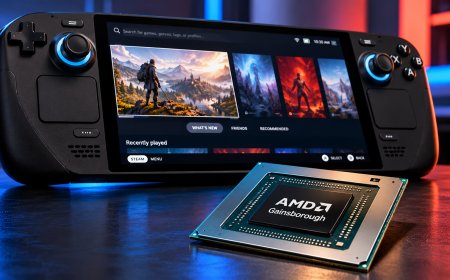
AI data centres are reshaping the global memory market, adding new cost pressure to PlayStation, Xbox and PC gaming while challenging the old assumption that gaming hardware naturally gets cheaper over time.
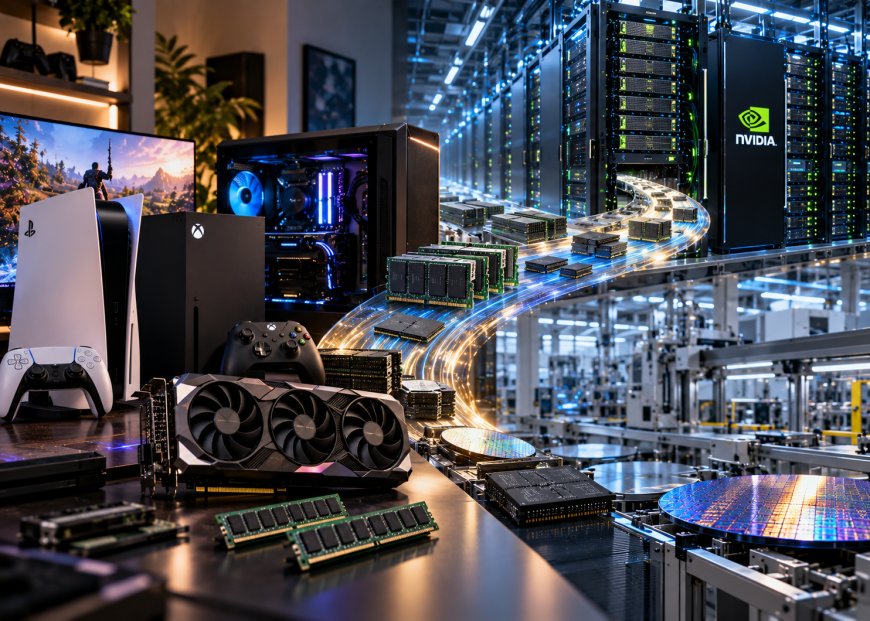
Game consoles are supposed to become cheaper as they age. Six years into the PlayStation 5 generation, that familiar pattern has broken down.
Sony raised the U.S. price of the standard PS5 to $649.99 in April, while the Digital Edition climbed to $599.99 and the PS5 Pro reached $899.99. Microsoft followed with another Xbox increase in August, adding $100 to its 512GB consoles and $150 to 1TB models. Microsoft offered an unusually direct explanation: console storage and memory costs had increased by more than 2.5 times, with the company expecting another significant increase before the end of 2027.
That does not mean artificial intelligence is single-handedly breaking the gaming business. Console manufacturers are dealing with inflation, currency pressures, expensive game development and years of strategic mistakes that have little to do with ChatGPT or data centres. AI has introduced a powerful new competitor for some of the semiconductor capacity consumer electronics depends on, particularly memory.
The consequences are becoming difficult to ignore.
AI Data Centres Have Changed the Memory Market
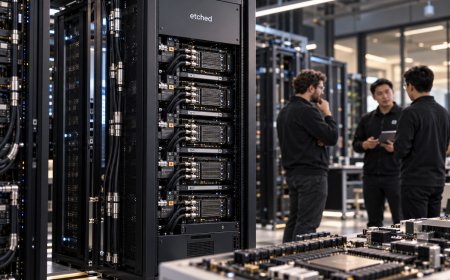
The scale of modern AI infrastructure bears little resemblance to conventional consumer computing. Nvidia’s latest accelerators carry enormous pools of high-bandwidth memory, while hyperscalers deploy them by the rack and data centre rather than by the individual chip.
It would be inaccurate to say that a gigabyte of memory installed in an AI server is literally a gigabyte that can no longer go into a PlayStation. AI systems use large amounts of HBM and server-grade DRAM, while consoles rely on different memory technologies and packaging. They do, however, ultimately compete for investment, wafer capacity, advanced manufacturing equipment and the attention of the same small group of major memory manufacturers.
TrendForce estimates that HBM and server RDIMM products will together account for 51% of worldwide DRAM bit supply in 2026. The research firm says suppliers are prioritising server applications as cloud companies expand AI infrastructure, while additional manufacturing capacity continues to lag demand. In September, TrendForce reported that total DRAM industry revenue had jumped 59.5% in a single quarter, helped by sharply higher contract prices and continued demand for AI servers.
The shift is also reflected in manufacturers’ decisions. Micron announced in December that it was shutting down its Crucial consumer business, ending a brand that had sold PC memory and storage to consumers for nearly three decades. The company explicitly cited surging AI data-centred demand and said leaving Crucial would let it better support larger customers in faster-growing markets.
For gamers, the important change is not simply that memory is expensive today. It is that AI infrastructure has altered which customers memory companies have the greatest incentive to serve.
Console Makers Can No Longer Absorb Every Increase
Game consoles have traditionally operated under unusual economics. Sony and Microsoft can accept extremely thin hardware margins because a console creates years of potential revenue through games, subscriptions, and digital purchases.
Microsoft acknowledged that model when explaining its latest price increase, noting that consoles are typically sold at little or no hardware profit. When memory and storage costs rise sharply, less margin is available to absorb the increase than on a premium smartphone or laptop.
Consumers appear to be responding to the higher prices. Circana data showed U.S. PlayStation hardware unit sales falling 58% year over year in May 2026, producing the weakest May for PlayStation hardware since 2000. Xbox recorded its lowest May unit sales since the original Xbox entered the U.S. market in 2001.
One month does not establish a permanent decline, and mature console generations naturally slow as they age. The unusual part is that consumers are being asked to pay substantially more for hardware that is already well into its lifecycle.
That creates an uncomfortable problem for the next generation. Console platforms depend on reaching a large installed base quickly enough that publishers can justify building games around the new hardware. If future consoles become dramatically more expensive, developers have a financial reason to continue targeting the tens of millions of machines consumers already own rather than designing games around capabilities available only to a smaller new audience.
This does not mean a $1,000 PlayStation 6 is inevitable, despite speculation around next-generation prices. It does mean Sony and Microsoft face a harder engineering and economic problem than they did when they designed the PS5 and Xbox Series machines.
Gaming’s Problems Go Far Beyond RAM
The industry would still be going through a difficult restructuring even without the current memory shortage.
Microsoft announced the largest reorganisation in Xbox history in July, saying it would remove about 3,200 positions during its 2027 fiscal year. Four studios are also leaving Xbox under new management, and Xbox leadership made the unusual admission that the business was “not healthy.”
Those cuts cannot reasonably be blamed on the price of DRAM. Gaming companies expanded aggressively during the pandemic, spent billions acquiring studios, and pursued expensive projects as development budgets were already rising. Publishers have since cancelled games, closed studios, and reduced headcount as they try to restore profitability.
AI-driven hardware inflation is another layer of pressure on top of those problems.
The same caution is necessary when discussing physical games. Sony has confirmed that it will stop producing discs for newly released PlayStation games beginning in January 2028. Games released before that date are unaffected, and Sony says it will still sell future titles digitally through retailers. The company attributes the decision to the long-term shift toward digital purchasing, not to memory shortages or AI.
Consumers still face significant consequences. Physical games can be resold, lent to friends and purchased secondhand, while a digital license generally remains attached to an account. Moving away from discs therefore increases platform owners’ influence over distribution and reduces some of the alternatives consumers have historically used to lower gaming costs.
When Hardware Gets Expensive, Access Starts Replacing Ownership
Cloud gaming becomes more attractive in exactly this kind of market. Instead of spending hundreds or thousands of dollars on graphics hardware, a player rents access to computing running inside somebody else’s data centre and streams the result.
The tradeoff is that the hardware no longer belongs to the player.
Nvidia’s GeForce Now already shows how different that relationship can become. Performance and Ultimate subscriptions include 100 hours of premium playtime each month, with up to 15 unused hours rolling into the following month. Users who exceed the allowance can purchase additional hours or continue on the service’s more limited basic experience until their monthly allocation resets. Nvidia says the cap helps maintain performance and shorter queues.
A 100-hour limit will never affect many users, but its existence illustrates an important difference between buying and renting computing power. A graphics card sitting in a PC does not count the hours its owner spends playing.
That does not make cloud gaming inherently bad. It changes the economics, and rising hardware prices make those economics increasingly relevant.
The Gaming Market Is Not Breaking, but Its Old Assumptions Are
The most dramatic version of this story is that AI companies are consuming the world’s memory and will eventually destroy affordable gaming. The evidence does not support such a simple conclusion.
What is happening is more subtle and potentially more important. AI has created a customer class willing to spend extraordinary amounts on computing infrastructure, and semiconductor suppliers are reorganising production around that demand. TrendForce expects server memory and HBM to consume more than half of DRAM bit supply this year. Meanwhile, Micron has already walked away from a major consumer brand to focus resources elsewhere.
Gaming companies are feeling that pressure at a particularly bad time. Hardware is becoming more expensive just as consumers resist price increases, publishers cut staff, game budgets remain hard to control, and the industry steadily moves toward subscriptions and digital distribution.
The console business has survived component shortages before, and memory manufacturers are investing in additional capacity. Supply conditions can change quickly, especially if AI infrastructure spending slows. There is no reason yet to conclude that PlayStation, Xbox or high-end PC gaming are approaching extinction.
The assumption worth questioning is simpler: that better gaming hardware will naturally become cheaper and more accessible over time.
For most of the modern gaming era, semiconductor economics made that feel almost inevitable. The AI infrastructure race has shown that it was never guaranteed.
What's Your Reaction?
 Like
0
Like
0
 Dislike
0
Dislike
0
 Love
0
Love
0
 Funny
0
Funny
0
 Angry
0
Angry
0
 Sad
0
Sad
0
 Wow
0
Wow
0