


























Retro Song Bird Turns Nintendo Game Boy Cartridges Into a Standalone Music Player
Retro Song Bird plays music from original Game Boy cartridges and offers built-in speakers, WAV exports, and audio tools. Pricing and launch details remain unconfirmed.
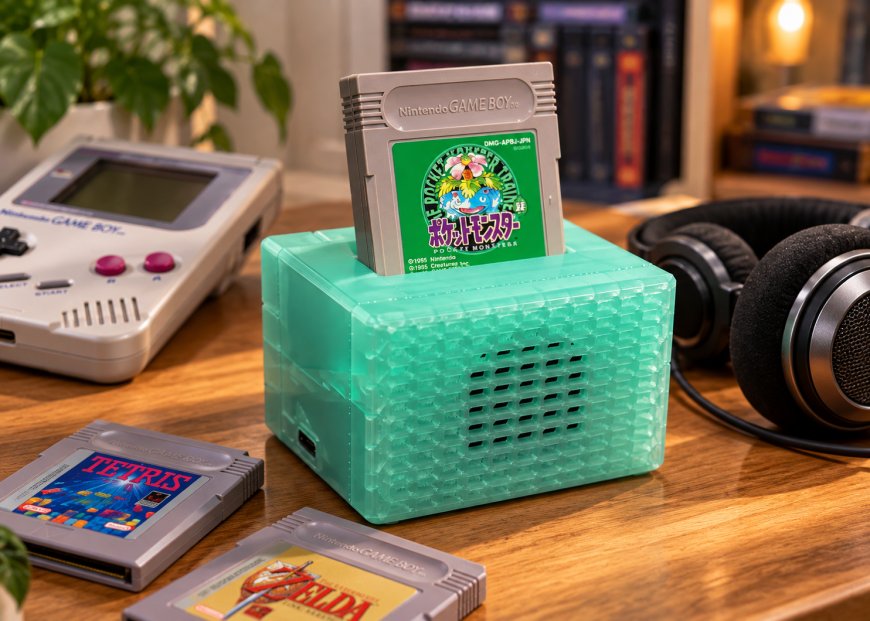
Retro Song Bird is a new music player designed to do something most retro gaming accessories overlook: play the soundtracks stored inside original Nintendo Game Boy cartridges without requiring users to play the games. The compact desktop device accepts Game Boy and Game Boy Colour cartridges, identifies their music and sound effects, and plays them through a built-in speaker or an external audio system.
Created by independent developer BJ, Retro Song Bird combines a deliberately simple music player with several more ambitious audio and cartridge-management tools. It supports more than 1,900 games, according to its developer, and can export music as WAV files, separate individual Game Boy sound channels and back up cartridge data.
The device remains in development, with only a few prototypes produced. A retail price and confirmed release date have not been announced, although its creator is considering crowdfunding or direct sales once the hardware is finalised.
A Game Boy Music Player That Doesn’t Play Games
Retro Song Bird’s appeal starts with its straightforward concept. Instead of inserting a Game Boy cartridge into a handheld console and navigating through a game to hear its soundtrack, users place the cartridge into a dedicated player that accesses the music directly.
Physical controls let listeners move between tracks and adjust the volume. The device is meant to work more like a small desktop music player than a traditional gaming accessory, letting owners explore the soundtracks of cartridges they have collected over the years.
The idea is appealing because many Game Boy soundtracks are closely tied to the experience of playing their respective games. Music from titles such as Tetris, Pokémon and The Legend of Zelda: Link’s Awakening remains recognisable decades after their original releases. Yet listening to those soundtracks on original hardware usually requires running the game, finding an in-game sound test (when one exists), or capturing audio during gameplay.
Retro Song Bird removes much of that inconvenience. Its stated compatibility with more than 1,900 cartridges also gives it a much broader purpose than a device built around a handful of famous Nintendo soundtracks. The practical success of that approach will depend on how reliably it identifies music across different games.
Simple Hardware With a Built-In Speaker
Retro Song Bird has a restrained rectangular design with a top-mounted cartridge slot. The prototype doesn’t try to recreate a Game Boy console or add a large screen. It focuses on physical cartridge playback, with basic controls and an integrated speaker as the primary listening experience.
The small enclosure makes sense for a product intended to sit on a desk or shelf. You don’t need to hold a handheld console or keep a game running to hear its music. However, the prototype’s understated design also means its functionality depends heavily on software that can locate and organise tracks correctly.
The player uses register-level sound emulation to reproduce the Game Boy’s audio. This approach aims to recreate the original sound hardware’s behaviour rather than rely on recordings of commercially released soundtracks.
For users who want better playback equipment, Retro Song Bird includes a stereo line output. This lets you connect to external speakers, an amplifier, or recording equipment. This flexibility matters because the original Game Boy speaker was never intended to deliver the same listening experience as a dedicated audio system.
Independent measurements of audio quality, output noise and emulation accuracy have not yet been published. Those details will matter to collectors who want a faithful reproduction of their favourite soundtracks rather than simply a convenient way to access them.
Four-Channel USB Audio Opens Up Music Production
The technology becomes even more interesting when Retro Song Bird connects to a computer. Rather than providing only a conventional stereo recording, the device can output each of the Game Boy’s four sound channels as a separate USB audio stream.
The original Game Boy audio system uses two pulse-wave channels, one programmable waveform channel and one noise channel. Game developers combined these limited resources to create melodies, bass lines, percussion and sound effects that became characteristic of portable games during the late 1980s and 1990s.
By separating those channels, Retro Song Bird lets musicians examine individual elements of a soundtrack. A producer could isolate a melody, study a bass pattern or capture a percussion channel for further processing in music-production software.
The device also supports exporting soundtracks to WAV files, so you can save and play music without keeping the original cartridge connected. This makes it potentially useful for personal archiving, musical analysis and creative projects, subject to the copyright restrictions that apply to the original compositions and recordings.
These features give Retro Song Bird a second audience beyond collectors. Musicians working with chiptune sounds may find the individual audio streams more valuable than the standalone speaker, particularly when experimenting with the distinctive limitations of Game Boy sound hardware.
Cartridge Backups, Game Boy Camera and Developer Tools
Retro Song Bird is also being developed as a cartridge utility. Its announced capabilities include backing up game ROM data, preserving save files and writing to compatible flash cartridges. These functions could make the device useful to people maintaining older Game Boy collections.
Cartridge-based games can store personal save data that owners may want to preserve, especially as original storage hardware ages. A device that can create backups offers another way to protect that information, though the reliability and compatibility of Retro Song Bird’s backup tools have not yet been independently verified.
The developer has also demonstrated an unusual secondary use for Nintendo’s Game Boy Camera. When the camera cartridge is connected, Retro Song Bird can operate as a USB webcam, bringing the accessory’s distinctly low-resolution images into a modern computer environment.
Planned features also include an alarm function, an open API for third-party developers, and built-in Wi-Fi for over-the-air software updates. These capabilities suggest that the hardware could become a broader platform for Game Boy-related experiments. However, their usefulness will depend on how they are implemented in a final retail version.
The developer’s Bird Cartel website also highlights a Game Boy album-creation project, reflecting a broader interest in using cartridge-based hardware for music distribution and experimentation rather than gaming alone.
How Retro Song Bird Differs From Existing Cartridge Readers
Retro Song Bird is not the first accessory designed to connect original Game Boy cartridges to a modern computer. Devices such as the Epilogue GB Operator already offer cartridge reading and game management, including ways to play compatible titles through computer-based software.
The distinction is the listening experience. GB Operator is primarily a computer-connected accessory, while Retro Song Bird is designed around immediate soundtrack playback without needing a computer for its basic music-player function.
That difference could appeal to collectors who enjoy using physical cartridges but don’t want to launch an emulator every time they listen to a soundtrack. The dedicated speaker and simple controls also make Retro Song Bird better suited to casual desk listening.
On the other hand, someone who mainly wants cartridge backups or access to classic games may find a conventional cartridge reader more practical. Retro Song Bird does not position itself as a Game Boy replacement, and its specialised music features may be unnecessary for some retro gaming enthusiasts.
Retro Song Bird Price and Release Date
Retro Song Bird is still a prototype, not a finished retail product. The developer has produced only a limited number of working units and has not confirmed a retail price or a firm availability date.
According to Time Extension’s coverage, the project was initially targeting a release later in 2026. However, the current prototype status means a commercial launch cannot yet be considered guaranteed.
The developer is exploring possible crowdfunding or direct-sales options. Prospective buyers can follow updates through the project’s official website, although pricing and ordering details remain unresolved.
Several practical questions will need answers before the device is ready for purchase. These include final cartridge compatibility, playback reliability, audio performance, software stability and the durability of the cartridge connector. The absence of a confirmed price also makes it difficult to judge how the hardware will compare financially with existing cartridge readers.
Final Verdict: A Promising Music Player for Game Boy Collectors
Retro Song Bird stands out because it gives old Game Boy cartridges a different purpose. Instead of treating them solely as games to preserve or replay, it turns them into physical music collections you can explore without navigating the original software.
The concept is particularly compelling for collectors with extensive Game Boy libraries and musicians interested in chiptune production. Built-in playback, stereo output, WAV exports, and four independent USB audio channels make a useful package, while cartridge backup capabilities add value beyond listening.
Its limitations are equally important. Retro Song Bird cannot replace a conventional gaming handheld, and its price, launch schedule and final hardware quality remain unknown. Buyers interested mainly in playing games or managing cartridge collections may be better served by an established cartridge reader.
However, for those who care as much about Game Boy music as the games themselves, Retro Song Bird offers a distinctive approach to retro hardware. The prototype demonstrates a practical and creative use for decades-old cartridges. Whether it becomes a worthwhile purchase will depend on the finished device’s reliability, compatibility and eventual price.
What's Your Reaction?
 Like
0
Like
0
 Dislike
0
Dislike
0
 Love
0
Love
0
 Funny
0
Funny
0
 Angry
0
Angry
0
 Sad
0
Sad
0
 Wow
0
Wow
0