































Sony LinkBuds Clip Bring Open-Ear Audio to a New Clip-On Design
Sony LinkBuds Clip bring open-ear audio, three listening modes, AI-assisted calls, 37-hour battery life and a lightweight clip-on design for daily use.
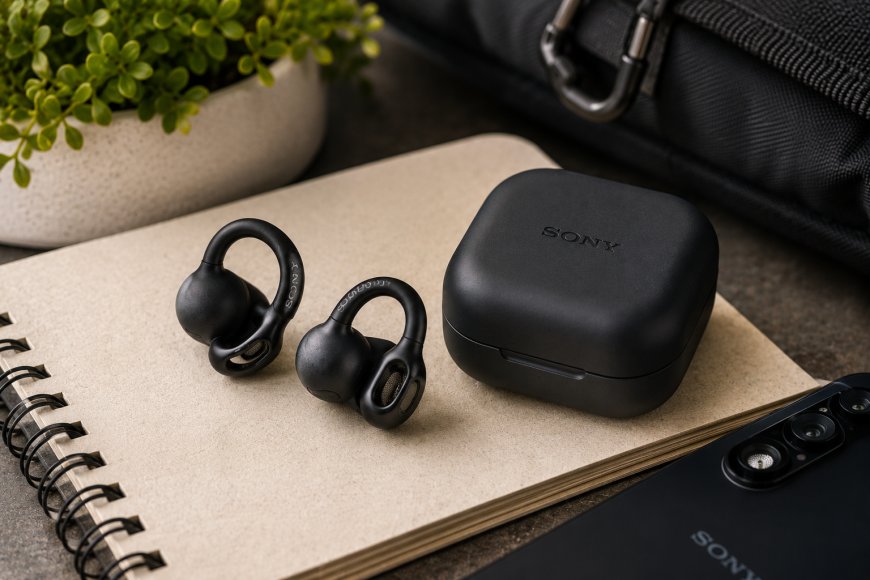
Sony has expanded its LinkBuds family with the LinkBuds Clip, a new pair of open-ear wireless earbuds designed to deliver music and calls without sealing users off from their surroundings.
Instead of sitting inside the ear canal like conventional earbuds, the LinkBuds Clip attach around the outer ear using a C-shaped clip design. The approach keeps the ear canal open, allowing ambient sounds to remain naturally audible while music continues to play.
It is Sony’s latest attempt to make open-ear listening an everyday alternative to traditional wireless earbuds.
A Different Kind of LinkBuds
Sony has experimented with open listening before, most notably with the distinctive ring-shaped design of earlier LinkBuds models.
The LinkBuds Clip take a different approach. Each earbud uses two sections connected by a flexible band that clips around the ear. Sony also offers removable Fitting Cushions to help users adjust stability and comfort for different ear shapes.
Each earbud weighs about 6.4 grams, keeping the design relatively light despite the additional structure required by the clip.
The earbuds are available in Black, Greige, Lavender and Green.
Three Listening Modes
One of the more interesting features is the ability to switch between three listening modes depending on the environment.
Standard Mode is intended for everyday music listening.
Voice Boost Mode emphasizes voices, making podcasts, videos and spoken content easier to hear in noisy environments.
Sound Leakage Reduction Mode is designed for quieter environments where users may want to reduce how much of their audio is heard by nearby people.
The concept differs fundamentally from active noise cancellation. LinkBuds Clip are designed to keep users connected to their environment rather than block it out.
That could make them useful for walking, working in an office, commuting or other situations where awareness of surrounding sounds matters.
Sony Adds DSEE and a 10-Band Equaliser.
Sony has equipped the LinkBuds Clip with 10mm drivers and several of its familiar audio technologies.
DSEE processing is included to enhance compressed digital audio, while users can adjust the sound through a customizable 10-band equalizer in Sony’s companion app.
The earbuds support SBC and AAC Bluetooth audio codecs.
Independent testing has generally found the sound to be clear and usable, although the open design inevitably limits isolation and low-frequency response compared with well-sealed in-ear earbuds. That trade-off is common across the open-ear category.
AI and Bone Conduction Assist With Calls
Calls are another major part of Sony’s pitch.
The LinkBuds Clip uses microphone processing, an AI-based voice pickup system, and a bone-conduction sensor to distinguish the wearer’s voice from surrounding noise.
Because open-ear earbuds are often used outdoors or while moving around, microphone performance can be particularly important.
Real-world results can still depend heavily on wind, traffic and other environmental noise. Independent reviews have produced mixed assessments of call quality, reinforcing that performance can vary by situation.
Up to 37 Hours With the Charging Case
Battery life is one of the stronger specifications.
Sony rates the earbuds for up to9e hours of music playback, with the charging case providing an additional 28 hours. That brings total advertised listening time to as much as 37 hours.
Quick charging can provide approximately one hour of playback from a three-minute charge.
The earbuds carry an IPX4 water-resistance rating, making them resistant to splashes and sweat under specified conditions. The charging case itself is not water-resistant.
Wireless charging is not included, so the case must be charged through a cable.
Multipoint and Voice Assistant Support
LinkBuds Clip support Bluetooth multipoint, allowing them to remain connected to two compatible devices.
That can be useful for someone working on a laptop while also keeping the earbuds connected to a smartphone for incoming calls.
Sony also offers integrations and controls through its companion app, along with access to supported voice assistant and music features.
Open-Ear Listening Comes With a Trade-Off
The biggest reason to choose LinkBuds Clip is also their biggest limitation.
Because the earbuds deliberately leave the ear canal open, users can naturally hear traffic, conversations and other sounds around them. That awareness can be valuable outdoors and during long periods of wear.
But the same design means there is effectively no traditional passive noise isolation.
On an aeroplane, a train, or a particularly noisy street, conventional noise-cancelling earbuds are likely to provide a more immersive listening experience.
For that reason, LinkBuds Clip are better viewed as an alternative category of earbuds rather than a direct replacement for Sony’s noise-cancelling models.
Price Puts Them in Premium Territory
Sony launched the LinkBuds Clip in the United States at $229.99, with a suggested European price of approximately €200 and a UK price of £180.
That pricing places them against established open-ear competitors from brands including Bose, Shokz and Soundcore.
It also makes value an important consideration. Independent reviewers have generally praised aspects such as battery life, controls and the ability to remain aware of surroundings. At the same time, some have questioned whether the overall package justifies the premium price.
The LinkBuds Clip ultimately represent a different philosophy from conventional earbuds. Rather than trying to isolate listeners from the outside world, Sony is betting that some users would prefer to hear their music alongside their surroundings.
For commuters, office workers, and people who dislike having earbuds inserted into their ear canals, the LinkBuds Clip could be an appealing alternative. For buyers who prioritize powerful bass and maximum noise isolation, traditional in-ear earbuds remain the stronger choice.
What's Your Reaction?
 Like
0
Like
0
 Dislike
0
Dislike
0
 Love
0
Love
0
 Funny
0
Funny
0
 Angry
0
Angry
0
 Sad
0
Sad
0
 Wow
0
Wow
0