































Pocket Secures $11M to Expand Its AI Note-Taking Device Business
Pocket has raised $11 million to accelerate the growth of its AI note-taking device. Discover how the startup plans to expand its smart meeting and conversation recording technology.
Unlike AI hardware products such as Rabbit and Humane, dedicated devices built for recording and transcribing meetings have gained meaningful traction in the market. While smartphones paired with note-taking apps can perform many of the same tasks, the growing demand has encouraged companies including Plaud, Mobvoi, Anker, Viaim, and Vibe to launch specialised recording devices.
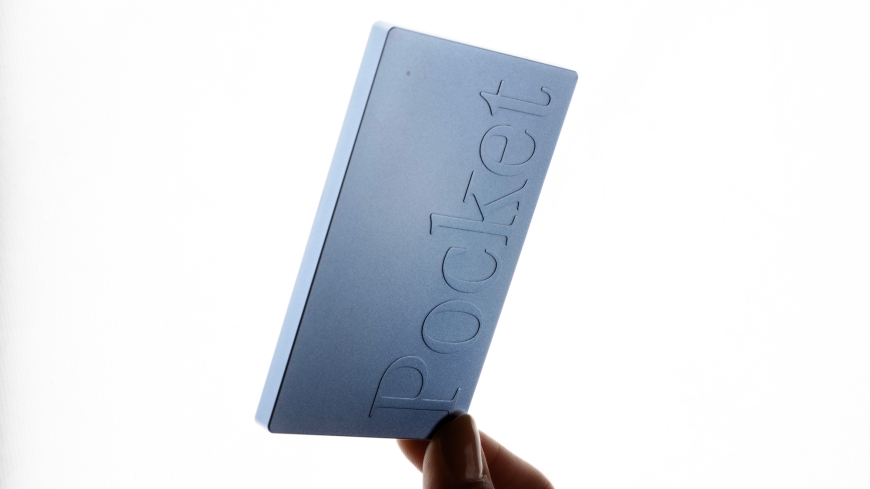
Entering this increasingly competitive market, Y Combinator-backed Pocket believes it can stand out through its design, pricing, and overall user experience. The company offers a $129 credit card-sized recording device that attaches magnetically to the back of a smartphone and provides unlimited recordings, transcriptions, and to-do lists without requiring a subscription.
Pocket says it has sold more than 130,000 devices since launching last year. That early momentum has helped the startup secure $11 million in new funding from Accel, Y Combinator, and ElevenLabs CEO and co-founder Mati Staniszewski.
The product itself follows a familiar concept. Users attach the slim device to the back of their phone, activate recording during meetings or conversations, and Pocket automatically records and transcribes everything being discussed.
After a meeting is complete, users can access the companion mobile app to generate AI-powered summaries, ask questions about previous conversations through an AI assistant, create mind maps, and convert transcripts into various document templates.
Although unlimited transcription is included with the device, Pocket also offers a premium subscription priced at $200 per year. The paid plan unlocks unlimited AI-generated summaries, unrestricted AI assistant queries, daily highlights, and support for file attachments.
Accel partner Cecilia Wang said Pocket is particularly useful because it allows users to capture conversations while working offline or in environments where smartphones alone are less practical. She noted that professionals,s including lawyers, sales representatives, doctors, real estate agents, construction workers, and students,s are already using the device in their daily work. According to Wang, users remain more engaged in conversations instead of dividing their attention between speaking and taking notes, while also preserving valuable information that might otherwise be forgotten over time.
Pocket was founded by Akshay Narisetti, a founding team member at the note-taking startup Omi, and Gabriel Dymowski, who previously established a blockchain-based document management company.
Narisetti said the founders believed that most existing AI note-taking products were designed primarily for virtual meetings, while very few solutions focused on capturing in-person conversations. He added that AI systems perform better when they have richer context, much of which is generated during face-to-face discussions.
For enterprise customers, Pocket provides features such as custom workflow automation, webhook support, and integrations with services including Google Calendar, Google Drive, OneDrive, Obsidian, Claude, and Cursor. The platform also includes a Model Context Protocol (MCP) server, enabling its AI assistant to connect with external databases and enterprise systems.
Like many other AI meeting assistants, Pocket aims to automate routine follow-up work such as drafting emails, updating CRM systems, and generating action items directly from meeting conversations. The company believes that rapidly expanding its software capabilities and integrations will help strengthen its competitive position.
Pocket competes not only with hardware-focused companies but also with software platforms including Granola, Zoom, Fireflies, Otter, and Read AI. At the same time, hardware-first competitors such as Plaud continue expanding beyond recording devices by building enterprise software capabilities and desktop applications for managing digital meetings, demonstrating that competition across the AI note-taking market continues to intensify.
What's Your Reaction?
 Like
0
Like
0
 Dislike
0
Dislike
0
 Love
0
Love
0
 Funny
0
Funny
0
 Angry
0
Angry
0
 Sad
0
Sad
0
 Wow
0
Wow
0