


































Best AI Search Engines: Perplexity, ChatGPT, Gemini and Alternatives
Compare the best AI search engines, including Perplexity, ChatGPT, Google AI Mode, Microsoft Copilot and Brave, for research, citations and web search.
AI search engines are changing what people expect from web search. Instead of returning a page filled mainly with blue links, they can search multiple sources, summarise the findings, answer follow-up questions and provide citations that lead back to the original material.
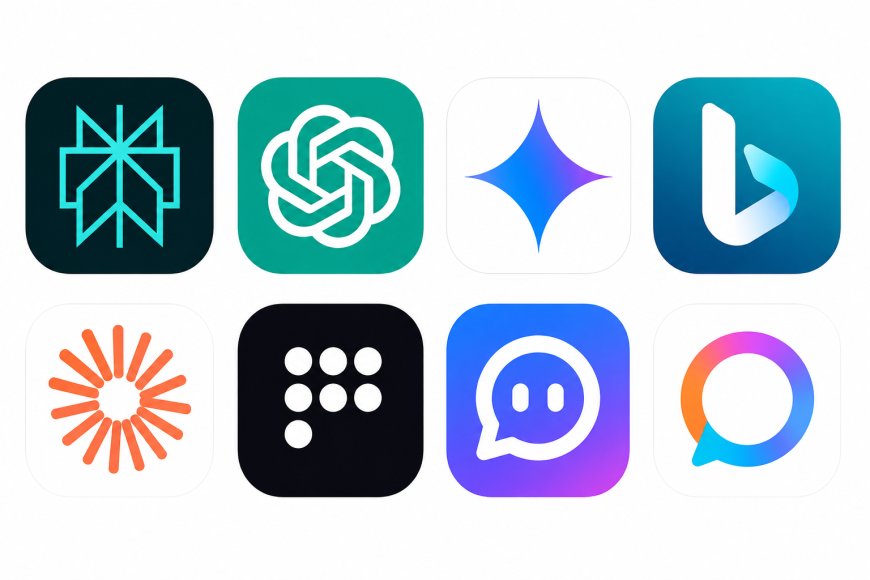
Perplexity was built around this model from the start, but it is no longer the only one. ChatGPT can search the live web; Google’s AI Mode brings Gemini directly into Google Search; Microsoft has Copilot Search in Bing; and Brave combines its independent search index with AI-generated answers.
The services overlap, but they are not identical. Perplexity puts sources at the centre of the experience. ChatGPT is stronger when web research is part of a longer conversation or analysis task. Google AI Mode benefits from Google’s enormous search infrastructure. Brave places unusual emphasis on privacy, while Microsoft’s offering is tightly connected to Bing.
There is also no reliable universal benchmark proving that one AI search engine is always the most accurate. Results vary by query, source selection, freshness and how effectively the model interprets retrieved information. Important claims should still be checked against the cited source.
AI Search Engines at a Glance
| Service | Best For | Web Citations | Free Access | Key Advantage |
|---|---|---|---|---|
| Perplexity | Research and source discovery | Yes | Yes | Citation-first search experience |
| ChatGPT Search | Search plus analysis | Yes | Yes | Search inside a broader AI assistant |
| Google AI Mode | General web discovery | Yes | Yes | Deep integration with Google Search |
| Microsoft Copilot Search | Bing users | Yes | Yes | AI answers combined with Bing results |
| Ask Brave | Privacy-focused Search | Yes | Yes | Independent index and privacy focus |
Features and usage limits can change as these services are updated.
Perplexity: Best for Citation-First AI Search
Perplexity remains one of the clearest examples of an AI search engine rather than a conventional chatbot with optional web access.
When a user asks a question, Perplexity searches the internet and produces a conversational answer supported by numbered citations. Those citations link to the underlying sources, making it relatively easy to move between the generated answer and the material used to construct it.
That approach is especially useful for research. Instead of opening many search results before understanding a subject, a user can begin with an overview and then inspect the individual sources that support important points.
Follow-up questions retain the context of the eSearch search, which works well when researching a subject gradually rather than trying to construct the perfect search query on the first attempt.
Perplexity also offers Research and Pro Search modes for deeper investigation. Its free plan provides standard access and a limited amount of Pro Search, while paid plans increase search capacity and access to advanced models and features.
Its biggest strength is also something users need to watch carefully. A response can contain many citations and still make an unsupported inference between them. For serious research, clicking through to the source remains essential.
Best for: Research, source discovery, current information and users who want citations visible throughout an answer.
ChatGPT Search: Best for Combining Search With Analysis
ChatGPT Search takes a different approach. Search is part of the wider ChatGPT experience rather than a separate traditional search-results product.
ChatGPT can decide when a question would benefit from current web information, or users can explicitly trigger a web search. Search-based answers can include inline citations and a sources panel that provides access to relevant webpages.
The advantage becomes clearer after the iSearch search.
A user can ask ChatGPT to compare several sources, explain disagreements, restructure the findings into a table, extract important dates or continue researching a specific part of the question. This makes it particularly useful. Search is only the first step in a larger task.
OpenAI also offers deep research for more complicated research projects. It is designed to search, analyse, and synthesise information across multiple sources, and OpenAI has expanded it with features including the ability to restrict searches to selected trusted sites.
For a simple navigational search, however, ChatGPT may be more tool than necessary. Someone looking for one known website or a quick local result may still prefer a conventional search interface.
Best for: Search followed by analysis, comparison, explanation, document work and complex follow-up questions.
Google AI Mode: Best for AI Built Directly Into Web Search. Google’s answer to conversational AI search is AI Mode in Search.
The distinction between Gemini and Google Search matters here. Gemini is Google’s broader AI assistant, while AI Mode is the AI search experience inside Google Search, powered by Gemini models.
Google upgraded AI Mode globally to Gemini 3.5 Flash in May 2026. The company says AI Mode is designed to handle complex questions, follow-ups, and searches that might previously have required several individual queries.
Google has also blurred the line between traditional results and AI conversations. Users can move from AI-generated information into follow-up questions rather than starting a completely new search. AI Mode can provide links to webpages alongside generated responses, keeping access to the broader web within the experience.
Another advantage is multimodal Search. Search Live has expanded across the markets where AI Mode is offered, allowing users to combine voice and camera input with conversational Search.
Google’s scale makes AI Mode particularly attractive for general web discovery, shopping, places, visual searches and questions where conventional search results remain useful alongside an AI answer.
The downside is that AI-generated summaries can still make mistakes. The presence of Google’s search index underneath an answer does not guarantee that the model has interpreted every source correctly.
Best for: Everyday web search, broad discovery, visual searches and users who want AI without abandoning the traditional Google experience.
Microsoft Copilot Search: Best Alternative for Bing Users
Microsoft has also reworked Bing around AI-generated answers.
Copilot Search in Bing places summarised information at the top of the search experience and includes cited sources that users can open for additional detail. Microsoft describes Bing as an AI-powered search and answer engine.
Microsoft has also brought more transparent web sourcing into the broader Copilot experience. When Copilot uses web information, users can see clickable sources showing where parts of an answer came from.
This makes Copilot Search a practical option for people already using Bing, Edge and other Microsoft services.
Its position is somewhat different from Perplexity. Perplexity is centred almost entirely on conversational research, while Bing continues to combine familiar search results with AI-generated answers and discovery features.
Best for: Bing and Edge users who want AI summaries without moving to a completely separate search platform.
Ask Brave: Best for Privacy-Focused AI Search
Brave offers one of the more distinctive alternatives because it combines AI search with an independent web index and a privacy-focused business model.
Ask Brave combines ConvenSearch search with AI chat in a single interface. Brave says it is free and available through any browser or platform, not only the Brave browser.
Its AI answers are grounded in Brave Search results and include sources so users can inspect the webpages behind the generated response.
Privacy is the larger differentiator.
Brave says its search engine does not profile users and does not collect personal search data that could be used to sell or share it. Brave Search also indexes its own independent web index rather than simply functioning as a front end for one of the largest conventional search providers.
That makes Ask Brave particularly appealing to people who want AI-generated search answers but are uncomfortable with extensive personalisation or search profiling.
Its trade-off is scale. Google has a much broader ecosystem of specialised search products, while ChatGPT and Perplexity offer more extensive research-oriented AI workflows.
Best for: Privacy-conscious users and those seeking an independent alternative to Google and Bing.
What About You.com?
You.com remains another name in AI-powered web search, although the company increasingly emphasises search infrastructure and APIs for AI applications and agents.
Its technology focuses on live web retrieval, citation-backed results and search tools that developers can integrate into AI systems. The company also offers research-oriented AI capabilities designed to synthesise information from multiple sources.
For everyday consumers, Perplexity, ChatGPT, Google, Bing and Brave currently provide clearer mainstream search experiences. You.com is particularly relevant to developers and companies building AI products that need real-time web information.
Best for: Developers, AI applications and research workflows that need live web retrieval.
Which AI Search Engine Is the Most Accurate?
There is no single answer.
AI search consists of at least two separate problems: retrieving useful sources and correctly interpreting those sources.
A system can retrieve the right webpage but summarise it incorrectly. It can also produce a logically convincing answer based on sources that are outdated or poorly matched to the question.
The safest way to use any AI search engine is to treat citations as a verification tool rather than proof that the generated text is correct.
For important searches, check whether:
- The citation actually supports the sentence it accompanies.
- The source is current enough for the question.
- The information comes from the source rather than from a site that repeats someone else’s reporting.
- Multiple reliable sources agree on contested information.
- Dates, prices, specifications, and statistics match those on the underlying page.
This becomes especially important for medical, financial, legal, political and rapidly developing news topics.
Perplexity vs ChatGPT Search
For straightforward web research, Perplexity offers a cleaner, citation-first workflow. Sources are central to how the answer is presented, and asking successive research questions feels close to using an AI-native search engine.
For tasks where Search needs to turn into something else, ChatGPT is more flexible. A user can search and then continue into analysis, writing, data work or a larger research process without switching products.
The better choice, therefore, depends on what happens after Search.
If the goal is “find and verify information,” Perplexity is particularly strong.
If the goal is “find information, understand it and then work with it,” ChatGPT is usually the more versatile environment.
Gemini vs. Perplexity
Google AI Mode is strongest when users still want the breadth of a traditional search engine around the AI response.
Perplexity provides a more focused conversational research interface, while Google can connect AI answers with the wider search ecosystem, including conventional web results and multimodal Search.
For research-heavy sessions, Perplexity’s source-forward presentation can be easier to audit. For everyday searching across a wide range of query types, Google AI Mode has the advantage of being integrated directly into Google Search.
Which AI Search Engine Should You Use?
Choose Perplexity if citations and web research are your main priority.
Choose ChatGPT Search if you want to research information and then analyse, compare or work with the results.
Choose Google AI Mode if you want AI answers combined with the breadth of Google Search.
Choose Microsoft Copilot Search if Bing and Microsoft’s ecosystem already fit your workflow.
Choose Ask Brave if privacy and an independent search index matter most.
There is no reason to use the same engine for every query. AI search tools retrieve, rank, and interpret information differently, so checking a difficult question on a second service can sometimes reveal missing sources or conflicting conclusions.
The biggest improvement over conventional Search is not that AI removes the need to inspect sources. It is now possible for Search, synthesis, and follow-up questions to occur within the same workflow. The source-checking step still matters.
What's Your Reaction?
 Like
0
Like
0
 Dislike
0
Dislike
0
 Love
0
Love
0
 Funny
0
Funny
0
 Angry
0
Angry
0
 Sad
0
Sad
0
 Wow
0
Wow
0