





























Samsung Galaxy Z Fold 8 Review: Better, Lighter and Still Compromised
Samsung Galaxy Z Fold 8 gets lighter, thinner, and faster, with improved battery life, but its cameras, durability, and $1,899 price point mean there are compromises.
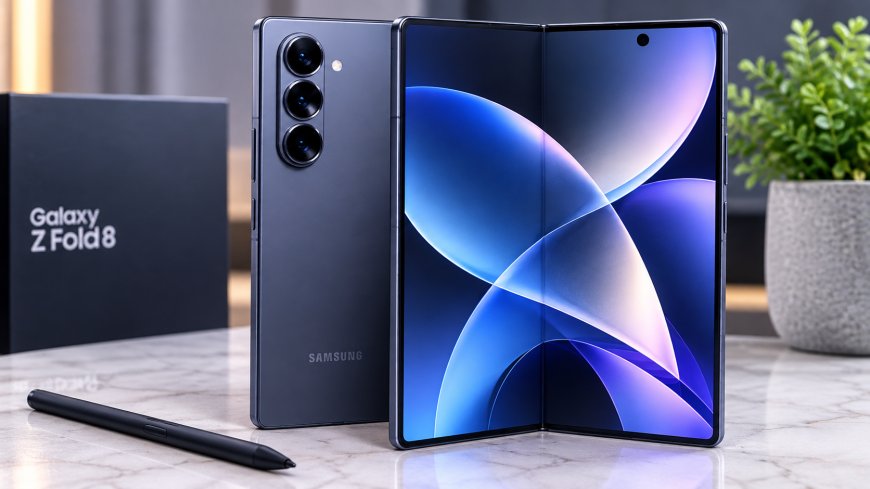
Samsung’s Galaxy Z Fold 8 is one of the company’s most refined foldable phones yet. Still, after years of incremental improvements, the honeymoon period for the Fold line may finally be over.
The Galaxy Z Fold 8 launched alongside the more expensive Galaxy Z Fold 8 Ultra, giving Samsung two book-style foldables for the first time. The standard model starts at $1,899.99 in the United States, with general availability beginning Aug. 7.
At that price, expectations are high.
Samsung has made the Fold 8 noticeably easier to live with. It weighs just 201 grams, making it the company’s lightest Fold yet, while the unfolded body measures about 4.5mm thick. The wider proportions also make the cover screen feel more like a conventional smartphone instead of the unusually narrow displays found on older generations.
Those changes make the Fold 8 more practical, but they do not eliminate the compromises that continue to define foldable phones.
A More Comfortable Foldable
The biggest improvement is the design.
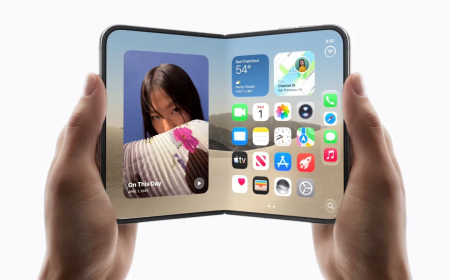
Samsung has shifted the Galaxy Z Fold 8 toward a shorter, wider form factor. The external display uses a more familiar 10:16 aspect ratio, while the internal screen opens into a 4:3 layout better suited to multitasking, reading and video.
That wider shape makes a meaningful difference in everyday use. Typing on the cover screen feels less cramped, websites fit more naturally, and social-media apps require fewer compromises.
Independent hands-on testing has also highlighted the more usable proportions as one of the Fold 8’s greatest improvements.
The lighter body is equally important. A foldable can have excellent specifications, but if it feels uncomfortable in a pocket or tiring to hold, the novelty quickly disappears.
At 201 grams, the Fold 8 is moving much closer to conventional flagship-phone territory.
Two Displays Still Define the Experience
Samsung equips the Galaxy Z Fold 8 with a 5.5-inch cover display and a 7.6-inch main folding screen.
Both panels support a 120Hz refresh rate, and Samsung says the displays can reach up to 3,000 nits of peak brightness.
The internal display remains the main reason to buy the phone.
Converting a normal smartphone into a small tablet still provides advantages for reading, spreadsheets, documents, maps, messaging, a nd multitasking that a conventional slab phone cannot easily match
Samsung’s One UI 9 software continues to lean into that hardware with two-way and three-way split-screen layouts. Multiple apps can run side by side, allowing the Fold 8 to function more like a compact productivity device.
For users who actually take advantage of multitasking, the Fold form factor continues to make sense.
For everyone else, the value proposition becomes harder to justify.
Snapdragon 8 Elite Gen 5 Brings Flagship Performance
Performance is not an area where the Fold 8 feels compromised.
Samsung uses the Snapdragon 8 Elite Gen 5 for Galaxy, a customised version of Qualcomm’s flagship processor.
The chip powers the phone’s CPU, GPU and NPU workloads, including Samsung’s growing collection of Galaxy AI features.
For normal use, gaming, multitasking and AI-assisted features, the Fold 8 has more than enough performance.
Storage options include 256GB, 512GB and 1TB, while the standard configurations come with 12GB of RAM.
Samsung has also continued to expand foldable-specific AI tools, particularly in image editing, multitasking, and content creation.
The question is no longer whether foldables can deliver flagship performance. They can.
The bigger question is whether the extra screen and folding mechanism provide enough value to justify paying significantly more than for a conventional flagship.
The Camera System Is Where Compromise Becomes Obvious
Samsung has equipped the standard Galaxy Z Fold 8 with a dual-camera setup featuring a 50MP wide camera and a 50MP ultrawide camera.
That may sound capable, but the more expensive Galaxy Z Fold 8 Ultra adds a 200MP main sensor and a dedicated 10MP telephoto camera with 3x optical zoom.
The difference creates an unusual situation.
A phone costing almost $1,900 does not offer the same camera versatility as Samsung’s traditional Ultra-class flagship phones.
Independent testing suggests the standard Fold 8 can still deliver good everyday images, but the absence of a dedicated telephoto camera is difficult to ignore at this price.
This is one of the clearest reminders that foldable buyers are still paying primarily for the form factor rather than receiving the absolute best hardware Samsung can offer in every category.
Battery Life Finally Moves Forward
The Galaxy Z Fold 8 includes a 4,800mAh battery, up from the 4,400mAh capacity used in several previous Fold generations.
Samsung rates the phone for up to 26 hours of video playback.
The larger battery is welcome because foldables have two displays and encourage more screen-heavy use than conventional smartphones.
Early long-term impressions suggest the Fold 8 can comfortably last through a normal day for many users. However, real-world endurance will depend heavily on how often the larger internal display is used.
The upgrade is meaningful, but it still does not turn the Fold 8 into a battery-life champion.
Durability Remains the Uncomfortable Question
Samsung has spent years strengthening its foldable designs, but the Fold 8 still carries an IP48 rating rather than full dust resistance.
That distinction matters.
An IP48 rating protects against objects larger than 1mm and offers strong water resistance, but it does not make the hinge fully resistant to fine dust, sand or small debris.
A recent iFixit teardown highlighted that weakness. Fine particles introduced around the hinge caused grinding and eventually affected the folding mechanism. iFixit gave the phone a provisional repairability score of 4 out of 10.
This is particularly noticeable now because competing foldables have begun to achieve higher dust-resistance ratings.
At almost $1,900, durability concerns are harder to dismiss as an unavoidable early-generation trade-off.
Foldables are no longer experimental products.
The Competition Is Getting Stronger
Samsung once dominated the foldable conversation simply by being one of the few major companies consistently selling the category globally.
That advantage is shrinking.
Google’s Pixel 11 Pro Fold now competes directly with Samsung, while other manufacturers continue to push thinner designs, larger batteries, and greater durability. Google’s recent Fold generations have also raised expectations around dust resistance.
Samsung itself now complicates the decision with the Galaxy Z Fold 8 Ultra.
The Ultra offers a larger 8-inch display, a 200MP main camera, a dedicated telephoto lens and a 5,000mAh battery, but starts at $2,099.99.
That leaves the standard Fold 8 in an awkward position.
It is cheaper, lighter and arguably easier to carry, but anyone already prepared to spend close to $2,000 may wonder whether paying another $200 for the Ultra makes more sense.
Is the Galaxy Z Fold 8 Worth $1,899?
The Galaxy Z Fold 8 is a better foldable than many of Samsung’s earlier attempts.
It is lighter, thinner, wider and easier to use. Performance is excellent, the 4,800mAh battery is an overdue improvement, and Samsung’s multitasking software remains one of the strongest reasons to own a folding phone.
But the compromises are becoming harder to excuse.
The camera system is limited relative to the price. Fine-dust protection still falls short of what some competitors now offer. And Samsung’s own Fold 8 Ultra provides better hardware for only a modest increase in an already premium budget.
That is why the Fold 8 feels different from Samsung’s earlier generations.
The excitement of simply having a folding screen is no longer enough.
Eight generations into the Galaxy Fold era, buyers can reasonably expect a $1,899 phone to be exceptional not just because it folds, but because it competes with the best conventional flagships in cameras, battery life, durability and value.
The Galaxy Z Fold 8 gets closer than ever to becoming a normal flagship that happens to fold.
It has not completely escaped the compromises of being a foldable.
What's Your Reaction?
 Like
0
Like
0
 Dislike
0
Dislike
0
 Love
0
Love
0
 Funny
0
Funny
0
 Angry
0
Angry
0
 Sad
0
Sad
0
 Wow
0
Wow
0