






































Steam Frame’s $1,059 Price Shows How Memory Costs Reshaped Valve’s VR Plans
Valve says rising RAM, storage and component costs pushed the Steam Frame above its original price target, with the new VR headset starting at $1,059.
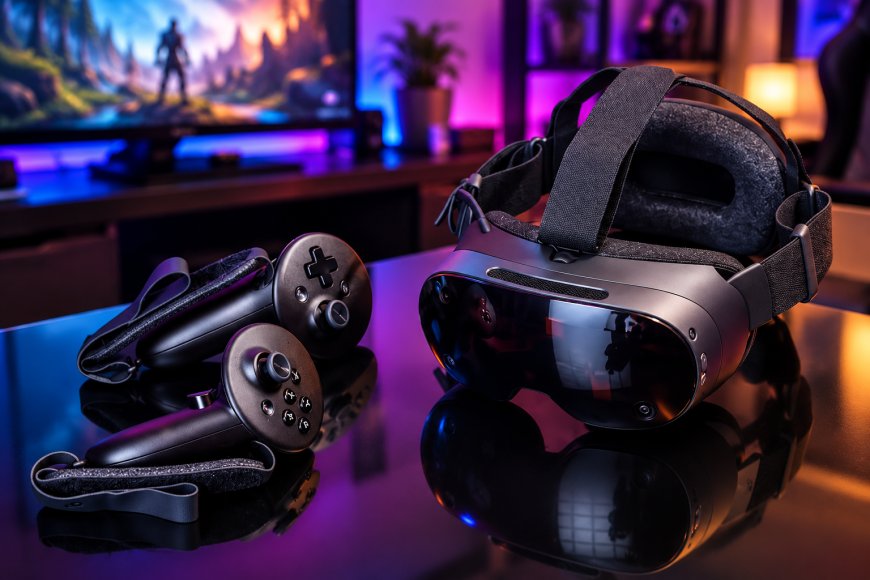
Valve’s Steam Frame has arrived at a price that makes the company’s return to virtual reality considerably more expensive than originally expected. The wireless headset starts at $1,059 for 256GB of storage, while the 1TB model costs $1,299, putting both versions firmly into premium VR territory.
The final price is not simply the result of Valve deciding to position Steam Frame as a luxury device. The company says rising memory, storage, motherboard, copper, and shipping costs changed the product’s economics during development, forcing it to reconsider the lower price it had originally hoped to achieve.
Steam Frame Starts at $1,059
Valve officially launched Steam Frame in September 2026 with two storage configurations. The 256GB version costs $1,059 in the United States, while the 1TB model costs $1,299. Both include the headset, Steam Frame Controllers and Valve’s dedicated wireless adapter.
The company’s official Steam Frame product page shows that the two models otherwise share the same core hardware, including 16GB of unified LPDDR5X memory and a microSD slot for expandable storage.
The $240 difference between the models therefore primarily buys additional internal UFS storage rather than more memory, a different processor or improved displays.
Valve’s pricing is notable because Steam Frame had originally been discussed as hardware the company hoped to make more accessible. Instead, rapidly changing component costs pushed the final product above the price many buyers expected, given Valve’s experience with aggressively priced hardware such as the Steam Deck.
Memory and Storage Costs Became a Major Problem
Valve had already warned earlier in 2026 that memory and storage shortages were complicating its hardware plans. In a Steam Hardware update, the company said limited availability and rising prices for those components had forced it to reconsider both pricing and shipping schedules for Steam Frame and Steam Machine.
Those pressures did not disappear before launch. Valve developer Pierre-Loup Griffais later said the problem extended beyond RAM and storage, with motherboard construction, copper and global shipping also becoming more expensive.
The result illustrates how quickly hardware economics can change between product design and mass production. A device can be engineered around one expected bill of materials only for individual components to become substantially more expensive before manufacturing reaches scale.
For Steam Frame, that problem was particularly difficult because the headset contains more computing hardware than a conventional PC-dependent VR display.
Valve Could Not Simply Remove the Expensive Hardware
One obvious response to increasing component costs would have been to reduce memory or other specifications. By the time prices changed significantly, however, Steam Frame was already built around its existing hardware architecture.
The headset includes 16GB of LPDDR5X memory because it is designed to do more than receive a video stream from another computer. Steam Frame can also operate independently, running compatible VR and conventional games through SteamOS without a gaming PC actively rendering the experience.
Reducing memory late in development could therefore have affected standalone compatibility and the performance targets Valve had already established for developers.
That makes the RAM unusually important to Steam Frame’s identity. It isn’t simply spare capacity added to improve the spec sheet; it supports Valve’s attempt to combine a wireless PC VR headset with a standalone SteamOS computer.
Steam Frame Is Essentially a Small PC Inside a VR Headset
The internal hardware helps explain some of the price. Steam Frame uses Qualcomm’s 4nm Snapdragon 8 Gen 3 processor with an ARM64 architecture, paired with 16GB of unified memory.
Each eye receives a 2160 × 2160 LLCD behind custom pancake lenses, with refresh rates from 72Hz to 144Hz, although Valve labels 144Hz support experimental.
The headset includes four outward-facing cameras for inside-out tracking and two internal cameras for eye tracking. Valve uses that eye-tracking data for its foveated streaming system, which concentrates image quality around the area the wearer is looking at.
Steam Frame also has Wi-Fi 7 with dual radios, Bluetooth 5.4 and an included Wi-Fi 6E wireless adapter that creates a dedicated 6GHz connection between the headset and a PC.
That combination makes it fundamentally different from a simple display accessory. Valve is packaging processors, memory, storage, wireless hardware, tracking cameras, optics, controllers and a battery-powered computing platform into a headset weighing about 440 grams.
Streaming Is Still the Main Focus
Despite including standalone hardware, Valve describes Steam Frame as a streaming-first product. Its primary use case is playing games rendered by a PC and transmitted wirelessly to the headset.
The dedicated adapter is intended to reduce interference by creating a direct connection for game streaming rather than forcing the headset to compete with every other device using a home Wi-Fi network.
Valve has also developed Multi-Link Streaming, which can route data over available connections simultaneously, and foveated streaming, which uses eye tracking to concentrate bandwidth where visual detail matters most.
These systems let Valve emphasise wireless PC VR while still retaining standalone capability for compatible software.
Standalone Gaming Complicates the Value Question
Evaluating Steam Frame purely against conventional PC VR headsets misses part of Valve’s approach. The device can run SteamOS independently and access a growing catalogue of games that meet Valve’s standalone compatibility requirements.
Valve created a Steam Frame Standalone Verified program to identify games that work properly on the headset without streaming from a separate PC.
That means Steam Frame sits somewhere between several established product categories. It is a wireless PC VR headset, a standalone headset and a SteamOS gaming computer capable of running some non-VR titles.
That versatility makes the hardware easier to understand, but it doesn’t automatically make the price easier to justify. Buyers focused on one function may end up paying for hardware designed to support capabilities they rarely use.
Storage Pricing Creates Another Decision
The 256GB model offers the lowest entry point, but standalone gaming makes internal storage more relevant than it would be on a streaming-only headset.
Games installed directly on Steam Frame consume local storage just as they would on another SteamOS device. The 1TB configuration provides considerably more room but raises the price to $1,299.
Valve also includes a microSD card slot, giving owners a cheaper way to add capacity. That could make the 256GB model more practical for users who expect to stream most demanding PC games rather than install them directly on the headset.
The best configuration therefore depends heavily on how you’ll use Steam Frame. A streaming-focused owner has less reason to pay for 1TB of internal storage than someone intending to build a substantial standalone library.
The Price Reflects a Wider Hardware Problem
Steam Frame is not the only Valve product affected by higher component costs. The company has discussed similar challenges around Steam Machine and the wider PC hardware market.
Memory-intensive products are particularly exposed because even small increases in per-component costs can add up quickly across production volumes. Manufacturers then have to decide whether to absorb those costs, alter specifications or pass more of the increase to customers.
Valve’s comments suggest it chose to preserve the hardware it had designed and price Steam Frame closer to its actual production economics rather than significantly reduce the specification before release.
That approach may protect the experience Valve intended to deliver, but it also changes the audience. At
What's Your Reaction?
 Like
0
Like
0
 Dislike
0
Dislike
0
 Love
0
Love
0
 Funny
0
Funny
0
 Angry
0
Angry
0
 Sad
0
Sad
0
 Wow
0
Wow
0