


































Trump-Era Permitting Delays Put 92 GW of U.S. Power Projects at Risk
Permitting changes under the Trump administration could delay or cancel up to 92 GW of new U.S. electricity capacity, threatening more than $121 billion in clean energy investments as AI-driven power demand continues to rise.
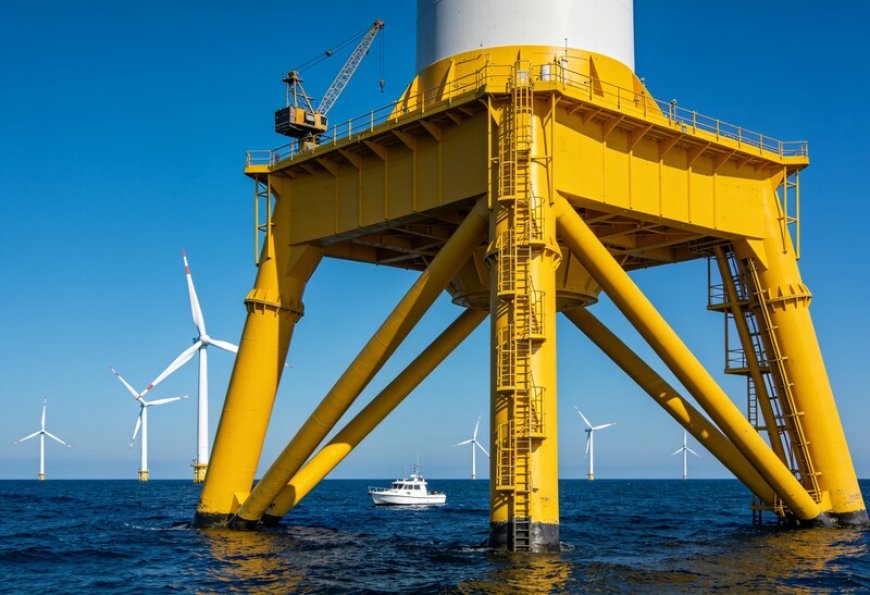
Permitting delays introduced under the Trump administration could jeopardise up to 92 gigawatts of new clean electricity generation, even as power demand continues to surge due to the rapid expansion of AI data centres.
A new report from consulting firm Wood Mackenzie found that revised permitting rules and the withdrawal of certain federal funding have already resulted in the cancellation of approximately 7 gigawatts of generating capacity on federally managed land during 2025. The report warns that continued regulatory scrutiny could place an additional 12 gigawatts of projects on federal land and another 80 gigawatts on privately owned land at risk of cancellation.
According to the study, these federal policy challenges threaten more than $121 billion in planned energy-sector investments.
Electricity consumption has been rising steadily after nearly two decades of relatively flat demand, driven largely by the rapid growth of AI infrastructure and data centres. BloombergNEF projects that both the number and size of data centres will continue expanding over the next decade, with their electricity consumption expected to nearly triple by 2035.
At the same time, the Federal Energy Regulatory Commission has instructed grid operators to create faster pathways for connecting new customers to the grid. However, little progress has been made in addressing the growing bottleneck affecting new power generation projects, a situation that has reached near-crisis levels in several regions.
Within the nation’s largest electricity grid, which also hosts the highest concentration of data centres, operators effectively prevented new generating facilities from connecting for roughly four years, freezing available supply even as electricity demand continued to climb. As a result, public frustration has increased, while many technology companies have begun pursuing their own energy strategies by constructing dedicated power plants alongside their data centres.
Where new electricity generation has been added in the United States, renewable energy has accounted for the largest share. Solar, battery storage, and wind projects collectively accounted for nearly 90% of the record 53 gigawatts of new generating capacity installed in 2025.
Wood Mackenzie said much of the increased uncertainty in permitting stems from an order issued in August 2025 by U.S. Interior Secretary Doug Burgum, which sought to “rein in environmentally damaging wind and solar projects.”
Although wind and solar developments have received the greatest scrutiny, the report also found that several energy storage projects have been cancelled. Most of the permitting difficulties have been concentrated in states including Oregon, Alabama, Maine, Minnesota, and Montana.
Solar developments located on or near privately owned wetlands appear to face the greatest regulatory risk, while wind energy projects have encountered additional review under aviation and airspace regulations. The long-term outlook for solar projects remains uncertain following the Trumpadministration’ss recent decision to remove federal protections from approximately 80% of U.S. wetlands.
Burgum’s current position represents a notable shift from his time as governor of North Dakota, when he oversaw significant expansion of wind energy across the state and established a goal of achieving net-zero carbon emissions by 2030. As recently as 2024, Burgum publicly highlighted North Dakota’s abundant wind resources, noting that wind power generated roughly one-third of the state’s electricity in 2022.
What's Your Reaction?
 Like
0
Like
0
 Dislike
0
Dislike
0
 Love
0
Love
0
 Funny
0
Funny
0
 Angry
0
Angry
0
 Sad
0
Sad
0
 Wow
0
Wow
0