The power shortage facing AI data centres has become so severe that people — not just Elon Musk — are now openly discussing sending servers into space to tap into uninterrupted solar power around the clock.
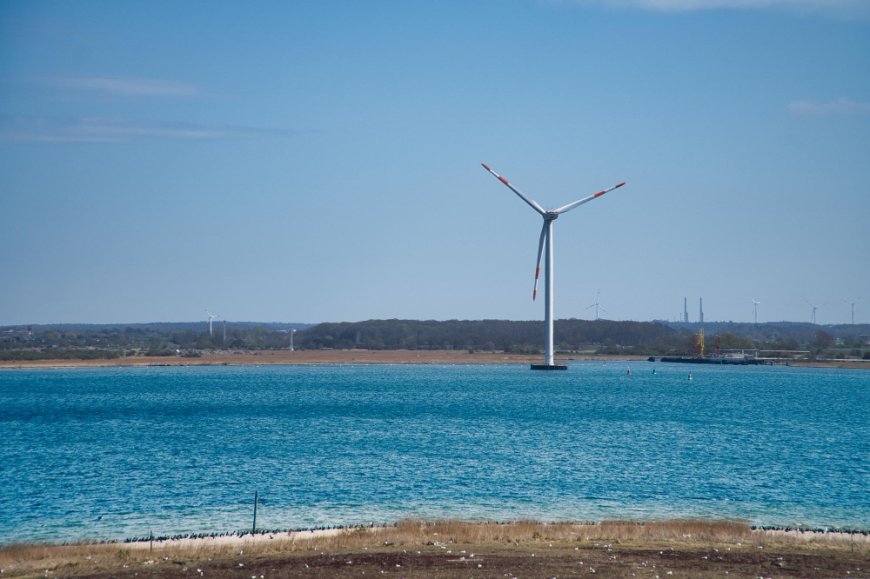
But one startup believes the ocean offers a far more practical answer. Offshore wind company Aikido is preparing to place a 100-kilowatt demonstration data centre off the coast of Norway later this year. The compact system will be housed inside submerged pods attached to a floating offshore wind turbine.
If the test is successful, the company plans to follow up with a much larger version it hopes to deploy off the U.K. coast in 2028. That future system would feature a turbine in the 15-megawatt to 18-megawatt range, supplying electricity to a data centre with a capacity of 10 megawatts to 12 megawatts.
Moving data centres offshore could address several major problems at once. One clear advantage is proximity to power, as the electricity source would sit directly above the facility. Offshore winds are also steadier than onshore winds, and a relatively small battery system could help smooth out temporary generation drops.
Submerged data centres could also avoid opposition from NIMBY groups — shorthand for “not in my backyard” — who often resist projects built near their homes because of concerns over noise and pollution.
Another major benefit is cooling. Because the facilities would be in cold seawater, keeping servers at manageable temperatures becomes much easier. Cooling remains one of the most challenging technical issues for orbital data centres, as systems in space must rely on very different methods in the vacuum environment.
Still, even though offshore data centres solve some problems, they create others. The ocean is an unforgiving environment. While surface waves would not slam submerged servers, they also would not remain perfectly motionless, meaning the systems would need to be fully secured. Seawater is also highly corrosive, so the hardware, including the container and its power and data connections, would need to be specially hardened to withstand those conditions.
Aikido is not the first company to suggest placing data centres underwater. Microsoft proposed the concept more than a decade ago, and in 2018, it launched a trial off the coast of Scotland that achieved modest success. During the 25-month experiment, only six out of more than 850 servers failed. The chamber was filled with inert nitrogen gas, which may partly explain the unusually low failure rate. Microsoft accumulatedseveralf patents related to the concept over the years and then open-sourced them in 2021. But by 2024, the company had ultimately shelved the project.








































 Like
0
Like
0
 Dislike
0
Dislike
0
 Love
0
Love
0
 Funny
0
Funny
0
 Angry
0
Angry
0
 Sad
0
Sad
0
 Wow
0
Wow
0