

































Danu Robotics Raises $5 Million to Bring AI Recycling Robot to Market
Danu Robotics raises $5 million to bring its AI recycling robot H.E.R.O. to market, with $500,000 in signed contracts and more than 200 sales prospects.
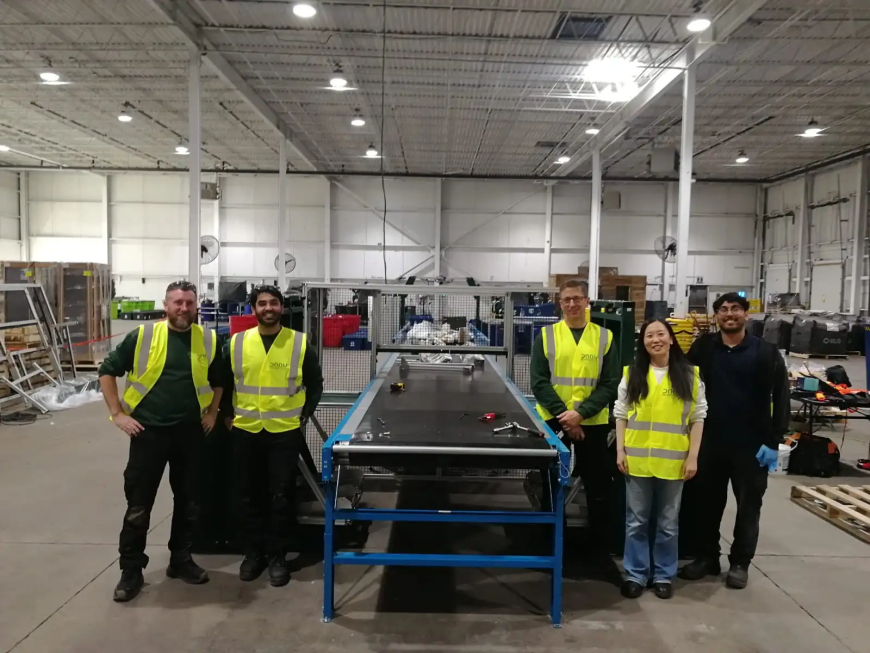
Scottish startup Danu Robotics has raised $5 million in late-seed funding to bring its AI-powered recycling robot, H.E.R.O., to market. The company is developing a mechanical sorting system that help recycling facilities recover more valuable materials while reducing reliance on manual labour.
Founded by Amy Ma, the Edinburgh-based company has secured $500,000 in signed contracts and letters of interest from two major customers. It also reports more than 200 prospective customers in its sales pipeline, targeting a recycling sorting market estimated at $20 billion across Europe and North America.
How Danu’s AI Recycling Robot Works
Unlike competing recycling robots that use suction to collect waste, H.E.R.O. relies on mechanical pincer grippers to pick up recyclable materials from conveyor belts. Its computer vision system identifies objects, while AI software supports sorting decisions and improves as more operational data becomes available.
According to Danu Robotics, its compact two-arm system can be fitted into existing waste sorting facilities with relatively limited installation requirements. The company also measures successful material recovery by confirming that an item reaches its designated collection bin, rather than simply counting attempted pickups.
Ma began exploring recycling technology after discovering that the London bank where she worked as a software developer was ultimately mixing separately collected waste. Further investigation revealed how heavily recycling facilities depend on workers manually separating valuable materials from mixed waste streams.
She founded Danu in 2020 to address those limitations through robotics and AI. After six years of development, the company is moving toward commercial deployment, competing with established robotic sorting providers such as Glacier and Recycleye.
Funding and the Economics of Automated Recycling
Ma believes the financial benefits of recovering more recyclable materials will help justify the investment in automation. Recycling facilities generate revenue from separated materials, so sorting accuracy and operating costs drive their purchasing decisions.
She estimates that installing H.E.R.O. could generate about $485,000 in additional revenue for a facility, with an initial investment of about $160,000 and annual maintenance costs of $24,000. These figures represent the founder’s projections rather than independently verified financial results from widespread commercial deployments.
Danu’s business model also separates durable robotic hardware from its continually updated AI software. The company says this approach lets customers benefit from improved object recognition and sorting performance without replacing the entire machine.
Danu Plans Smaller Robots for More Locations
As its first systems enter the market, Danu is working to make H.E.R.O. more compact, durable, and adaptable. Ma wants the technology to operate beyond traditional materials recovery facilities, where large sorting lines currently handle mixed recyclable waste.
Potential applications include shopping centres, airports, hospitals and large events, where smaller autonomous sorting systems could process recyclable materials directly at collection points. For Danu, the immediate challenge is turning its early contracts and sales pipeline into successful installations while demonstrating the cost savings and material recovery improvements its technology promises.
What's Your Reaction?
 Like
0
Like
0
 Dislike
0
Dislike
0
 Love
0
Love
0
 Funny
0
Funny
0
 Angry
0
Angry
0
 Sad
0
Sad
0
 Wow
0
Wow
0