


































Deep Fission Pushes Ahead With New Nasdaq IPO Plan Amid Questions Over Reactor Progress
Deep Fission is pursuing a new Nasdaq IPO that could raise to $157 million as the nuclear energy startup advances its underground reactor technology. Investors are closely watching the company’s financial position, drilling milestones, regulatory pathway, and commercialisation timeline.
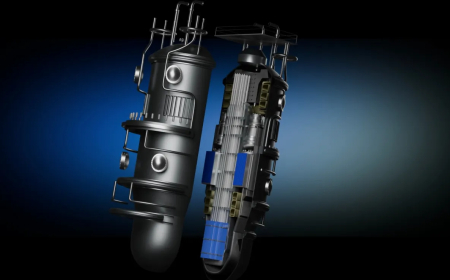
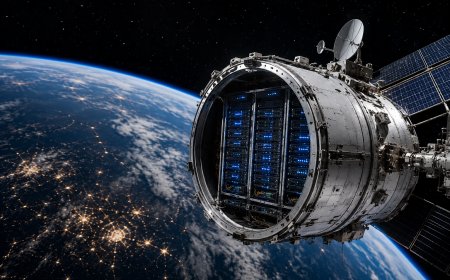
Deep Fission is once again pursuing a public-market debut, announcing plans for a Nasdaq initial public offering to fund its vision of underground nuclear reactors designed to power future AI data centres. The move comes less than a year after the company revealed plans to become publicly listed through a reverse-merger transaction, creating confusion about its path to the stock market.
Last September, Deep Fission announced that it had completed a reverse merger with Surfside Acquisition, raising $30 million through a concurrent private placement priced at $3 per share. While the transaction technically made Deep Fission a reporting company subject to SEC requirements, the company’s stock never began public trading.
At the time, Deep Fission had indicated that it intended to trade on the OTCQB marketplace, which serves smaller growth companies that do not meet the listing standards of major exchanges such as Nasdaq or the NYSE. However, public records show no evidence that Deep Fission shares were ever actively traded on the OTCQB, and the company’s latest SEC filing states that its stock has never been publicly traded.
Now, Deep Fission is pursuing a more conventional IPO process. According to its latest filing, the company hopes to raise approximately $157 million through a Nasdaq offering priced between $24 and $26 per share, potentially giving the startup a valuation of up to $1.66 billion.
The ambitious valuation stands in contrast to the company’s financial and operational position. Just one year ago, Deep Fission was reportedly seeking to raise a significantly smaller funding round of roughly $15 million. At the same time, recent regulatory filings suggest that progress toward its first reactor deployment has slowed.
In previous filings submitted in December, the company projected that it could reach nuclear criticality—the point at which a self-sustaining nuclear chain reaction is achieved—by July 2026. In its latest filing, however, Deep Fission no longer provides a timeline for reaching that milestone.
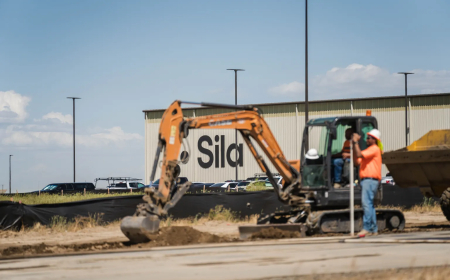
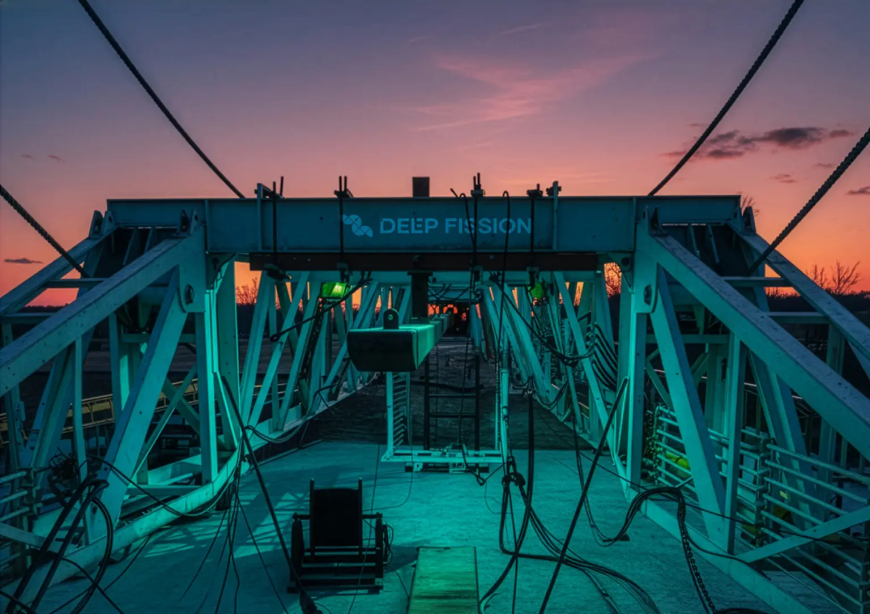
The company does point to progress in its drilling program. Deep Fission began drilling the first of three planned test wells in March to gather geological and engineering data from depths of up to 6,000 feet. The current test well measures approximately eight inches in diameter, substantially smaller than the boreholes expected to be required for future commercial reactor installations.
Scaling that concept remains one of the company’s major technical challenges. Deep Fission has stated that commercial operations may require boreholes ranging from 30 to 50 inches in diameter and extending roughly a mile underground. Even at the lower end of that range, such wells would exceed the size of many commonly drilled oil and gas boreholes, creating significant engineering and cost considerations.
Financially, the company continues to face pressure. Deep Fission’s latest filing includes the same “going concern” warning that appeared in earlier disclosures, indicating that the business may face funding challenges if it is unable to complete its IPO or secure additional capital successfully. The company’s accumulated deficit reportedly increased to $88.1 million as of March, up from $56.2 million previously. Cash reserves also declined during recent months.
One development that may have strengthened investor interest is an $80 million equity investment secured by the company. That financing included $20 million from Blue Owl, which also signed a non-binding memorandum of understanding related to potential future power projects. However, the investment was not sufficient to eliminate concerns highlighted in the company’s financial disclosures.
The timing of the IPO effort coincides with growing investor enthusiasm for advanced nuclear technologies and their potential to meet the energy demands of artificial intelligence infrastructure. Earlier this year, X-energy completed a public offering after increasing the size of its IPO. However, unlike Deep Fission, X-energy is already generating revenue and has progressed further through the licensing process overseen by the Nuclear Regulatory Commission.
That comparison highlights a key distinction within the emerging nuclear sector: investor excitement can drive valuations higher even when technical development and regulatory approvals remain years away. While enthusiasm for nuclear-powered AI infrastructure continues to grow, Deep Fission still faces substantial engineering, financial, and licensing hurdles before its underground reactor concept can become a commercial reality.
For now, the company’s Nasdaq IPO appears to be aimed at capitalising on strong market interest in next-generation nuclear energy. Whether that enthusiasm translates into long-term operational success will depend less on market sentiment and more on the company’s ability to demonstrate meaningful technical and commercial progress in the years ahead.
What's Your Reaction?
 Like
0
Like
0
 Dislike
0
Dislike
0
 Love
0
Love
0
 Funny
0
Funny
0
 Angry
0
Angry
0
 Sad
0
Sad
0
 Wow
0
Wow
0