





















Honda Shifts Focus Toward Data Center Infrastructure as AI Demand Surges
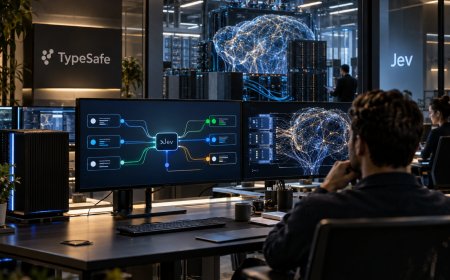
Honda is expanding into the data centre sector as soaring demand for AI and cloud computing fuels new infrastructure investments. Discover why the automaker is exploring opportunities beyond electric vehicles.
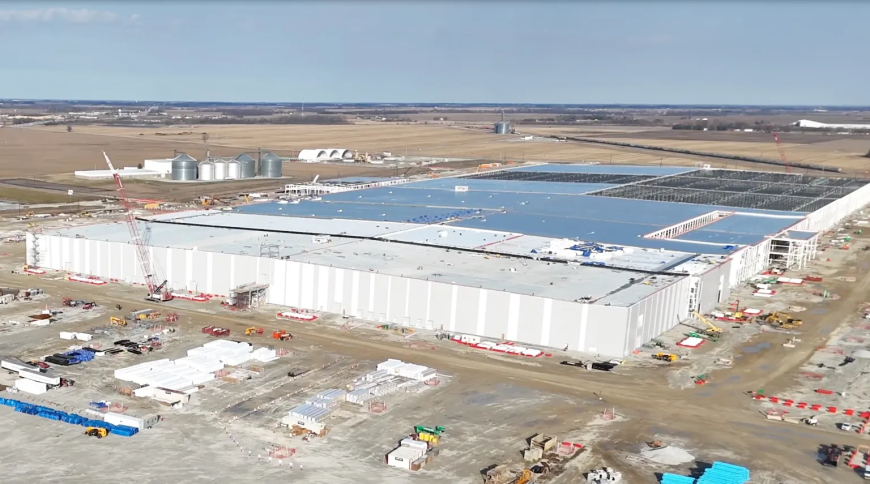
Honda has officially begun manufacturing batteries for energy storage systems, according to a report from Nikkei Asia, marking the latest step by a major automaker into the rapidly expanding energy storage market.
The move comes only three months after Honda cancelled several electric vehicle programmes in the United States. Battery cells originally intended for those EVs are being produced at the company’s Ohio facility, which operates through a joint venture with LG Energy Solution. Instead of powering electric vehicles, those batteries are now being redirected to energy storage systems serving facilities such as data centres.
Honda’s strategic shift reflects broader challenges facing the U.S. electric vehicle market. Demand has remained weaker than expected following the Republican-led repeal of federal EV tax credits, which were introduced to encourage domestic production of electric vehicles and battery technology. EV sales have continued to decline compared with the previous year, partly because many buyers accelerated their purchases before the tax incentives expired last September.
That uncertainty prompted Honda to revise its North American electrification strategy significantly, cancelling three electric vehicle models planned for the U.S. market. During the last fiscal year, the company recorded write-downs totalling approximately $15.7 billion, with a significant portion tied to restructuring its EV business. Honda’s weakening performance in China—where electric vehicles continue to gain rapid market share- also contributed to the financial impact.
Despite scaling back its EV ambitions, Honda has maintained its battery manufacturing partnership with LG Energy Solution. Like several other major automotive companies, including Tesla, Ford, and General Motors, Honda increasingly sees battery technology as a business opportunity beyond electric vehicles alone.
The stationary energy storage sector has experienced exceptional growth in recent years. According to a report published by the Solar Energy Industries Association (SEIA) and Benchmark Minerals, the market expanded by 32% year over year. During the first quarter of this year alone, approximately 9.7 gigawatt-hours of battery storage systems were installed—equivalent to enough battery capacity to manufacture roughly 120,000 electric vehicles.
Industry forecasts suggest that expansion will continue throughout the decade. The report projects that annual energy storage deployments could reach 110 gigawatt-hours by 2030, nearly tripling the current market size.
The sector has also become increasingly profitable. Tesla, which currently leads much of the stationary battery market through its Megapack and Powerwall products, has reported gross profit margins of roughly 30% on its energy storage business—around double the margin generated by its vehicle division.
Although many stationary battery installations are deployed at data centres to support growing AI computing demand, a substantial portion is connected directly to the electricity grid. Falling battery costs have enabled storage systems to play an increasingly important role in improving grid stability while complementing renewable energy sources such as solar and wind, making electricity generation more reliable and predictable.
Honda may still be reassessing its long-term strategy for electric vehicles in the United States. Still, its latest move makes one thing clear: the company intends to remain an active participant in the broader energy transition, even if that growth increasingly comes through battery storage rather than passenger EVs
What's Your Reaction?
 Like
0
Like
0
 Dislike
0
Dislike
0
 Love
0
Love
0
 Funny
0
Funny
0
 Angry
0
Angry
0
 Sad
0
Sad
0
 Wow
0
Wow
0