

































StarCraft Returns in 2030 as Blizzard Reinvents the Series as an Open-World Shooter
Blizzard is bringing StarCraft back in spring 2030 with a story-driven open-world shooter set in the Koprulu Sector, shifting beyond its RTS roots.
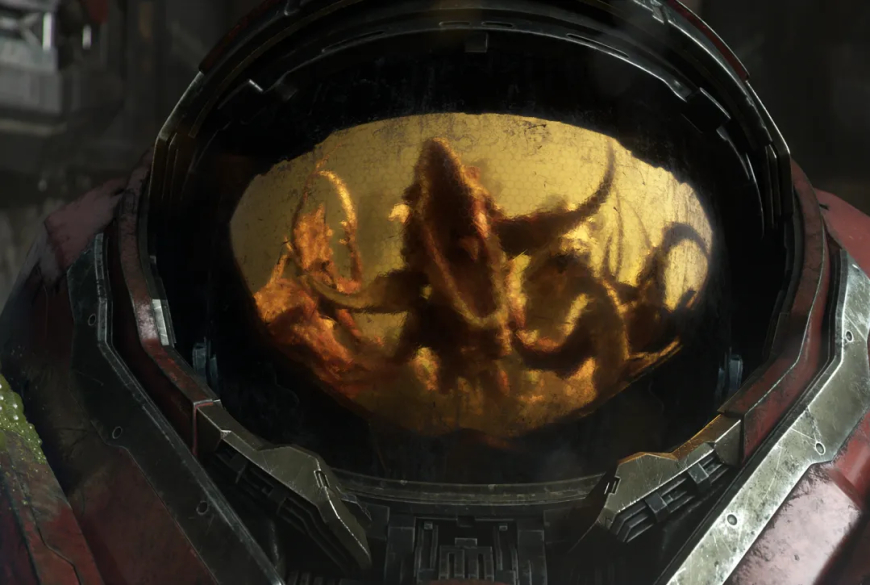
Blizzard is bringing StarCraft back, but not by making the real-time strategy sequel many longtime players expected. The next major game in the franchise is an open-world shooter scheduled for spring 2030, shifting the perspective from commanding entire armies to experiencing the Koprulu Sector conflict much closer to the ground.
The project was unveiled at BlizzCon 2026 with a cinematic rather than gameplay, leaving many of its systems unexplained. What Blizzard has confirmed is significant enough on its own: StarCraft is returning as a new game after years without a major standalone release, and the company is willing to move one of PC gaming’s defining strategy franchises into a completely different genre.
Blizzard Calls It a New Era for StarCraft
Blizzard announced the project during the BlizzCon 2026 opening ceremony, describing the new StarCraft as an original open-world shooter set in the Koprulu Sector. The company currently targets spring 2030 for release.
So far, the title is simply StarCraft. Blizzard has not presented it as StarCraft III, and nothing in the announcement indicates that it is intended to replace the traditional strategy series with a numbered sequel.
That distinction matters because the franchise built its reputation around large-scale real-time strategy. Players gathered resources, built bases, and commanded Terran, Zerg, and Protoss armies rather than controlling one combatant through an open environment.
Moving into a shooter therefore changes more than the camera. It gives Blizzard a chance to show the same universe from the perspective of people who once existed as individual units in much larger battles.
The Reveal Focuses on the Human Cost of StarCraft’s Wars
The announcement cinematic leans heavily into militarism and the brutal scale of conflict in the StarCraft universe. Human soldiers prepare for battle while the threat of the Zerg hangs over the presentation, shifting the emphasis away from the strategic overview of the original games.
The trailer does not establish how representative those scenes are of actual gameplay. Blizzard has not confirmed the player character, perspective, playable factions or whether players will remain aligned with one human force throughout the campaign.
The Protoss are part of the wider setting, but the initial reveal provides too little information to determine their role in the game. Similarly, the Zerg’s presence doesn’t confirm whether they will serve only as enemies or eventually become playable in some form.
That restraint is important because a cinematic can establish tone without revealing the systems that will define an open-world game.
No Gameplay Has Been Shown Yet
For a game announced more than three years before its planned release, surprisingly little has been locked down publicly. Blizzard has not shown combat, exploration, mission design, progression or the structure of the open world.
The company also has not announced launch platforms, multiplayer support, cooperative modes or monetisation plans. Microsoft’s BlizzCon recap likewise describes the project simply as an original open-world shooter arriving in 2030.
The phrase “open world” itself leaves several possibilities. StarCraft spans planets, colonies, space installations, and radically different alien environments so that Blizzard could build one continuous region, several large connected zones, or multiple planetary spaces. None of those structures has been confirmed.
That makes the announcement more of a statement of direction than a detailed game reveal. Blizzard has told players what kind of StarCraft it is building, but not yet how that concept will work minute to minute.
Dan Hay’s Involvement Makes the Open-World Direction Interesting
Blizzard vice president Dan Hay introduced the project at BlizzCon. Hay previously spent years at Ubisoft working on the Far Cry franchise, making his involvement particularly notable now that StarCraft is becoming an open-world shooter.
That background does not mean the new game will reproduce a Far Cry structure with StarCraft characters. It does, however, give Blizzard leadership experience with large explorable environments, first-person action and systemic open-world design.
The challenge will be translating those ideas into a universe traditionally defined by armies rather than lone protagonists. StarCraft battles involve overwhelming Zerg swarms, mechanised Terran forces and highly advanced Protoss technology. A shooter needs to make an individual player feel important without shrinking the scale that makes those conflicts distinctive.
StarCraft Has Tried to Become an Action Game Before
This is not Blizzard’s first attempt to move the franchise outside real-time strategy. Blizzard announced StarCraft: Ghost in 2002 as an action game built around Nova, a Terran Ghost operative, but it never reached release.
The project changed developers and spent years in uncertain development before Blizzard ultimately abandoned it. Blizzard later clarified in its own StarCraft II lore Q&A that unreleased material from Ghost was not considered canon.
The new StarCraft should therefore not be viewed as a revival of Ghost. The connection is broader: both projects aim to let players experience the StarCraft universe through direct action rather than battlefield command.
The difference is that Blizzard is now committing publicly to an open-world design and a 2030 release target rather than presenting the project as a smaller spin-off alongside an active strategy series.
The RTS Legacy Creates Enormous Expectations
The original StarCraft arrived in 1998 and helped establish the franchise as a defining name in competitive PC strategy. Blizzard’s history of the series traces how Terran, Protoss and Zerg warfare became central not only to its campaigns but also to the growth of professional competitive gaming, particularly in South Korea.
StarCraft II: Wings of Liberty followed in 2010 and expanded into a trilogy of campaigns that ended with Legacy of the Void. Its multiplayer also continued the franchise’s reputation for demanding strategic competition.
That history means an open-world shooter will inevitably face questions about a conventional RTS successor. Blizzard has not announced StarCraft III, and this project should not be interpreted as confirmation that another strategy game is being developed alongside it.
For longtime players, the new game will therefore have to succeed on its own terms rather than relying on the assumption that it is merely filling time until another RTS arrives.
An Open World Could Show Parts of StarCraft the RTS Games Could Not
The genre change also creates opportunities. Strategy games communicate scale exceptionally well, but individual locations can become battlefields viewed primarily in terms of resources, defensive positions and unit movement.
An open-world shooter can operate at human scale. Settlements, military installations, abandoned colonies and alien environments can become spaces to investigate rather than terrain to occupy with an army.
The Zerg in particular could feel very different from ground level. A swarm that functions as a tactical challenge from an overhead perspective can become a physical threat when the player is standing directly in its path.
Whether Blizzard can combine that intimacy with StarCraft’s larger interstellar conflict will likely determine how convincingly the franchise survives the transition.
Spring 2030 Leaves Blizzard Plenty to Prove
The distant release window makes this an unusually early announcement. With spring 2030 still years away, major elements of the project could evolve substantially before launch.
That gives Blizzard time to explain how exploration works, whether the game supports multiplayer, which factions are involved and how much freedom players will have across the Koprulu Sector. It also means expectations will build long before players can judge the actual combat.
For now, the most important fact is straightforward: StarCraft is no longer dormant. Blizzard has chosen to bring it back as an open-world shooter rather than another traditional RTS, making this one of the franchise’s biggest creative departures.
The move carries obvious risk, especially for a series so closely tied to strategy. But the StarCraft universe has always been larger than the viewpoint from which players controlled it. If Blizzard can preserve the scale, factions and hostility of the Koprulu Sector while making individual combat feel meaningful, moving down from the command map could give the series a genuinely different reason to return.
What's Your Reaction?
 Like
0
Like
0
 Dislike
0
Dislike
0
 Love
0
Love
0
 Funny
0
Funny
0
 Angry
0
Angry
0
 Sad
0
Sad
0
 Wow
0
Wow
0