






























Thea Energy Secures $100 Million Funding Round, Joins the Ranks of Leading Fusion Energy Startups
Thea Energy has raised $100 million in a Series B funding round, bringing total private investment to $130 million. The funding will support fusion technology development, manufacturing expansion, and construction of its Eos demonstration facility.
Energy startup Thea Energy has secured an oversubscribed $100 million Series B funding round led by U.S. Innovative Technology Fund, strengthening its position among the industry's most well-funded companies. The new capital is expected to accelerate the company's efforts toward building a commercially viable fusion reactor.
The funding will support the expansion of Thea's manufacturing capabilities for its distinctive magnet technology and help begin construction of Eos, the company's planned demonstration reactor designed to operate at a scale relevant to future power generation. Construction of Eos is scheduled to begin next year. The startup previously raised $20 million in a Series A round in early 2024, bringing its total private funding to approximately $130 million.
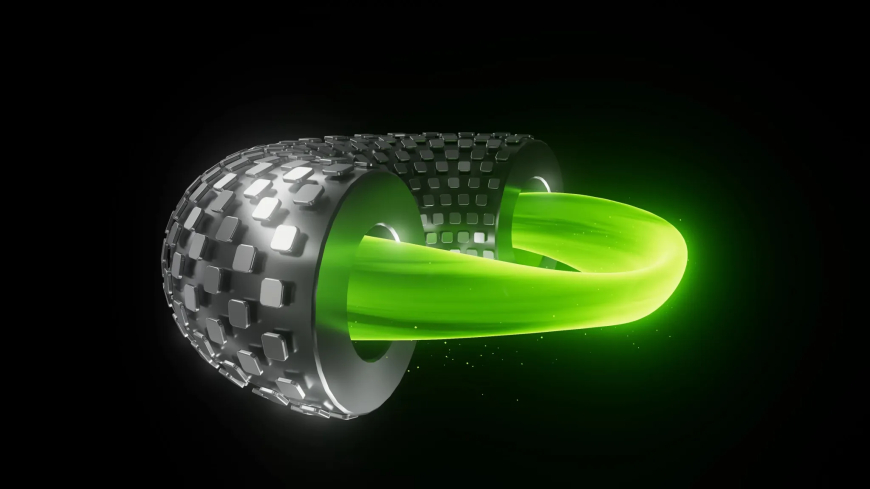
Magnetic systems are central to most fusion reactor designs because they confine and control plasma, the extremely hot state of matter required for fusion reactions. Thea's approach differs from many competitors' in that it uses smaller rectangular magnets that can be individually adjusted to shape the overall magnetic field inside the reactor.
The company compares its magnet system to pixels on a display screen. Each magnet performs a small task individually, but together they create the complex magnetic structure needed to control fusion plasma through software-driven control.
Thea is developing a stellarator reactor, a design known for its ability to maintain highly stable plasma conditions. Unlike tokamaks, which rely on powerful magnetic forces to confine plasma, stellarators use carefully shaped magnetic fields that twist and curve around the plasma. While this design offers stability advantages, it has historically been difficult and expensive to manufacture because of its complex geometry.
The company believes its modular magnet architecture can simplify that challenge. By surrounding the reactor core with numerous adjustable magnets, Thea aims to generate the required stellarator magnetic field without building an equally complex physical structure. Software can then fine-tune the field by controlling each magnet individually.
The approach may also simplify reactor assembly. According to the company, testing has shown that its control software can compensate even when magnets are intentionally installed slightly out of alignment, potentially reducing manufacturing and installation complexity.
Thea plans to complete its Eos demonstration reactor by 2030 and hopes to bring its commercial reactor, known as Helios, online by 2034. That timeline places the company alongside several other fusion developers targeting commercialisation in the early 2030s, including Commonwealth Fusion Systems and its planned ARC reactor project.
If successful,l Thea's technology could provide significant manufacturing advantages. The company has already built dozens of full-scale magnet prototypes at its Jersey City facility. In contrast, many competing fusion companies pursuing magnetic confinement designs require massive facilities to manufacture and assemble reactor-scale magnets.
However, the smaller magnets are only part of the overall system. Thea also relies on larger external magnets to perform most of the plasma confinement, while the hundreds of smaller magnets are used primarily for fine-tuning and optimisation. Although this reduces some of the manufacturing advantage, the company believes the overall design remains simpler than traditional stellarator approaches.
In an industry where reducing complexity is critical to making fusion power commercially viable, even incremental improvements can have a significant impact. The additional $100 million provides Thea with greater resources to continue developing its technology and move closer to demonstrating practical fusion energy.
Other investors participating in the funding round include General Innovation Capital Partners, Linse Capital, Calm Ventures, Climate Capital, Divergent Capital, Emerald Technology Ventures, Gaingels, Idemitsu Kosan, Overlay Capital, Timescale Ventures, and What If Ventures.
The company also clarified that while earlier reactor concepts included 12 surrounding magnets, those components were removed from later design iterations.
What's Your Reaction?
 Like
0
Like
0
 Dislike
0
Dislike
0
 Love
0
Love
0
 Funny
0
Funny
0
 Angry
0
Angry
0
 Sad
0
Sad
0
 Wow
0
Wow
0