


































US Military Personnel Reportedly Tracked Through Commercial Location Data, Raising National Security Concerns
The US Department of Defence has confirmed that hostile actors used commercially available location data to track and surveil American troops in active military zones. Lawmakers are now urging stronger privacy protections and stricter controls on the data brokerage industry amid growing national security concerns.
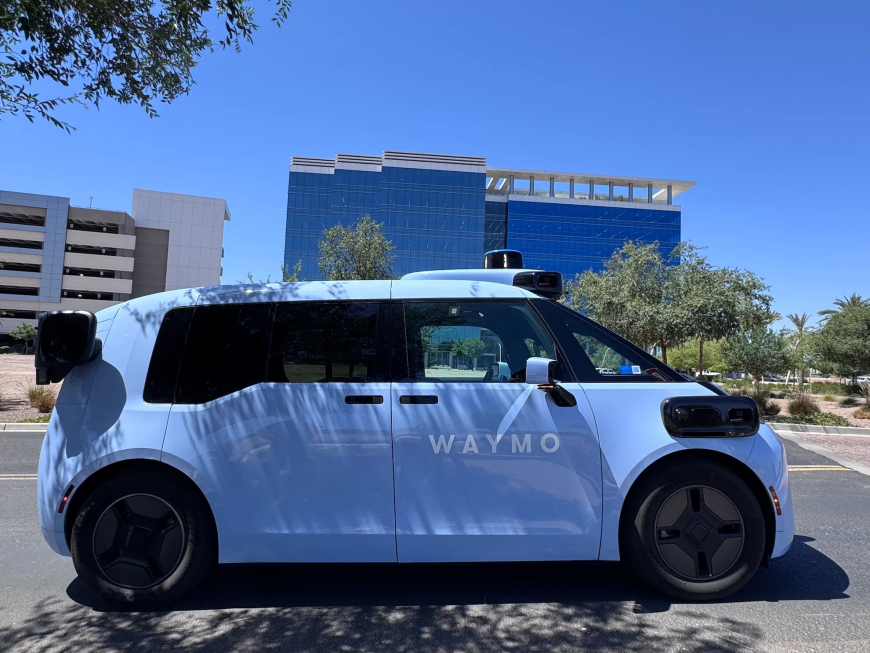
Waymo has started offering select riders in Los Angeles, Phoenix, and San Francisco access to its newest autonomous vehicle, an all-electric minivan-style robotaxi designed to improve passenger comfort while reducing operational and maintenance costs.
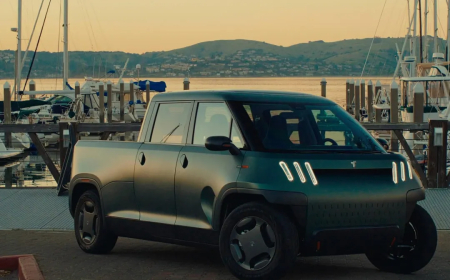
The Alphabet-owned company announced Thursday that the vehicle, known as the Ojai (pronounced "oh-hi"), will initially be available to a limited group of customers through complimentary rides. Waymo said the early rollout is intended to gather user feedback and help refine the overall robotaxi experience before expanding access to additional riders and markets.
The launch follows several years of development and testing focused on creating a vehicle that is easier to maintain, more accessible for passengers, and less expensive to build and operate at scale.
The introduction of the Ojai comes during a challenging period for Waymo. The company recently suspended robotaxi operations on freeways in Los Angeles, Phoenix, Miami, and San Francisco as it works to improve vehicle performance in construction zones. It also temporarily paused services in Atlanta and San Antonio due to flooding-related concerns.
Despite those setbacks, the arrival of the Ojai represents an important step in Waymo's efforts to expand its fleet and strengthen its path toward larger-scale revenue generation.
Although Waymo's autonomous driving technology powers the vehicle, the platform itself was developed in partnership with Zeekr, the electric vehicle brand owned by China's Geely Holding Group.
The two companies first announced their collaboration in 2021 and unveiled a purpose-built robotaxi concept in late 2022. Since then, Waymo has spent nearly two years testing both prototype and production-intent versions on public roads.
Designed in Sweden and manufactured in China, the Ojai is built on Zeekr's SEA-M platform, a mobility-focused version of the company's Sustainable Experience Architecture developed specifically for future transportation services such as robotaxis and commercial mobility vehicles.
The vehicle is equipped with Waymo's sixth-generation autonomous driving system, including 13 cameras, four lidar sensors, six radar units, and multiple external audio receivers. The modular design of the system allows Waymo to deploy the same technology across different vehicle platforms, including both the Ojai and the Hyundai Ioniq 5 robotaxi, which has already been announced.
Waymo says the new vehicle incorporates lessons learned from providing more than 500,000 paid robotaxi rides each week. The company expects the Ojai to play a major role in expanding its fleet, which currently consists of approximately 3,700 Jaguar I-Pace vehicles.
The Zeekr vehicles are shipped to Waymo's Arizona facility without any Chinese connected-car technology installed. There, the company adds its autonomous driving hardware and software before deploying the vehicles into service. Waymo said it is scaling production capacity toward tens of thousands of vehicles annually, beginning with the Ojai and later expanding to the Hyundai Ioniq 5.
The finished vehicle features a flat floor, lower step-in height, and sliding doors on both sides to make entry and exit easier. Passenger-focused additions include charging ports, cup holders, extra headroom and legroom, grab bars, braille labels above key controls, and three large adaptive screens that allow riders to view routes, adjust climate settings, control music, and provide feedback.
Waymo has also designed the Ojai with operational efficiency in mind. The robotaxi features a more durable, easier-to-clean interior, faster charging, increased battery capacity, and a modular design intended to simplify maintenance and lower long-term operating costs.
What's Your Reaction?
 Like
0
Like
0
 Dislike
0
Dislike
0
 Love
0
Love
0
 Funny
0
Funny
0
 Angry
0
Angry
0
 Sad
0
Sad
0
 Wow
0
Wow
0